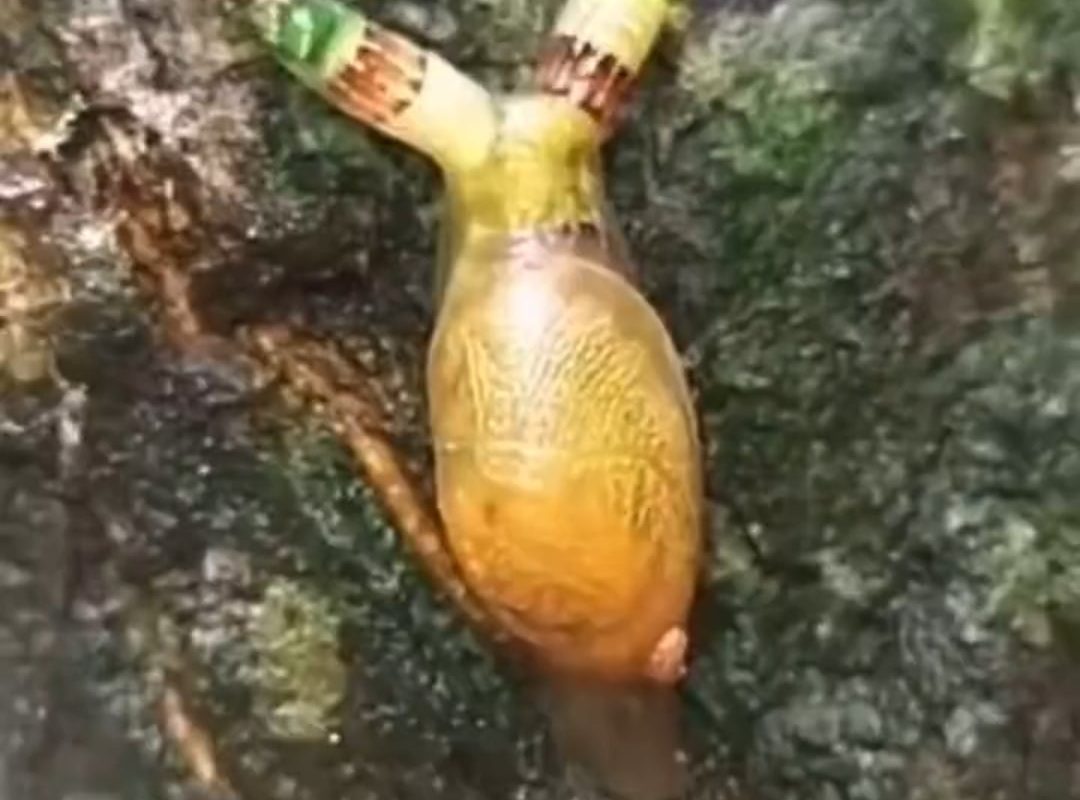
The “Zombie Snail” Parasite (Leucochloridium) hijacks a snail brain & forces it to climb into the open, it then makes the snails eyes pulsate to mimic caterpillar’s, tricking birds into eating them so the Parasite can complete its life cycle in the bird’s gut.
The Zombie Snail Parasite: Nature’s Real-Life Horror Story
Title: Leucochloridium: The Parasite That Hijacks Snail Brains, Mimics Caterpillars, and Commands a Grisly Bird Feast
Meta Description: Discover how the “zombie snail” parasite (Leucochloridium) mind-controls snails, transforms them into bird bait, and completes its terrifying life cycle. A masterclass in evolutionary horror.
Introduction: A Real-Life “Walking Dead”
Imagine a parasite so cunning that it transforms its host into a zombie puppet, literally hijacking its brain, altering its appearance, and leading it to certain death—all to fulfill its own life cycle. Meet Leucochloridium, the “zombie snail” parasite that turns ordinary land snails into twitching, pulsating bird bait. This isn’t science fiction; it’s a shocking display of nature’s brutal ingenuity.
What is Leucochloridium?
Leucochloridium is a genus of parasitic flatworms (trematodes) infamous for its horrifying manipulation of land snails (typically Succinea or Amber snails). These parasites belong to a broader group of organisms called “neuroparasites,” which weaponize their hosts’ nervous systems to advance their own survival.
The Life Cycle: A Bird, a Snail, and a Nightmare
Leucochloridium’s life cycle involves two hosts:
- Snails (intermediate host): Where the parasite grows and incubates.
- Birds (definitive host): Where the parasite reproduces sexually.
Here’s how the grisly cycle unfolds:
Stage 1: Infection
- Snails inadvertently consume bird feces containing Leucochloridium eggs while foraging.
- Inside the snail, the eggs hatch into larvae called sporocysts.
Stage 2: Hijacking the Snail
The sporocysts multiply explosively, forming long, branching tubes that invade the snail’s body, including its eyes (eyestalks) and nervous system. This is where the horror begins:
- Mind Control: The parasite seizes control of the snail’s brain, overriding its instincts to hide from predators.
- Forced Exposure: The infected snail is driven to climb into open, elevated areas (like tall blades of grass) in broad daylight—behavior that normally spells doom for a prey animal.
Stage 3: The Gruesome Disguise
Leucochloridium transforms the snail’s eyestalks into pulsating, caterpillar-mimicking lures:
- The parasite-filled tubes cause the eyestalks to swell, glow neon green/yellow, and throb rhythmically.
- To birds, this mimics the appearance and movement of a juicy caterpillar—irresistible prey.
Stage 4: The Bird Feast
- Birds spot the “caterpillar” (the snail’s zombified eyestalks) and devour the snail.
- Inside the bird’s gut, Leucochloridium matures into an adult, reproduces, and releases eggs, which exit via feces—ready to infect new snails.
Why Does the Zombie Snail “Comply”?
Leucochloridium doesn’t just physically control the snail—it alters its behavior neurologically:
- Dopamine Manipulation: The parasite floods the snail’s brain with dopamine, inducing hyperactivity and recklessness.
- Circadian Override: Infected snails abandon their nocturnal habits, becoming active during the day when birds hunt.
The result? A living puppet with no survival instinct, marching toward its own destruction.
Why Target Birds? Evolutionary Brilliance
Birds are ideal hosts for Leucochloridium’s final act:
- Mobility: Birds spread parasite eggs across vast distances through their droppings.
- Digestive Compatibility: The bird’s gut provides the perfect environment for reproduction.
By weaponizing snails as bait, the parasite ensures its eggs reach new hosts with ruthless efficiency.
The Bigger Picture: A Parasite’s Role in Ecosystems
While Leucochloridium’s methods seem gruesome, they highlight the complexity of predator-prey relationships:
- Population Control: By culling snail populations, the parasite prevents overgrazing of plants.
- Evolutionary Arms Race: Snails may evolve defenses, while birds learn to avoid infected prey—fueling natural selection.
Frequently Asked Questions
1. Do infected snails feel pain?
There’s no evidence snails experience pain as humans do. Their simplified nervous systems likely don’t process suffering in the same way.
2. Can Leucochloridium infect humans?
No. The parasite is specialized to infect snails and birds only. Humans are not part of its life cycle.
3. How common is this parasite?
Leucochloridium is widespread in North America, Europe, and Asia, especially in moist habitats where snails thrive.
Conclusion: Nature’s Most Terrifying Puppeteer
The Leucochloridium parasite isn’t just a biological oddity—it’s a master of manipulation, exploiting snails as expendable vehicles for its reproduction. While the snail’s fate is grim, this real-life “zombie” story offers a sobering reminder of evolution’s ruthless creativity. Next time you see a snail with glowing, pulsing eyes, remember: you’re witnessing a parasite pulling the strings of its very own horror show.
SEO Tags: #ZombieSnail, #Leucochloridium, #ParasiteLifeCycle, #MindControlParasite, #NatureHorror, #BrainHijacking, #SnailParasite, #BirdPredator, #EvolutionaryBiology
Optimization Tips for Publishers:
- Use high-quality images/videos of infected snails (highlighting pulsating eyestalks).
- Link to related content about neuroparasites (e.g., Ophiocordyceps, the “zombie-ant” fungus).
- Target keywords: “zombie snail parasite,” “snail brain hijack,” “Leucochloridium life cycle,” “parasite mind control.”
This article blends scientific intrigue with visceral storytelling—perfect for engaging curious readers and dominating search rankings!