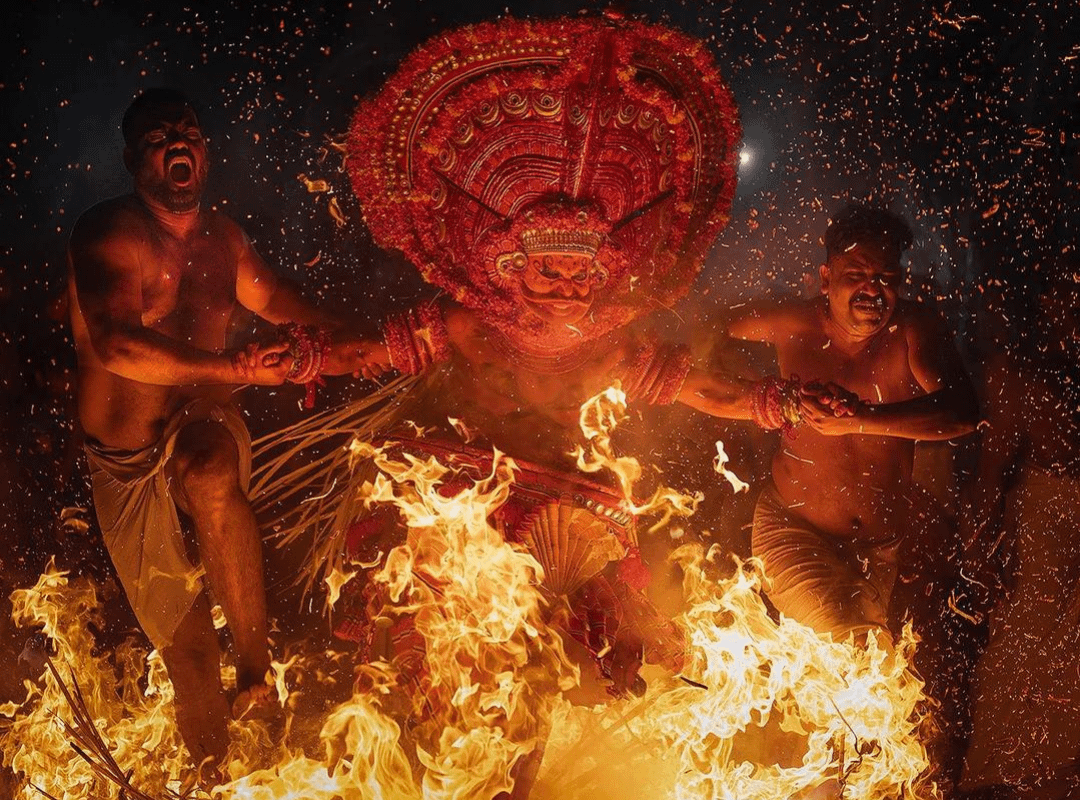
Theyyam is a Hindu ritual practised in the North Malabar region of Kerala in India
Meta Title: Theyyam Kerala: Discover the Divine Ritual Dance of North Malabar
Meta Description: Explore Theyyam, Kerala’s ancient Hindu ritual of North Malabar. Uncover its history, significance, vibrant performances, and how to witness this mystical cultural treasure.
Theyyam: North Malabar’s Divine Dance Ritual Where Mortals Become Gods
Deep in the lush landscapes of North Malabar, Kerala, an extraordinary spiritual tradition transforms humans into living deities. This is Theyyam (meaning “God” in the local Malayalam dialect), a 1,500-year-old ritual dance form that blurs the line between myth and reality. More than just a performance, Theyyam is a sacred act of worship, storytelling, and community healing unique to the villages of Kannur, Kasaragod, and surrounding regions.
What Is Theyyam? The Fusion of Ritual, Art, and Devotion
Theyyam is a vibrant amalgamation of dance, music, mythology, and tribal traditions. During the ritual, trained performers (often from indigenous communities like the Malayar, Vannan, or Velan) undergo elaborate transformations to embody Hindu deities, ancestral spirits, or folk heroes. Once the sacred makeup (known as abhinayam) is applied and the dancer enters a trance-like state, devotees believe they are in the presence of the divine.
Unlike classical Indian dance forms, Theyyam is deeply rooted in local folklore and shamanic practices, emphasizing direct communion between the divine and the human. Each performance acts as a bridge—the “god” blesses devotees, addresses grievances, and even predicts futures, reinforcing its role as a social equalizer in traditional Malabari society.
The Mythological Origins
Legend traces Theyyam’s origins to the mother goddess Kali. Stories tell of her fierce battle against the demon Darika, after which she danced in victory, laying the foundation for Theyyam. Over time, the ritual expanded to honor over 400 diverse deities, including local heroes (like Kathivanoor Veeran), serpent gods (Nagakanyaka), and Hindu deities like Vishnu (as Vishnumoorthy) and Shiva (as Bhairava).
Key Elements of a Theyyam Performance
1. Ritual Transformation: From Human to God
The performer’s metamorphosis takes 3–12 hours. Craftsmen painstakingly apply natural pigments to create intricate facial art, while coconut husks, peacock feathers, and palm leaves fashion towering headdresses (mudi) that may reach 15–20 feet. The vibrant reds, yellows, and blacks symbolize divine energy and ancestral power.
2. Sacred Spaces: Kavu Groves & Temples
Theyyam unfolds in village shrines called kavus—sacred groves teeming with biodiversity. These open-air temples become arenas where the divine interacts with devotees, often from dusk to dawn.
3. Rhythms & Instruments
Percussion drives the ceremony. The chenda (drum), elathalam (cymbals), and kurumkuzhal (wind instrument) create hypnotic beats that guide the dancer’s movements, from slow, meditative steps to frenzied whirls.
4. Narratives in Motion
Each Theyyam tells a story through choreography. For example:
- Gulikan Theyyam: Represents Yama, the god of death, judging souls.
- Raktha Chamundi Theyyam: A fierce form of Kali, symbolizing destruction of evil.
Cultural Significance: More Than a Ritual
- Social Equity: Historically, Theyyam challenged caste hierarchies. Lower-caste performers became revered as gods, briefly overturning social norms.
- Ecological Wisdom: Kavu groves are conserved as biodiversity hotspots, reflecting the ritual’s ties to nature worship.
- Healing & Justice: Communities seek divine intervention for illnesses, disputes, or droughts through Theyyam.
Where & When to Witness Theyyam
Season: October to May (peaking December–April), avoiding monsoon months.
Top Locations:
- Kannur: Parassini Kadavu Temple (famous for Raktha Chamundi),
- Kasaragod: Muchilot Kavu,
- Payyanur: Karivellur region.
Travel Tip: Check local schedules—performances (kaliyattam) often coincide with temple festivals. Arrive early to observe the mesmerizing makeup process!
Experiencing Theyyam: A Traveler’s Guide
- Respect the Ritual: Dress modestly, remove footwear, and avoid interrupting ceremonies.
- Photography: Ask permission before capturing close-ups of performers in trance.
- Local Guides: Hire Kannur-based experts for insights into myths and etiquette.
Conclusion: Kerala’s Living Divinity
Theyyam isn’t a spectator sport—it’s a visceral, spiritual encounter that captures Kerala’s syncretic soul. For travelers, researchers, and devotees, it offers a rare glimpse into a world where art and devotion fuse to celebrate the divine in the mortal. As North Malabar’s villages echo with drumbeats and chants, Theyyam remains a defiant celebration of tradition in a rapidly modernizing India.
Keywords for SEO:
Theyyam Kerala, Theyyam ritual, North Malabar Theyyam, Hindu dance ritual, Theyyam festival, Theyyam performance, cultural heritage of Kerala, sacred groves Kerala, Theyyam deities, Theyyam travel guide.
Immerse yourself in Kerala’s spiritual heritage—plan your journey to witness Theyyam, where gods walk the earth.