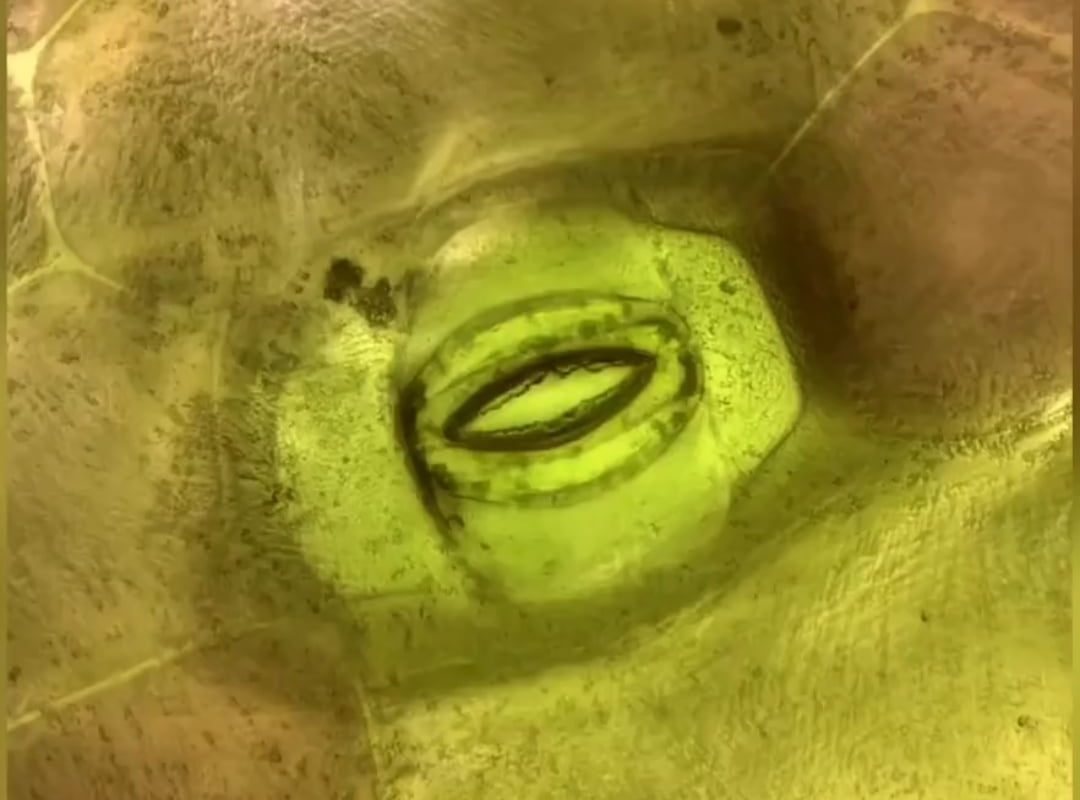
This is how plants breathe A close up of a leaf’s stoma under a microscope.
Title: How Do Plants Breathe? The Secret Life of Stomata Revealed
Meta Description: Discover the fascinating world of plant respiration! Learn how microscopic structures called stomata enable plants to “breathe” and sustain life on Earth.
Keywords: plant respiration, stomata function, how plants breathe, leaf stoma under microscope, gas exchange in plants
When we think of breathing, we imagine lungs inhaling oxygen and exhaling carbon dioxide. But what about plants? How do these silent, rooted organisms “breathe”? The answer lies in tiny, hidden portals on their leaves called stomata (singular: stoma). In this article, we’ll zoom in—literally—to explore how these microscopic structures allow plants to perform gas exchange, survive, and support life on our planet.
What is Plant Respiration?
Plants, like all living organisms, need oxygen to generate energy through respiration. However, unlike animals, they also absorb carbon dioxide (CO₂) to fuel photosynthesis, the process of converting sunlight into sugars and oxygen. This dual role makes gas exchange critical for plant survival.
But how do plants manage this without lungs or mouths? The secret lies in their leaves—specifically, in tiny pore-like structures invisible to the naked eye.
The Stomata: Nature’s Microscopic Gatekeepers
If you’ve ever seen a close-up image of a leaf under a microscope, you’ll notice countless tiny openings resembling miniature mouths or valves. These are stomata, and they serve as the primary gateways for gas exchange in plants.
What does a stoma look like?
Each stoma consists of two kidney-shaped guard cells surrounding a central pore. When open, the pore allows gases like CO₂, oxygen (O₂), and water vapor (H₂O) to flow in and out. When closed, it seals the leaf’s surface to conserve water.
Under a microscope, stomata resemble tiny pairs of lips guarding an opening. They’re most densely packed on the underside of leaves, hidden from direct sunlight to minimize water loss.
How Do Stomata Work?
The opening and closing of stomata is a finely tuned dance influenced by light, humidity, temperature, and the plant’s internal signals:
-
Opening the Pores:
- At sunrise, light triggers guard cells to absorb potassium ions and water.
- The influx of water swells the guard cells, bending them outward and creating an opening for CO₂ to enter.
-
Closing the Pores:
- At night, in darkness or drought, guard cells lose water and become flaccid.
- The pore closes, reducing water loss through transpiration (evaporation from leaves).
This process allows plants to balance two competing needs: absorbing CO₂ for photosynthesis while conserving water.
Photosynthesis vs. Respiration: A 24/7 Cycle
It’s a common misconception that plants only “breathe in” CO₂ during the day. In reality:
- Daytime:
Stomata open to absorb CO₂ for photosynthesis, releasing O₂ as a byproduct. - Nighttime:
Photosynthesis stops, but respiration continues. Plants take in O₂ (like animals) and release CO₂.
This cycle highlights why forests are vital carbon sinks—and why indoor plants can improve air quality day and night.
Observing Stomata Under a Microscope
To see stomata in action, you can replicate a simple experiment:
- Peel the thin layer from the underside of a leaf (e.g., a peace lily or spinach).
- Stain it with iodine or food coloring to highlight cell structures.
- Place it under a microscope at 100–400x magnification.
You’ll witness a bustling world of stomata—some open, some closed—like microscopic lungs working tirelessly.
Why Stomata Matter to Us
- Climate Regulation:
Stomatal activity impacts global CO₂ levels and water cycles. - Agriculture:
Understanding stomata helps scientists breed drought-resistant crops. - Climate Change:
Rising CO₂ levels can alter stomatal density, affecting plant growth and water use.
Final Thoughts
Stomata may be microscopic, but their role is monumental. They’re not just how plants breathe—they’re a lifeline for ecosystems, agriculture, and our planet’s future. Next time you admire a leaf, remember: hidden beneath its surface are thousands of tiny, hardworking gates sustaining life as we know it.
Call to Action:
Fascinated by plant biology? Share this article and dive deeper into how plants shape our world! 🌿✨
Tags:
plant science, botany, microscopic structures, photosynthesis, transpiration, cellular biology