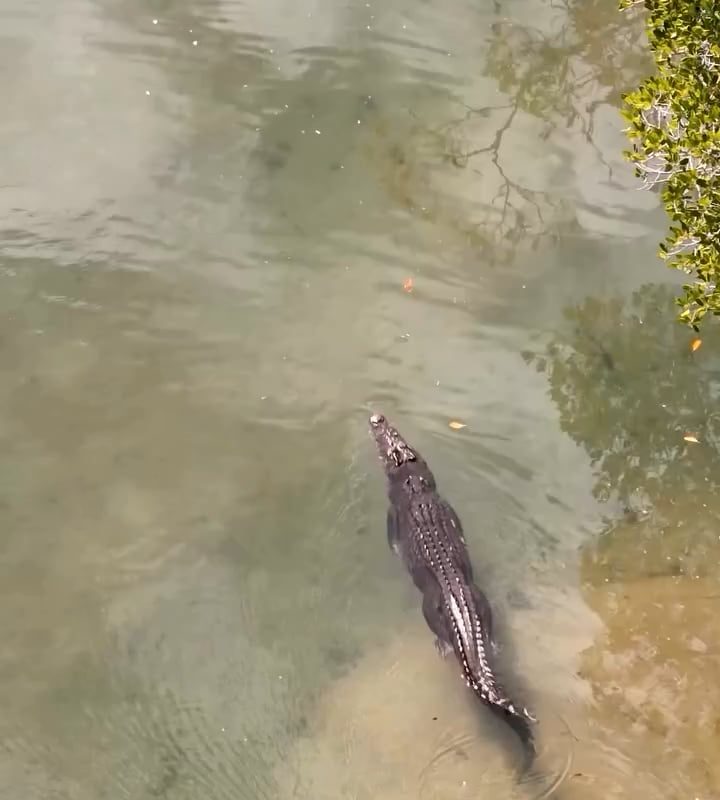
This is how stealthy a crocodile can move under water
Title: Silent Predators: How Crocodiles Master the Art of Underwater Stealth
Meta Description: Discover the astonishing stealth of crocodiles underwater. Learn how their anatomy, movement, and hunting tactics make them apex ambush predators in aquatic ecosystems.
Silent Predators: How Crocodiles Master the Art of Underwater Stealth
Crocodiles are ancient hunters that have perfected the art of stealth over millions of years. While their intimidating size and powerful jaws command fear, it’s their ghostly ability to move unseen underwater that truly cements their status as apex predators. In this article, we unravel the secrets behind the crocodile’s underwater invisibility—and why their hunting success rate leaves even sharks in awe.
The Crocodile’s Stealth Toolkit: Anatomy for Aquatic Invisibility
To understand how crocodiles vanish underwater, look no further than their evolutionary adaptations:
1. Streamlined, Low-Profile Body
Crocodiles boast a hydrodynamic shape, with a muscular tail and flattened body that minimizes water resistance. Their eyes, ears, and nostrils sit atop their skulls, allowing them to submerge almost completely while still sensing prey.
2. Silent Swimming Technique
Unlike splashing mammals, crocodiles propel themselves using side-to-tail undulations without breaking the surface. Their legs tuck flush against their bodies to eliminate drag, enabling near-silent gliding.
3. Buoyancy Control Mastery
Crocodiles regulate air in their lungs and adjust internal weights (like ingested stones) to sink or hover effortlessly. This lets them drift like logs or sink without bubbles—key for ambushing prey.
4. Specialized Sensory Systems
- Nictitating Membranes: Transparent eyelids protect their eyes while maintaining visibility.
- Palatal Valves: Seal the throat to avoid water intake during submerged strikes.
- Pressure Receptors: Tiny sensory pits on their skin detect vibrations in water, pinpointing prey even in total darkness.
The Hunt: A Stealthy Sequence of Terror
Crocodile underwater hunts follow a chillingly efficient script:
- Patience: They remain motionless for hours, camouflaged as debris or riverbanks.
- Stalking: Using slow, controlled tail movements, they inch toward prey without a ripple.
- The Explosion: In milliseconds, they burst upward at 20+ mph, propelled by their tails. Most prey never see the strike coming.
This ambush strategy boasts a 90% success rate—higher than lions, sharks, or tigers.
Why Can’t Prey Detect Them?
Crocodiles exploit two critical weaknesses in their targets:
– Limited Vision Underwater
Land animals (e.g., zebras drinking at rivers) struggle to see through water’s refractive surface. Crocodiles attack from below, where they’re least visible.
– Distracted Prey
Focusing on drinking or escaping land predators, victims rarely scan for submerged threats.
Comparing Stealth: Crocodiles vs. Other Aquatic Predators
| Predator | Stealth Strengths | Limitations |
|---|---|---|
| Crocodile | Ambush from below; zero splashing | Limited to shallow, murky waters |
| Shark | Speed and electroreception | Size/vibration alerts prey in open water |
| Orca | Intelligent cooperative hunting | Large size creates noise and visibility |
Crocodiles reign supreme in close-range stealth—no competitor matches their ambush precision.
Human Encounters: When Stealth Becomes Danger
Crocodiles are responsible for ~1,000 fatal attacks on humans annually, largely due to their invisibility. Key survival tips:
- Avoid murky rivershores at dusk/dawn (peak feeding times).
- Never stand near water edges—crocodiles can lunge up to 1/2 their body length (e.g., 10 ft for a 20 ft Nile croc).
Conclusion: Evolution’s Perfect Ambush Artist
Crocodile underwater stealth is a marvel of natural engineering. From their sensory adaptations to their noiseless propulsion, every trait serves their role as the ultimate surprise predator. Next time you’re near crocodile territory, remember: what you don’t see is what you should fear most.
FAQ
Q: How long can crocodiles stay submerged?
A: Up to 1–2 hours by slowing their heart rate to 2–3 beats per minute.
Q: Do crocodiles swim fast underwater?
A: Yes! Short bursts reach 12–20 mph—akin to a human sprinter.
Q: Can crocodiles communicate stealthily underwater?
A: Yes, via infrasonic vibrations and jaw claps that travel through water undetected by most prey.
Target Keywords:
- Stealthy crocodile underwater
- How crocodiles hunt unseen
- Crocodile ambush tactics
- Hydrodynamic crocodile adaptations
- Why crocodiles are stealth predators
Optimize your wildlife content with this deep dive into nature’s most efficient stalkers! 🐊💧