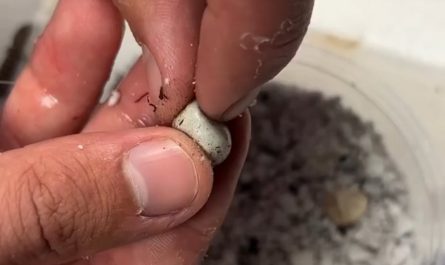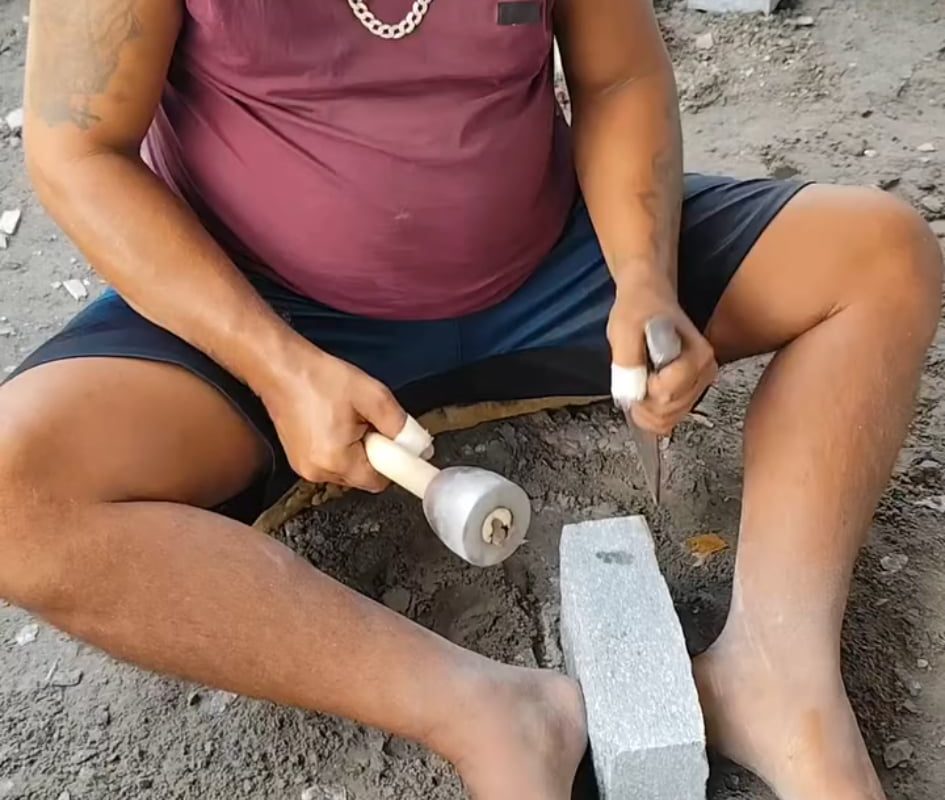
This is how this Brazilian man cuts natural stones into thin pieces. These stones are commonly used for sidewalks in Brazil.
Title: The Art and Precision Behind Brazil’s Iconic Natural Stone Sidewalks: A Master Craftsman’s Technique
Introduction:
Walking down the vibrant streets of Brazil, especially in cities like Rio de Janeiro or São Paulo, you can’t miss the striking beauty of the sidewalks. Adorned with intricate patterns and durable surfaces, these walkways are crafted from natural stones meticulously cut into thin, uniform pieces—a testament to skilled Brazilian craftsmanship. In this article, we explore the fascinating process of how Brazilian artisans transform rugged natural stones into the elegant paving slabs that define the nation’s urban landscapes.
The Tradition of Natural Stone Sidewalks in Brazil
Brazil’s sidewalks aren’t just functional—they’re cultural landmarks. Known as “calçadas portuguesas” (Portuguese-style pavements), these walkways blend artistry with engineering, inspired by designs brought to Brazil during the colonial era. Locally sourced stones like basalt, granite, and limestone are favored for their durability, non-slip surfaces, and aesthetic versatility, making them ideal for Brazil’s tropical climate.
How Natural Stones Are Cut into Thin Pieces: Step-by-Step
While modern machinery has streamlined the process, traditional techniques still play a vital role in shaping Brazil’s sidewalks. Here’s a breakdown of the process:
1. Stone Selection and Quarrying
The journey begins in quarries, where massive blocks of natural stone are extracted. Artisans prioritize stones with uniform color, texture, and minimal fractures. Basalt and granite are top choices for their hardness and weather resistance.
2. Cutting with Diamond-Tipped Saws
To slice the stone into thin, precise slabs (typically 3–5 cm thick), craftsmen use industrial saws equipped with diamond-tipped blades. These blades, cooled by water jets, slice through the stone with minimal waste.
- Why Diamond Blades? Diamond’s hardness ensures clean cuts without chipping, preserving the stone’s integrity.
- Precision Matters: Uniform thickness is critical for seamless installation and longevity.
3. Shaping and Surface Finishing
After cutting, slabs may be trimmed into smaller tiles or shaped into geometric forms (squares, rectangles, or custom designs). The surface is then polished or treated for texture:
- Honed Finish: Smooth but non-glossy, ideal for foot traffic.
- Flamed Finish: Heat-treated for a slightly rough, anti-slip surface.
4. Artisanal Assembly by Hand
In historic districts, skilled pavers lay stones by hand, following intricate patterns like waves (Copacabana’s iconic black-and-white wave design), mosaics, or geometric motifs. This labor-intensive process ensures each sidewalk is a unique work of art.
Why Natural Stone Dominates Brazilian Sidewalks
Brazilian cities rely on natural stone for sidewalks due to its unmatched benefits:
- Durability: Resists heavy foot traffic, rain, and heat for decades.
- Safety: Textured surfaces reduce slip hazards during rainstorms.
- Aesthetic Flexibility: Stones can be cut into countless shapes and arranged into culturally rich designs.
- Eco-Friendliness: Natural stone requires less energy to produce than concrete, with minimal environmental impact.
Challenges in the Craft
Despite its advantages, natural stone paving isn’t without hurdles:
- Cost: Quarrying and hand-cutting are more expensive than mass-produced concrete.
- Labor Intensity: Artisans require years of training to master cutting and installation techniques.
- Maintenance: While durable, stones may require occasional repositioning or replacement.
A Cultural Legacy Preserved
Brazil’s stone-cut sidewalks are more than infrastructure—they’re symbols of national pride. In cities like Salvador, Curitiba, and Recife, preservation efforts ensure these historic walkways endure. Organizations like Instituto do Patrimônio Histórico e Artístico Nacional (IPHAN) classify certain sidewalks as cultural heritage sites, protecting them for future generations.
Conclusion: Where Art Meets Function
The next time you stroll across a Brazilian sidewalk, take a moment to appreciate the craftsmanship beneath your feet. From the quarry to the city streets, the process of cutting natural stones into thin, resilient pieces embodies a blend of tradition, skill, and innovation. These sidewalks aren’t just pathways—they’re open-air galleries showcasing Brazil’s mastery of natural materials.
Call to Action:
Inspired by Brazil’s stone craftsmanship? Share your favorite sidewalk photos or learn more about sustainable urban design! Subscribe to our newsletter for more stories on global architectural wonders.
SEO Keywords:
Brazilian natural stone sidewalks, how to cut natural stones for paving, Portuguese-style pavements, Brazilian stone cutting techniques, sustainable sidewalk materials, basalt and granite pavers, handmade stone sidewalks, Rio de Janeiro sidewalks, diamond-tipped stone sawing.
This engaging, informative piece is optimized for search engines while celebrating the human skill behind Brazil’s iconic sidewalks. 🌟