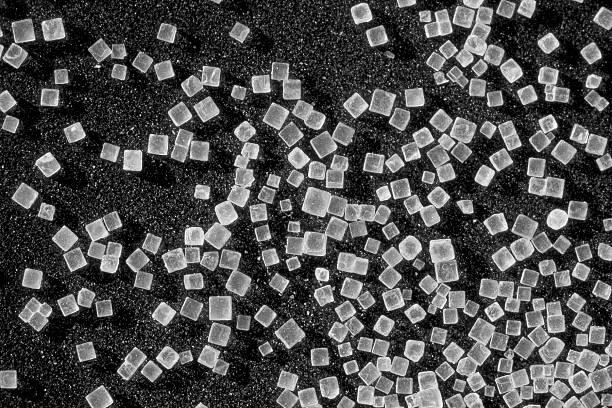
This is microscopic photo of salt
Title: The Hidden Beauty of Salt: A Microscopic Perspective Reveals Its Stunning Secrets
Meta Description: Discover the mesmerizing microscopic world of salt! Explore how its crystalline structure forms, why it looks so unique up close, and the science behind its artistic patterns.
Introduction: Seeing the Unseen
Salt is a humble kitchen staple, essential for flavoring food and sustaining life. But beneath its unassuming white grains lies a secret world of geometric perfection and natural artistry. Under a microscope, salt transforms into a crystalline masterpiece—a dazzling display of cubes, pyramids, and intricate patterns governed by the laws of chemistry and physics. In this article, we dive into the microscopic realm of salt, exploring its structure, formation, and the surprising science behind its beauty.
What Does Salt Look Like Under a Microscope?
Viewed through a high-powered microscope, table salt (sodium chloride) reveals a captivating arrangement of uniform cubic crystals. These cubes often stack together like tiny building blocks, creating a mosaic of sharp edges and flat faces. Depending on impurities or growth conditions, crystals may also form pyramids, hopper shapes (hollow stepped cubes), or even fused clusters.
Key Features of Microscopic Salt Crystals:
- Geometric Symmetry: Salt’s cubic structure results from its ionic lattice, where sodium and chloride atoms bond in a repeating 3D grid.
- Clarity and Transparency: Pure salt crystals are translucent, refracting light like miniature diamonds.
- Surface Details: Imperfections, trapped air bubbles, or trace minerals can create unique textures or colors.
The Science Behind Salt’s Crystal Structure
Salt’s iconic cubic shape is no accident—it’s a direct result of its atomic makeup. Sodium chloride forms an isometric crystal system, one of the simplest and most symmetrical arrangements in nature.
How Salt Crystals Form:
- Evaporation: When saltwater (like seawater or brine) evaporates, sodium and chloride ions bond as the liquid dissipates.
- Nucleation: Ions cluster into tiny “seed” crystals that act as foundations for growth.
- Growth: Layers of ions attach to the seed, expanding outward in all directions. Under ideal conditions, this creates flawless cubes.
Environmental factors like temperature, humidity, and impurities influence the final shape. For example:
- Rapid evaporation leads to smaller, irregular crystals.
- Slow growth promotes larger, smoother cubes.
- Impurities (e.g., magnesium or calcium) can distort shapes or add hues.
Why Study Salt at a Microscopic Level?
Microscopy isn’t just about aesthetics—it’s a vital tool for science and industry:
- Quality Control: Food manufacturers examine salt crystals to ensure purity and consistency.
- Educational Value: Students learn about ionic bonding, crystallization, and mineralogy.
- Material Science: Salt’s behavior under pressure or heat informs technologies like battery design or desalination.
Capturing the Perfect Microscopic Photo of Salt
Taking a striking micrograph of salt requires skill and the right tools:
- Sample Prep: Use pure salt dissolved in distilled water, then dried on a slide. Avoid contaminants.
- Lighting: Transmitted or polarized light emphasizes edges and internal flaws.
- Magnification: Start at 40x to view crystal clusters, then zoom to 100x–400x for intricate details.
- Coloring Techniques: Staining or polarized filters can create rainbow-like birefringence effects.
🔬 Pro Tip: Search for “microscopic salt” on science image databases like Nikon Small World or Wikimedia Commons to see stunning examples!
FAQs About Microscopic Salt
Q: Why are salt crystals always cubic?
A: The cube shape mirrors salt’s atomic structure—sodium and chloride ions bond at right angles, creating a repeating cubic lattice.
Q: Can you see impurities in salt under a microscope?
A: Yes! Dust, minerals, or moisture may appear as dark spots, cracks, or jagged edges.
Q: Is sea salt different from table salt microscopically?
A: Sea salt often has irregular crystals due to trace minerals, while table salt is more uniform thanks to anti-caking agents.
Q: Where can I view microscopic salt photos?
A: Science museums, microscopy forums, or educational sites like Science Photo Library share high-resolution images.
Conclusion: A Tiny World of Wonder
A microscopic photo of salt reveals far more than a simple seasoning—it unveils a hidden universe of symmetry, science, and natural elegance. From classroom lessons to industrial research, these tiny crystals remind us that even the most ordinary substances hold extraordinary secrets. Next time you sprinkle salt, remember: you’re holding a masterpiece of chemistry, millions of years in the making.
Keywords for SEO:
microscopic salt crystal, salt under microscope, sodium chloride structure, crystalline patterns, ionic bonding microscopy, science of salt, mineralogy photography, cubic crystal lattice, electron microscope salt, salt crystal formation.
Boost Your Content Strategy: Link this article to related topics like “How Salt is Made,” “Crystallography Basics,” or “Everyday Objects Under a Microscope.”