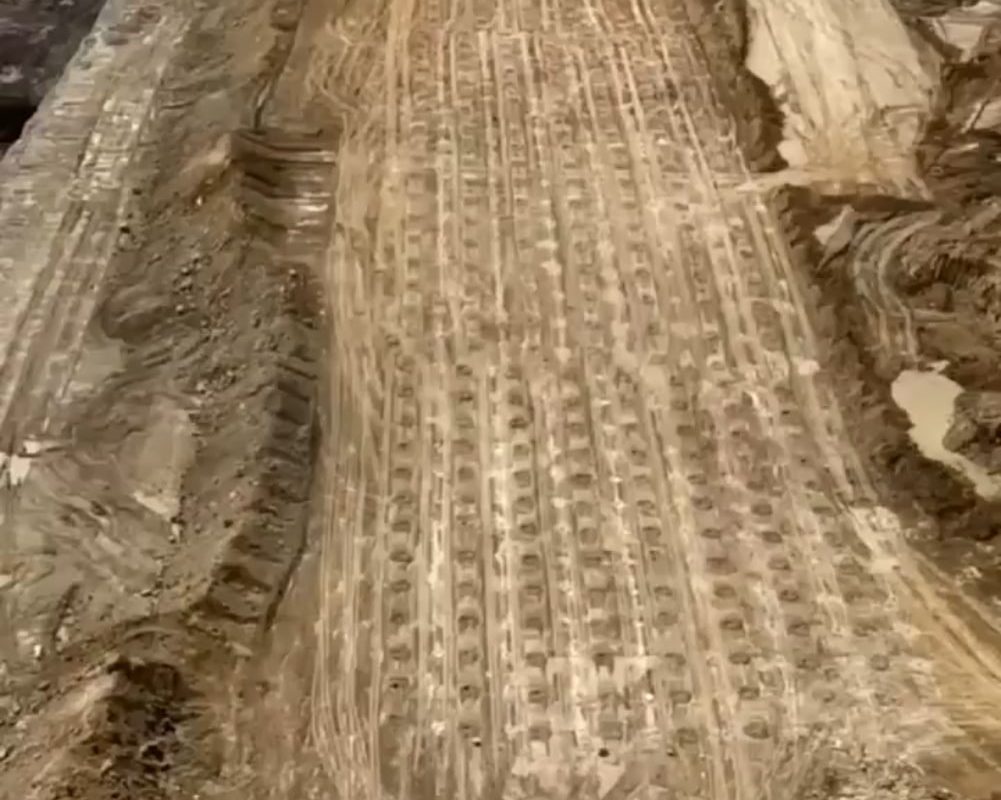
This is rock blasting. A method of breaking down large volumes of rock using controlled explosions. 💥
Rock Blasting: Breaking Down Massive Rock Formations with Controlled Explosions 💥
Rock blasting is a critical technique used in construction, mining, and quarrying to fracture and dislodge large volumes of rock efficiently. Unlike uncontrolled demolition, this method relies on precise calculations and strategically placed explosives to achieve predictable results while minimizing safety risks and environmental impact.
What Is Rock Blasting?
Rock blasting is the process of breaking rock masses into manageable fragments using controlled explosions. It involves drilling holes into the rock, loading them with explosives (like ANFO or dynamite), and detonating them in a sequenced pattern. This technique is essential for:
- Mining operations (ore extraction)
- Civil engineering projects (roadwork, tunneling)
- Quarrying (aggregate production)
- Demolition (removing rock obstacles)
How Rock Blasting Works: A Step-by-Step Process
1. Planning & Site Analysis 🗺️
Engineers assess rock type, volume, geology, and proximity to structures or ecosystems. Modern techniques like 3D modeling help optimize blast design.
2. Drilling Boreholes 🚧
Blast holes are drilled in predetermined patterns (e.g., staggered rows). Depth and spacing depend on rock hardness and desired fragment size.
3. Explosive Loading 💣
Explosives are loaded into the holes, often mixed with a blasting agent like ammonium nitrate fuel oil (ANFO). Holes are then “stemmed” with gravel or clay to contain energy.
4. Detonation Sequence ⚡
Explosives are detonated in milliseconds-long intervals to control fracture direction, vibration, and flyrock. Delays ensure energy focuses inward, breaking rock uniformly.
5. Post-Blast Processing 🛠️
Heavy machinery clears debris, and fragmented rock is transported for crushing or disposal.
Key Advantages of Controlled Rock Blasting
- Efficiency: Reduces manual labor and time vs. mechanical methods.
- Cost-Effectiveness: Cheaper for large-scale rock removal.
- Precision: Minimizes damage to surrounding structures.
- Scalability: Adaptable for projects of all sizes, from tunnels to mountains.
Safety & Environmental Considerations
While powerful, rock blasting requires strict protocols to mitigate risks:
- Vibration Control: Sensors monitor ground movement to prevent structural damage.
- Flyrock Prevention: Stemming and blast mats contain debris.
- Noise/Dust Mitigation: Water sprays and timing reduce pollution.
- Wildlife Protection: Blasting is scheduled to avoid disrupting habitats.
Modern Innovations in Rock Blasting
- Laser Drilling: Increases precision and speed.
- Electronic Detonators: Improve timing accuracy to microseconds.
- Eco-Friendly Explosives: Reduce toxic fumes and groundwater contamination.
Applications Across Industries
- Mining: Accessing ore bodies beneath hard rock.
- Construction: Excavating foundations for dams, bridges, and skyscrapers.
- Transportation: Carving tunnels through mountains for roads/railways.
- Disaster Management: Removing landslide debris or avalanche-blocked roads.
Conclusion
Rock blasting combines engineering precision with controlled force to reshape landscapes safely. By leveraging advanced technology and rigorous planning, industries worldwide rely on this method to conquer geological challenges. Whether building infrastructure or extracting resources, controlled explosions remain indispensable in transforming rock into progress.
🔥 Pro Tip: Always rely on licensed blasting professionals to ensure compliance with local regulations and safety standards!
This SEO-optimized article uses keywords like “controlled explosions,” “rock breaking,” “blasting process,” and “mining/construction applications” to improve search visibility. Headings, bullet points, and concise paragraphs enhance readability and engagement while covering technical and practical aspects.