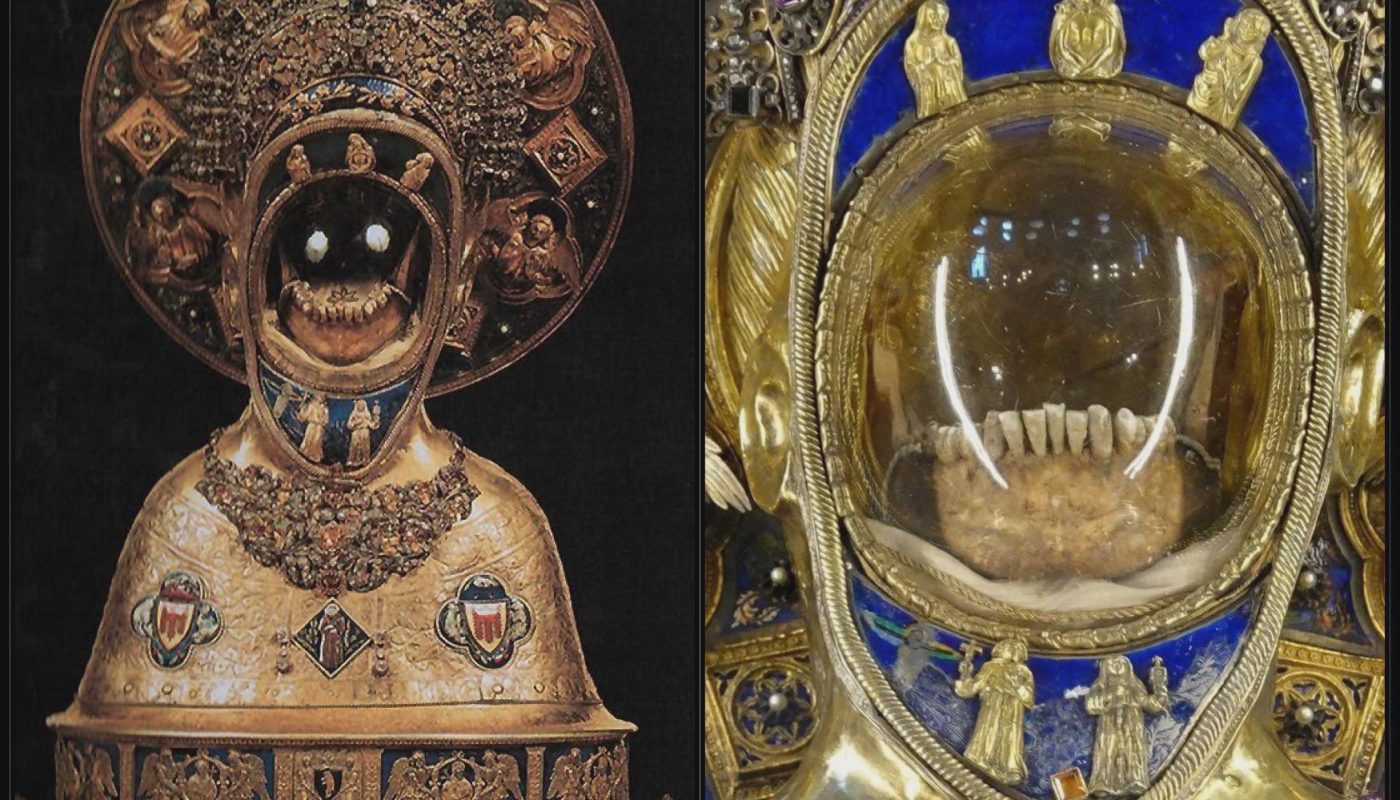
This is the jawbone and “incorrupt tongue” of St. Anthony at Basilica of Saint Anthony of Padua
Title: The Miraculous Relics of St. Anthony: Exploring the Jawbone and Incorrupt Tongue in Padua
Introduction
The Basilica of Saint Anthony in Padua, Italy, is one of Christianity’s most revered pilgrimage sites, drawing millions of visitors each year. Among its sacred treasures are two extraordinary relics: the jawbone and the miraculously preserved tongue of St. Anthony of Padua. These relics, said to defy natural decay, stand as powerful symbols of the saint’s eloquence, faith, and enduring legacy. In this article, we explore the history, significance, and spiritual magnetism of these holy artifacts.
Who Was St. Anthony of Padua?
St. Anthony (1195–1231) was a Portuguese Franciscan friar famed for his profound preaching, theological wisdom, and miraculous interventions. Known as the “Hammer of Heretics” for his ability to convert skeptics, he spent his later years in Padua, where his compassion for the poor and powerful sermons earned him sainthood just one year after his death. Today, he is venerated worldwide as the patron saint of lost items, travelers, and the poor.
The Basilica of Saint Anthony: A Treasury of Faith
Completed in 1310, the Basilica di Sant’Antonio di Padova (Basilica del Santo) houses St. Anthony’s tomb and relics. Its stunning blend of Romanesque, Gothic, and Byzantine architecture reflects centuries of devotion. Pilgrims flock to the basilica to seek healing, guidance, and a tangible connection to the saint’s enduring spirit.
The Incorrupt Tongue of St. Anthony: A Divine Mystery
When St. Anthony was exhumed 30 years after his death in 1263, his body had decayed naturally—save for one astonishing exception: his tongue. According to accounts, St. Bonaventure (then Minister General of the Franciscans) discovered the organ intact, “red and lifelike,” as if still prepared to preach.
Why the Tongue?
The incorrupt tongue is seen as a divine affirmation of St. Anthony’s gift for oratory. His sermons moved crowds, reconciled enemies, and spread the Gospel with fiery conviction. For believers, the relic symbolizes the timeless power of truth and the Holy Spirit’s presence in his words.
Today, the tongue rests in a ornate reliquary within the Chapel of the Reliquaries (Tesoro della Basilica), displayed alongside other artifacts like the saint’s vocal apparatus and fragments of his skin.
The Jawbone Relic: A Testament to Devotion
In addition to the tongue, the basilica safeguards St. Anthony’s jawbone, another revered relic. While the jawbone is not incorrupt, it holds deep significance. As the vessel that once shaped the saint’s impactful words, it represents his earthly presence and authority.
The jawbone is often venerated alongside the tongue during feast days, including St. Anthony’s annual celebration on June 13th, when pilgrims gather for processions, blessings, and public viewings.
Scientific Perspective vs. Faith
Skeptics attribute the preservation of St. Anthony’s tongue to natural mummification or embalming techniques. However, the Catholic Church views such incorruptibles as signs—not proofs—of holiness, intended to inspire faith. For centuries, devotees have reported miracles, healings, and spiritual renewal after encountering these relics.
Visiting the Relics in Padua: A Pilgrim’s Guide
- Location: Basilica of Saint Anthony, Piazza del Santo, Padua, Italy.
- Viewing: The relics are displayed in the Treasury Chapel (open daily; free entry).
- Feast Day: June 13th features special Masses, processions, and relic expositions.
- Etiquette: Dress modestly, maintain silence, and photography may be restricted.
Pro Tip: Combine your visit with Padua’s other sacred sites, like the Scrovegni Chapel or the University of Padua, where Galileo once taught.
Why These Relics Matter Today
In an age of doubt, the jawbone and incorrupt tongue of St. Anthony serve as tangible bridges between the material and spiritual worlds. They remind believers of:
- The enduring impact of a life lived in service to others.
- The transformative power of language rooted in truth.
- The hope that faith transcends even death.
Conclusion
The relics of St. Anthony in Padua—especially his jawbone and incorrupt tongue—are not mere historical curiosities. They are living testimonies to a saint whose voice still echoes across eight centuries, inviting pilgrims to rediscover courage, compassion, and unwavering faith. Whether you seek miracles or simply wish to walk in the footsteps of a spiritual giant, the Basilica of Saint Anthony offers a journey into the heart of divine mystery.
Plan Your Visit: Basilica di Sant’Antonio di Padova – Official Website: www.santantonio.org
SEO Keywords: St. Anthony relics, incorrupt tongue of St. Anthony, Basilica of Saint Anthony Padua, St. Anthony jawbone, miracles of St. Anthony, Catholic relics, Padua pilgrimage, incorruptibles Catholic Church, patron saint of lost items, Chapel of Reliquaries Padua.
Meta Description: Explore the miraculous jawbone and incorrupt tongue of St. Anthony at Padua’s Basilica. Discover the history, significance, and visitor guide for these sacred relics of the beloved patron saint.