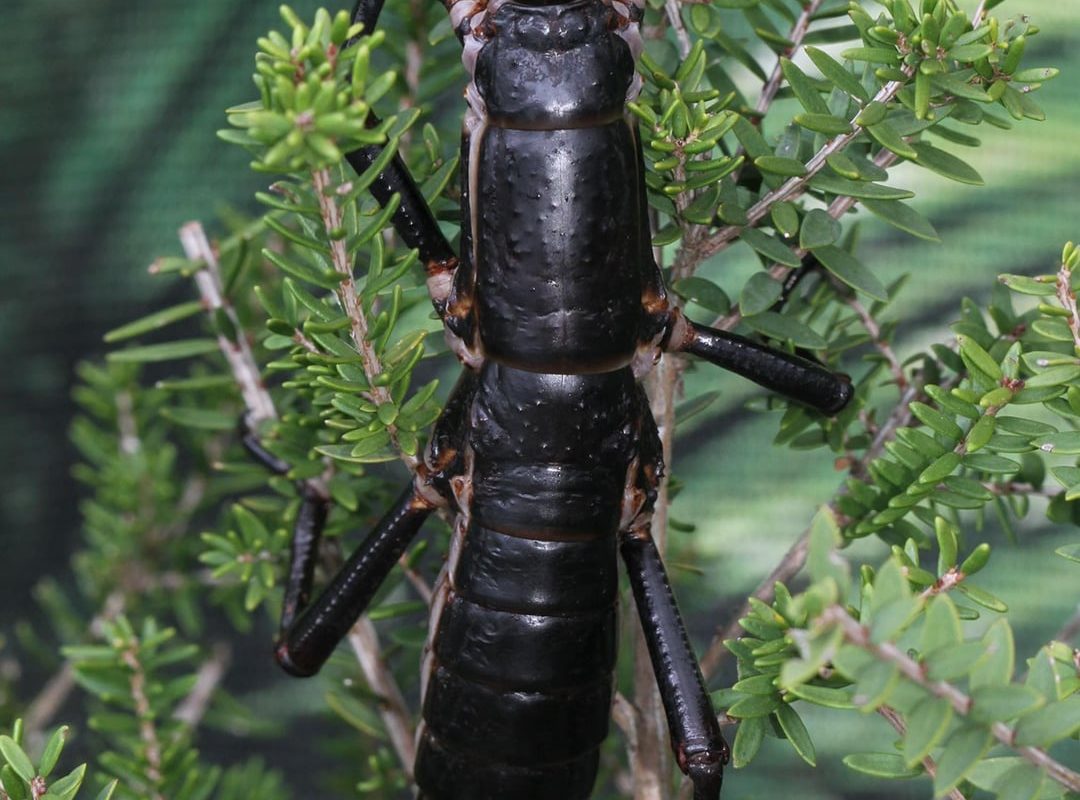
This is the Tree Lobster(Aka Lord Howe Island Stick Insect) which is the rarest insect of the entire world.
Title: The Tree Lobster: Lord Howe Island Stick Insect – The World’s Rarest Insect
Meta Description: Discover the Lord Howe Island Stick Insect, aka the “Tree Lobster” – the world’s rarest insect. Learn about its rediscovery, conservation, and why saving this species matters.
The Tree Lobster: Back from the Brink of Extinction
Imagine an insect so rare it was thought extinct for nearly a century—only to be found clinging to life on a remote sea spire in the Pacific. This is the incredible story of the Lord Howe Island Stick Insect (Dryococelus australis), affectionately nicknamed the “Tree Lobster” for its hefty size and lobster-like appearance.
Here’s why this critically endangered creature, often called the rarest insect on Earth, has captured the attention of scientists and conservationists worldwide.
What Is the Lord Howe Island Stick Insect?
The Tree Lobster is a flightless, nocturnal stick insect native to Australia’s Lord Howe Island. Here’s what makes it unique:
- Size: Up to 15 cm (6 inches) long – one of the bulkiest stick insects globally.
- Appearance: Shiny black-brown exoskeleton, thick legs, and antennae resembling lobster claws.
- Behavior: Nocturnal and social; adults cluster together under shrubs at night.
- Diet: Feeds exclusively on the leaves of native shrubs, like the Melaleuca tree.
Unlike most insects, females lay eggs in soil crevices, and nymphs take 6–24 months to hatch—a slow reproductive cycle adding to their vulnerability.
The “Extinct” Insect’s Astonishing Rediscovery
The Tragedy on Lord Howe Island
In 1918, a shipwreck introduced invasive black rats to Lord Howe Island, a UNESCO World Heritage site. Within two years, the rats’ insatiable appetite wiped out the Tree Lobster population, declaring it extinct by 1920.
The Miracle on Balls Pyramid
In 2001, Australian scientists scaled Balls Pyramid, a jagged volcanic sea stack 23 km (14 miles) southeast of Lord Howe Island. There, they found 24 surviving Tree Lobsters living under a single bush 500 feet above the ocean. This astonishing discovery sparked a global conservation mission.
Saving the Species: The Fight for Survival
Today, captive breeding programs are the Tree Lobster’s lifeline. Zoos like Melbourne Zoo and San Diego Zoo lead efforts to rebuild the population:
- Breeding Success: From 24 individuals, over 1,000 adults now thrive in captivity.
- Rehabilitation: Plans to reintroduce the species to Lord Howe Island hinge on eradicating invasive rats (completed in 2021).
- Genetic Diversity: Low variation in captive populations remains a challenge due to their small founder group.
[Image Suggestion: Close-up of Lord Howe Stick Insects in captivity]
Why Preserve the World’s Rarest Insect?
- Biodiversity Symbol: The Tree Lobster represents fragile island ecosystems. Its extinction would disrupt native plant growth, as these insects help cycle nutrients.
- Scientific Wonder: They exhibit rare behaviors, such as “huddling” for warmth and males forming protective bonds with mates.
- Hope for Conservation: Their resurrection proves even “lost” species can return with human intervention.
Future Challenges
While the rat eradication on Lord Howe Island is a milestone, hurdles remain:
- Disease Risk: Captive populations could succumb to fungal outbreaks.
- Habitat Readjustment: Reintroduction requires enough native plants to sustain new colonies.
FAQs About the Tree Lobster
Q: Why is it called a “Tree Lobster”?
A: Its thick, spiny legs and dark exoskeleton resemble a miniature lobster.
Q: Can these stick insects fly?
A: No – they lost their wings over time, making them vulnerable to predators.
Q: Are they dangerous to humans?
A: No! They’re gentle herbivores.
Q: Where can I see Lord Howe Stick Insects?
A: Visit Melbourne Zoo, Bristol Zoo, or San Diego Zoo to see captive populations.
Conclusion: A Beacon of Hope
The Tree Lobster’s journey from extinction’s edge to cautious recovery is one of ecology’s most inspiring tales. As scientists work to return them to their ancestral home, this rare insect reminds us that conservation can rewrite fate.
How You Can Help: Support organizations like the Lord Howe Island Board or zoos involved in captive breeding. Share their story—the rarest insect on Earth deserves a future.
Target Keywords: Tree Lobster, Lord Howe Island Stick Insect, rarest insect in the world, endangered insects, Lord Howe Island conservation, Dryococelus australis.
Internal Links (if applicable):
- [Lord Howe Island Wildlife Restoration Project]
- [San Diego Zoo’s Conservation Work]