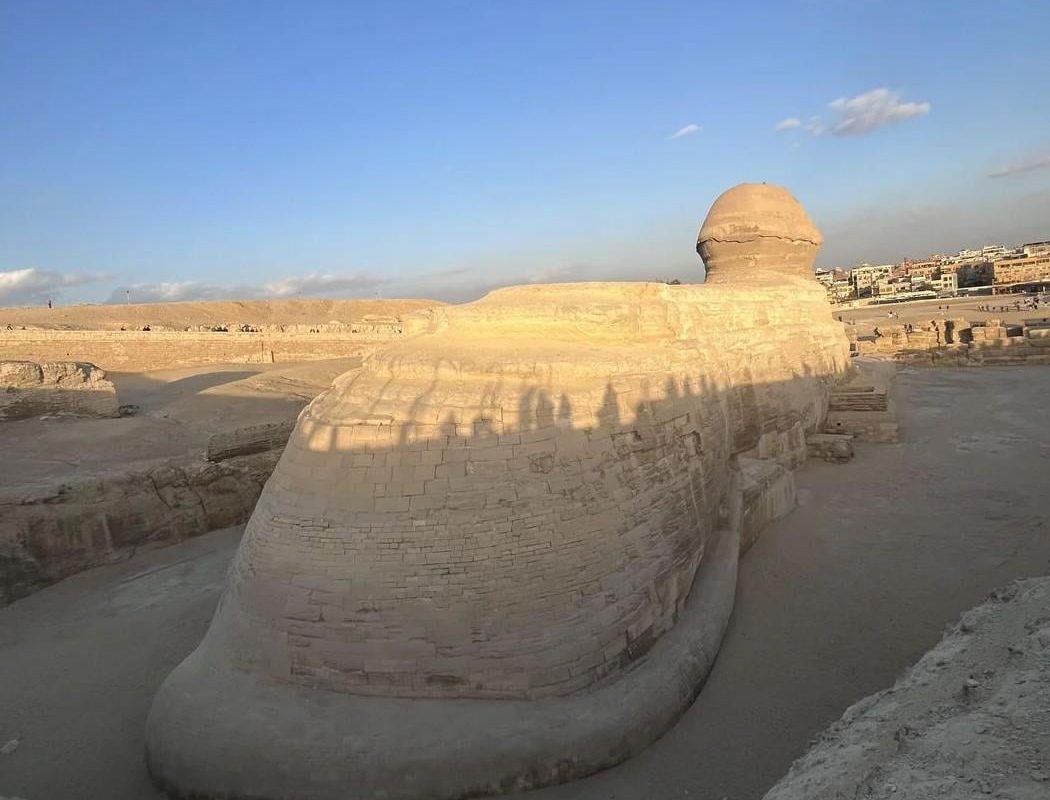
This is what the back of the Great Sphinx looks like.
Beyond the Gaze: Unveiling the Hidden Perspective – This is What the Back of the Great Sphinx Looks Like
The Great Sphinx of Giza, a colossal limestone statue with the body of a lion and the head of a pharaoh, stands as one of humanity’s most iconic monuments. Countless images capture its enigmatic face, weathered by millennia, gazing eternally eastward. But what lies behind that ancient stare? The back of the Great Sphinx offers a lesser-seen yet fascinating perspective, revealing secrets of its construction, erosion, and enduring mysteries.
The Rear View: A Different Kind of Majesty
While the front of the Sphinx draws crowds with its imposing presence and partially restored paws, the rear view tells a story of time’s relentless passage. Here’s what you’ll discover:
-
A Tail Unlike Any Lion’s:
The Sphinx’s rear features a distinct unfinished lion’s tail curled around its right hindquarter. Unlike the smooth curves often depicted in classical lion statues, the Sphinx’s tail appears blocky and incomplete. This section, carved directly from the bedrock, shows how builders prioritized the front and sides. Erosion has softened its form further, making it blend into the body. -
Erosion in Stark Relief:
The back of the Sphinx exhibits severe wind and water erosion, particularly along its spine and hindquarters. Deep vertical fissures and horizontal undulations scar the limestone, evidence of centuries exposed to the elements. Unlike the front, where restoration work is visible (especially on the chest and paws), the back retains a more rugged, untouched appearance. -
The “Rump” and Core Structure:
Looking directly at the rear, you see the massive bedrock core from which the Sphinx was carved. This natural limestone mound forms the statue’s bulk, with only the outermost layers originally covered in smoother casing stones (most now lost). The uneven texture highlights how erosion attacks softer rock layers differently. -
Graffiti of Ages:
Close inspection reveals ancient graffiti etched into the stone, including carvings from Roman and Napoleonic-era explorers. These markings emphasize the Sphinx’s long history as a site of human fascination—even vandalism. -
Restoration Patches & Missing Stones:
Modern restoration efforts are less evident on the back, but look closely for patches of newer limestone bricks filling gaps near the base. Unlike the front’s extensive repairs, the rear remains largely unrestored, offering a raw look at its geological vulnerability. -
A Hidden Architectural Feature:
Behind the Sphinx lies a lesser-known structure: Campbell’s Tomb, a small, ancient burial shaft discovered in the 19th century. This tomb, dating to the New Kingdom, sits directly behind the Sphinx’s rear paws, adding another layer of archaeological intrigue to the site.
Why the Back Holds Clues to the Sphinx’s Origins
The rear perspective isn’t just a curiosity—it’s a geology lesson. The erosion patterns here fuel debates about the Sphinx’s true age. Geologists like Robert Schoch argue that the deep vertical fissures on the back and sides resemble water erosion, possibly from heavy rainfall predating Egypt’s arid climate. This controversial theory suggests the Sphinx could be thousands of years older than its traditional 4,500-year attribution (built during Pharaoh Khafre’s reign, circa 2500 BCE).
Visiting the Back of the Sphinx: A Rare Vantage Point
Most tourists focus on the Sphinx’s front, but to glimpse its rear, you’ll need to explore the perimeter. Walk around the southern side of the enclosure, where you can observe the statue’s full profile. From here, the contrast between the iconic face and the weathered back is striking—a testament to both human ingenuity and nature’s power.
Key Takeaways: The Great Sphinx from Behind
- Erosion Tells a Story: The back reveals deep weathering absent on the front, sparking debates about age and climate history.
- Unfinished Details: The tail and rump are less refined, highlighting construction priorities.
- Raw Geology: Minimal restoration shows the Sphinx’s bedrock core in its most natural state.
FAQ: The Great Sphinx’s Rear View
Q: Can you walk behind the Great Sphinx?
A: You can walk along the southern perimeter of the enclosure for a rear view, but direct access behind the statue is restricted.
Q: Is the back damaged worse than the front?
A: Wind erosion dominates the back, while the front suffers from salt exfoliation (rising groundwater). Both show damage, but the rear’s texture appears more visibly weathered.
Q: Does the Sphinx have a tail?
A: Yes, but it’s a stylized, blocky appendage curled against the rear right flank—not a detailed lion’s tail.
Q: What lies directly behind the Sphinx?
A: The Sphinx is carved from a limestone outcrop. Behind it, beyond the enclosure, lies the Pyramid of Khafre (often misattributed as the Pyramid of Cheops).
In Conclusion: More Than Just a Face
The back of the Great Sphinx offers a humbling reminder of time’s passage. Away from the crowds and camera flashes, this angle showcases nature’s artistry, human limitation, and enduring mystery. Next time you see an image of the Sphinx, remember—there’s always another side to the story, etched in stone for those who look beyond the gaze.