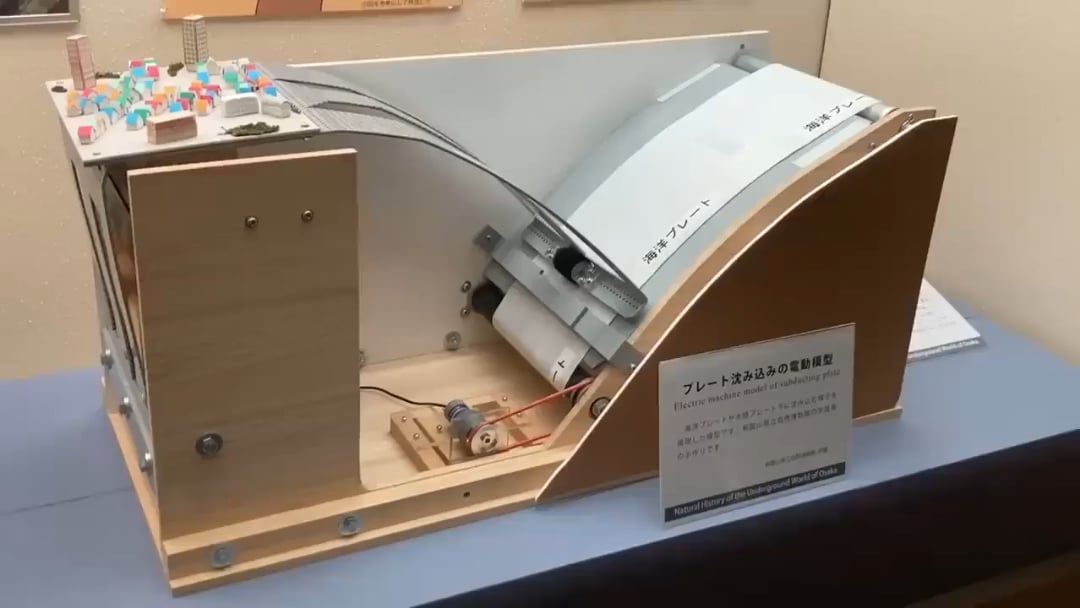
This model shows how earthquakes are formed
Title: Unveiling Earth’s Tremors: How Plate Tectonics Explain Earthquake Formation
Meta Description: Discover the science behind earthquake formation through plate tectonics. Learn how tectonic forces, fault lines, and seismic waves create the world’s most powerful tremors.
Introduction
Earthquakes are among nature’s most awe-inspiring and destructive phenomena. But what causes the ground to shake violently without warning? The answer lies beneath our feet—in the dynamic movements of Earth’s tectonic plates. This article breaks down the geological model explaining how earthquakes form, from tectonic pressure buildup to catastrophic rupture.
1. Earth’s Tectonic Plates: The Foundation of Earthquakes
Earth’s outer layer (the lithosphere) is divided into massive, rigid slabs called tectonic plates. These plates float atop the semi-fluid asthenosphere and constantly shift—colliding, sliding past each other, or pulling apart. Most earthquakes occur near plate boundaries, where these interactions create immense stress.
Key Fact:
90% of earthquakes happen along the Ring of Fire, a horseshoe-shaped zone encircling the Pacific Ocean where multiple plates converge.
2. The Earthquake Formation Process: Step by Step
Stage 1: Stress Accumulation
Tectonic plates move at a glacial pace (1–10 cm/year). When plates grind against each other, friction locks them in place. Over time, stress builds in the crust as the plates struggle to overcome this resistance.
Stage 2: Fault Slippage (The “Rupture”)
When stress exceeds the strength of rocks along a fault line (a fracture in Earth’s crust), the rocks suddenly slip or break. This releases pent-up energy in the form of seismic waves, causing the ground to shake.
Stage 3: Seismic Wave Propagation
The energy radiates outward from the earthquake’s hypocenter (underground origin point) and epicenter (surface point above it). Seismic waves include:
- Primary (P) waves: Fast, compressional waves.
- Secondary (S) waves: Slower, shear waves that cause more damage.
- Surface waves: Responsible for violent ground shaking.
3. Types of Faults Linked to Earthquakes
Different plate movements create distinct fault types and quake triggers:
-
Strike-Slip Faults
- Plates slide horizontally past each other.
- Example: San Andreas Fault (California).
-
Normal Faults
- Plates pull apart, causing crustal extension.
- Common in divergent boundaries (e.g., mid-ocean ridges).
-
Reverse (Thrust) Faults
- Plates collide, forcing one plate over another.
- Associated with convergent boundaries and megaquakes (e.g., Japan 2011).
4. The Elastic Rebound Theory: A Classic Model
Developed after the 1906 San Francisco earthquake, this theory explains earthquake mechanics:
- Rocks deform elastically (like bending a stick) due to tectonic stress.
- Once strain exceeds rock strength, they rupture and “snap back” to their original shape.
- The sudden rebound releases energy as seismic waves.
Visualize pulling a rubber band until it breaks—the stored energy propels the broken ends apart.
5. Measuring Earthquakes: Magnitude vs. Intensity
- Magnitude: Measures energy released (via seismographs). The Richter Scale and Moment Magnitude Scale (Mw) are commonly used (e.g., a Mw 7.0 quake is 10x stronger than Mw 6.0).
- Intensity: Gauges shaking impact at specific locations (using the Modified Mercalli Scale).
FAQs About Earthquake Formation
Q: Can human activities cause earthquakes?
A: Yes. Induced seismicity from fracking, mining, or reservoir creation can trigger minor quakes.
Q: Are earthquakes predictable?
A: No. While scientists monitor fault lines, exact timing remains unpredictable due to subsurface complexity.
Q: Why do some earthquakes cause tsunamis?
A: Underwater quakes at subduction zones displace seafloor water, generating massive waves.
Conclusion
Earthquakes are not random acts of nature but predictable outcomes of Earth’s geodynamic processes. By studying tectonic interactions, fault mechanics, and seismic waves, scientists demystify how these powerful events form—empowering us to build resilient communities in quake-prone regions.
Ready to deepen your knowledge? Explore how seismographs detect earthquakes or learn about historical earthquakes that reshaped civilizations!
SEO Keywords: earthquake formation, tectonic plates, fault lines, seismic waves, Ring of Fire, elastic rebound theory, earthquake causes, how earthquakes happen, types of faults.
Internal Linking Tip: Link to related articles like “Tsunami Formation Explained” or “Volcanoes vs. Earthquakes: Geological Powerhouses.”
Visual Suggestion: Include diagrams of plate boundaries, fault types, and seismic wave propagation to enhance reader engagement.