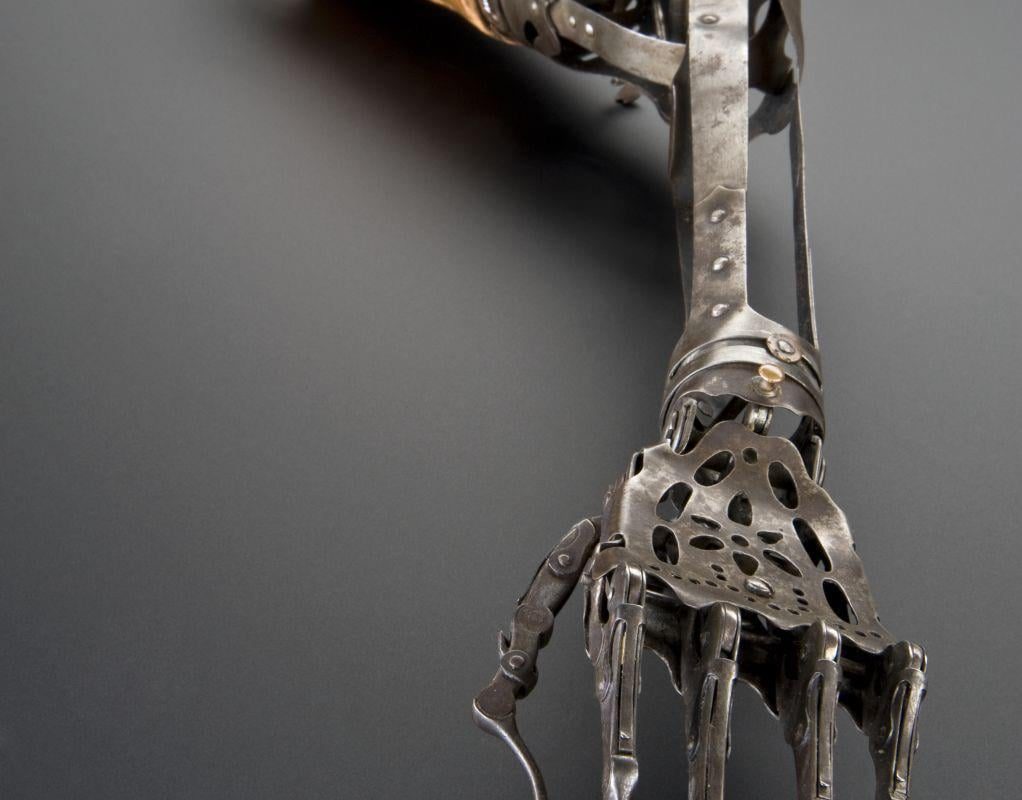
This prosthetic arm is from the Victorian era (1850–1910)
Title: The Ingenious Design of Victorian Era Prosthetic Arms (1850-1910): A Blend of Craftsmanship & Early Innovation
Introduction
The Victorian era (1850–1910) was a time of dramatic innovation in science, industry, and medicine. Among its lesser-known marvels were prosthetic limbs, particularly prosthetic arms, which combined artistry, engineering, and a quest to restore dignity to amputees. Long before modern robotics, these devices showcased human ingenuity — crafted from wood, leather, and metal to mimic both function and form. In this article, we explore the fascinating history, design, and legacy of Victorian-era prosthetic arms.
The Historical Context: Why Prosthetic Arms Emerged
The Industrial Revolution and frequent wars (like the Crimean War and American Civil War) led to a surge in amputations. With limited pain management and infection control, limb loss was tragically common. At the same time, Victorian society prized decorum and physical wholeness, creating demand for prosthetics that could conceal disability and enable social participation.
Materials & Design: Crafting a Functional Limb
Victorian prosthetic arms were typically handmade by artisans, surgeons, or specialized firms. Key materials included:
- Wood: Lightweight and carveable (e.g., willow or oak).
- Leather: Used for straps, joints, and cosmetic coverings.
- Metal: Springs, hinges, and screws for articulation.
- Ivory or Porcelain: For decorative hands to mimic realism.
Functional Features:
- Basic Grippers: Early models had simple hooks or pincers for holding objects.
- Articulated Fingers: High-end arms featured finger joints controlled by cables or body movements (e.g., shoulder flexion).
- Cosmetic Enhancements: Painted nails, lifelike veins, and even gloves to match skin tone.
Notable Examples & Innovators
-
James Potts’ “Anglesey Arm” (1812–1850s):
A pioneering design with fingers that opened via wrist movement. It remained popular into the Victorian era and was named after the Marquess of Anglesey, who lost his leg in battle. -
The Carnes Arm (1860s):
A U.S. patent featured rubber padding and adjustable straps for comfort, signaling a shift toward user-centric design. -
German “Iron Hands”:
Heavier but durable designs from firms like Ferdinand Sauerbruch, incorporating intricate spring mechanisms.
Limitations & Social Perception
Victorian prosthetics faced challenges:
- Weight: Heavy materials caused fatigue.
- Limited Mobility: Most arms prioritized appearance over utility.
- Cost: Only affluent individuals could afford advanced models, leaving laborers with basic hooks.
Yet, these devices held symbolic power. Wearers like veterans or accident survivors used them to avoid stigma, with ads promising “natural movement” to blend into society.
Legacy: How Victorian Prosthetics Paved the Way for Modern Designs
Victorian-era arms laid groundwork for 20th-century innovations:
- Ergonomics: Adjustable straps and padded sockets improved comfort.
- Material Science: Transition from wood to aluminum and plastics.
- Bionic Inspiration: Modern myoelectric prosthetics owe a conceptual debt to early cable-driven systems.
Conclusion
The prosthetic arms of the Victorian era stand as a testament to resilience and creativity. Though rudimentary by today’s standards, they embodied a profound desire to merge technology with humanity — offering wearers a chance to reclaim autonomy in a rapidly changing world. Today, museums like London’s Science Museum or the Bata Shoe Museum (Toronto) preserve these artifacts, reminding us how far medical engineering has come.
FAQ Section
Q: Were Victorian prosthetic arms functional or just cosmetic?
A: They ranged from purely cosmetic (e.g., porcelain hands) to semi-functional gripping tools. Utility often depended on the wearer’s budget.
Q: How much did a Victorian prosthetic arm cost?
A: High-end models could cost a year’s wages for a working-class person, making them inaccessible to many.
Q: Do any Victorian prosthetics survive today?
A: Yes! Museums and private collectors preserve examples, often with intricate carvings or patented mechanisms.
Target Keywords:
- Victorian era prosthetic arm
- 19th century prosthetic devices
- Historical artificial limbs
- Industrial Revolution prosthetics
- Anglesey arm history
Meta Description:
Explore Victorian-era prosthetic arms (1850–1910): their design, materials, and innovators. Discover how these early artificial limbs merged craftsmanship with medical science.
Image Alt Text Suggestions:
- “Antique Victorian prosthetic arm with leather straps and wooden hand.”
- “1850s Anglesey prosthetic arm mechanism detail.”
Optimize this article further by interlinking to related content (e.g., “Victorian Medical Advancements” or “Evolution of Prosthetics”) and adding schema markup for historical facts.