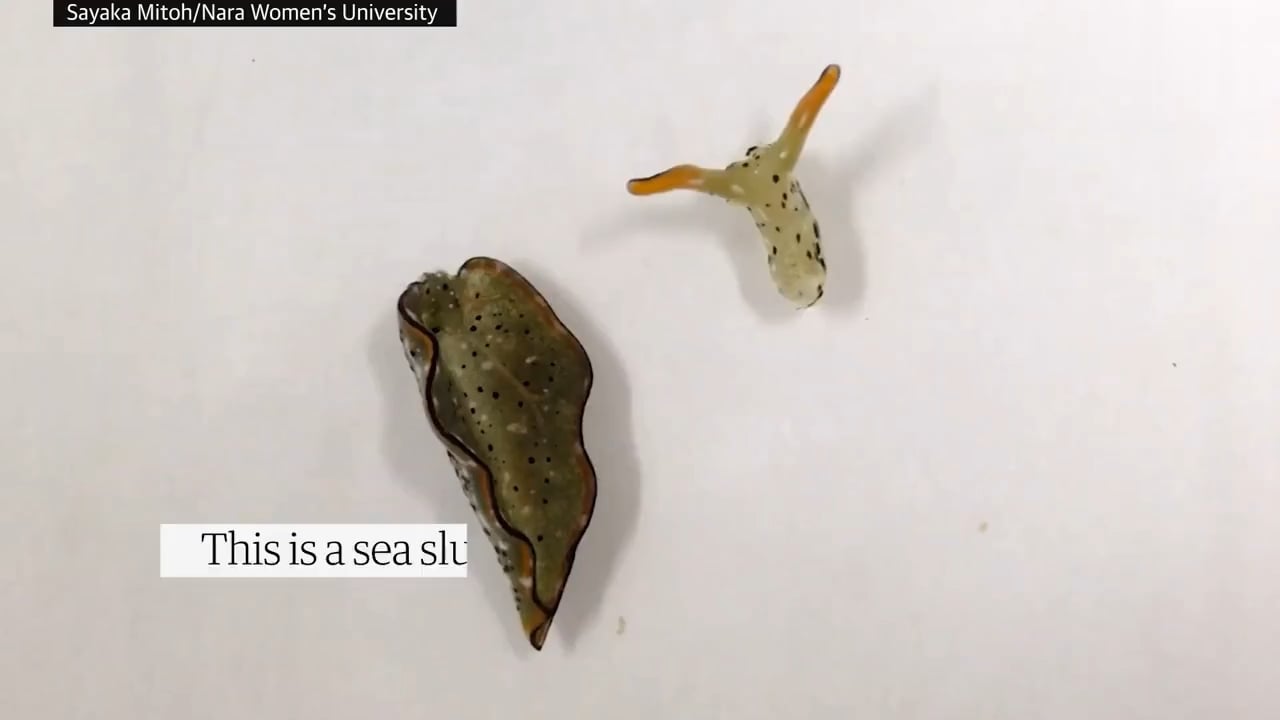
This sea slug can chop off its own head and grow an entire new body in a process called autotomy. It is one of the most extreme examples of regeneration ever seen.
Title: Scientists Stunned: Sea Slug Defies Death by Regrowing Entire Body from Severed Head
Meta Description: Discover the Sacoglossan sea slug’s surreal survival secret: autotomy allows it to shed its head and regenerate a brand-new body—a breakthrough in regenerative biology.
The Ultimate Survival Trick: How a Tiny Sea Slug Regrows Its Entire Body from Just Its Head
In the shadowy depths of the ocean, a creature no bigger than your thumb pulls off one of nature’s most shocking acts of survival. Meet the Sacoglossan sea slug, a marine invertebrate that can chop off its own head and regenerate an entirely new body—heart, digestive system, and all—in a matter of weeks. This jaw-dropping feat, called autotomy, redefines our understanding of regeneration and resilience in the animal kingdom.
What is Autotomy?
Autotomy refers to the voluntary shedding of a body part to escape predators or disease, common in lizards (tails) and crabs (claws). But the Sacoglossan slug takes it to extremes: it doesn’t just lose a limb—it jettisons its entire body, leaving only the head behind.
The Discovery That Shook Science
Researchers from Nara Women’s University in Japan first observed this phenomenon in 2021. While studying algae-eating sea slugs (Elysia cf. marginata), doctoral student Sayaka Mitoh noticed something bizarre: a severed head moving independently, without a heart or vital organs. Even stranger? Within weeks, the head regrew a brand-new body, complete with organs.
How Does the Head Survive—and Thrive?
Key to this biological marvel is the slug’s ability to photosynthesize like a plant. These slugs steal chloroplasts from the algae they eat, turning sunlight into energy—a process called kleptoplasty. This “solar power” sustains the head long enough (1–3 weeks) to regenerate its body. Meanwhile, the discarded old body, still alive for days, eventually dies.
Why Would a Slug Decapitate Itself?
Scientists suspect self-decapitation is a last-ditch effort to escape parasites. In the study, infected slugs were far likelier to detach their heads than healthy ones. Once parasite-free, the “rebooted” body gives the slug a fresh start—a tactic never before seen in vertebrates.
The Regeneration Process: Step by Step
- Detachment: The slug separates its head from its body, near a groove in its neck.
- Healing: The wound closes rapidly, preventing fatal blood loss.
- Regrowth: Within hours, the head begins forming stem-like cells to rebuild the heart, digestive tract, and reproductive organs.
- Maturation: A fully functional body regrows in less than a month.
Why This Matters for Humans
This extreme regeneration challenges long-held biological limits. While humans can heal wounds or regrow liver tissue, we’re far from rebuilding entire organs—let alone bodies. Studying these slugs could unlock breakthroughs in:
- Regenerative medicine (organ regrowth)
- Stem cell research (accelerated tissue repair)
- Cancer resistance (how slugs avoid tumors while regenerating)
Beyond Science Fiction: The Future of Regeneration
The Sacoglossan slug’s superpower forces us to rethink life’s possibilities. Could humans ever harness such abilities? Perhaps not—but as lead researcher Yoichi Yusa notes: “Nature still holds secrets we can’t yet imagine.”
Final Thought: In a world where survival often hinges on speed or strength, this humble sea slug triumphs through sheer biological audacity. Its story isn’t just about regeneration—it’s a reminder that evolution’s creativity knows no bounds.
Keywords: Sacoglossan sea slug, autotomy, extreme regeneration, body regrowth, kleptoplasty, regenerative biology, Elysia marginata, animal adaptation, marine biology breakthroughs, stem cell research.