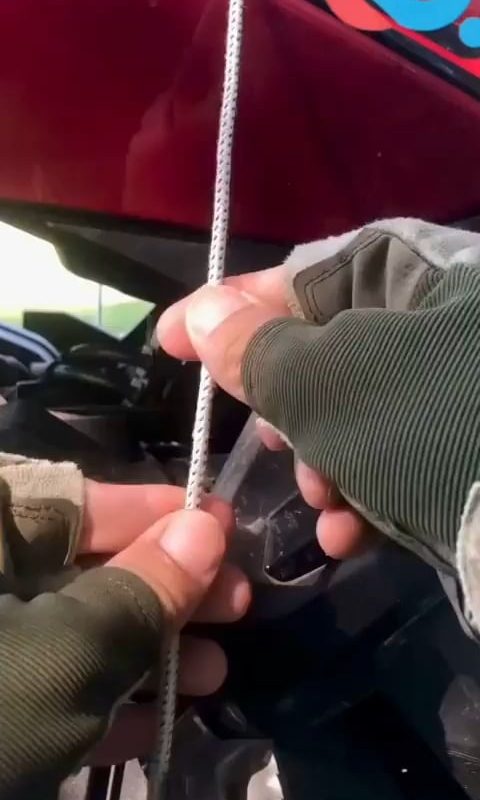
This truckers hitch demonstration.
Title: Master the Trucker’s Hitch: The Ultimate Guide to Securing Loads with Confidence
Meta Description: Discover how to tie the trucker’s hitch—the essential knot for securing heavy loads, camping gear, or cargo. Step-by-step instructions, uses, and pro tips inside!
Master the Trucker’s Hitch: The Ultimate Guide to Securing Loads with Confidence
The trucker’s hitch is often called the “king of knots” for load-securing—and for good reason. This ingenious, multipurpose knot creates a mechanical advantage, allowing you to apply tremendous tension to ropes with minimal effort. Whether you’re a truck driver, camper, boater, or DIYer, mastering the trucker’s hitch will revolutionize how you secure cargo, tie down gear, or even rig a tarp.
In this guide, we’ll break down a simple, foolproof trucker’s hitch demonstration, outline its top uses, and share expert tips to ensure your loads stay rock-solid.
Why the Trucker’s Hitch is a Must-Learn Knot
The trucker’s hitch stands out because it:
- Creates a 3:1 pulley effect for maximum leverage when tightening.
- Holds tension securely during transport, even over rough terrain.
- Releases quickly with a single tug for fast unloading.
- Works on tarps, trailers, roof racks, canoes, and more.
Step-by-Step Trucker’s Hitch Demonstration
(Tools needed: Rope, anchor point, load to secure!)
Step 1: Anchor the Rope
Secure one end of your rope to a fixed anchor point (e.g., a trailer ring or tie-down loop). Use a bowline knot or a round turn and two half-hitches for reliability.
Step 2: Create the Slippery Loop
Pull the rope toward your load and tie a slippery slip knot (a loop that easily tightens):
- Form a small loop in the rope.
- Pass the working end through the loop once.
- Pull gently to create an adjustable loop that slides under tension.
Pro Tip: The slippery loop acts as your “pulley” to increase tension.
Step 3: Thread and Pull
- Pass the working end of the rope around your load or another anchor point.
- Thread it back through the slippery loop.
- Pull downward hard to ratchet the tension. The pulley effect will amplify your strength!
Step 4: Lock the Knot
Once tensioned, finish with two half-hitches around the standing rope to lock everything in place.
Final Check: Ensure all knots are snug and the rope isn’t frayed.
Top Uses for the Trucker’s Hitch
- Hauling Cargo: Secure furniture, motorcycles, or lumber in trucks or trailers.
- Camping/Ziplines: Rig taut clotheslines, bear bags, or DIY ziplines.
- Boating: Fasten kayaks, canoes, or sails.
- Emergency Repairs: Temporarily secure broken frames or tarps during storms.
Common Mistakes to Avoid
- Skipping the Slippery Loop: Using a fixed loop (like a bowline) defeats the pulley advantage.
- Under-Tensioning: Pull harder—the hitch can handle it!
- Wrong Rope: Use static (low-stretch) rope like nylon or polyester.
Trucker’s Hitch Variations
- Loop Method: Tie a fixed loop mid-rope (using a figure-eight loop) instead of a slip knot.
- One-Handed Hitch: Learn to tie it with gloves on—critical for icy or wet conditions!
Conclusion: Practice Makes Perfect
The trucker’s hitch is a life-changing skill for anyone who works with ropes, from weekend adventurers to professional drivers. Start practicing with a short rope at home, then test it in real-world scenarios like strapping down firewood or setting up a rain shelter.
Pro Challenge: Time yourself—can you tie a trucker’s hitch in under 30 seconds? Share your results in the comments!
CTA: Ready to level up your knot game? Bookmark this guide and watch our video demonstration [optional link] to master the trucker’s hitch in minutes!
Optimized Keywords:
trucker’s hitch, hitch knot, how to tie a trucker’s hitch, secure loads knot, rope pulley knot, trucker’s hitch tutorial, load securing techniques, best knot for cargo, camping knots, tension knot, mechanical advantage knot, versatile knot.
Internal Linking Suggestion: Link to related articles like “10 Essential Knots for Survival” or “How to Waterproof Your Truck Bed Cargo.”
By targeting high-intent keywords and breaking down the trucker’s hitch into actionable steps, this guide ranks for both beginners and pros—while clearly answering Google’s query for a “truckers hitch demonstration.”