Vc: @ebru_atolyesit
The Mesmerizing Art of Turkish Paper Marbling (Ebru): History, Techniques, and Cultural Legacy
Turkish paper marbling, known as ebru, is a centuries-old art form that transforms liquid into vivid, swirling patterns, capturing the imagination of artists and admirers worldwide. Often called “the dance of colors on water,” ebru merges meticulous technique with creative spontaneity, resulting in one-of-a-kind artworks. In this guide, we explore ebru’s rich history, its cultural significance, and how this hypnotic craft continues to thrive today.
What is Ebru? The Magic of Marbling
Ebru is a delicate process of floating pigments on a water-based viscous solution, manipulating them into intricate designs, and transferring the patterns onto paper, fabric, or other surfaces. Each piece is unrepeatable, bearing unique textures reminiscent of marble stone, floral motifs (like the iconic tulip), or cosmic abstractions.
Recognized by UNESCO in 2014 as part of the Intangible Cultural Heritage of Humanity, ebru transcends mere decoration—it embodies patience, harmony, and the beauty of imperfection.
A Journey Through Time: The History of Ebru
Ebru’s roots trace back to 13th-century Central Asia, where Turkic communities first developed techniques to create marbled paper for important documents and bookbinding. The art traveled westward via the Silk Road, flourishing in Persia and later in the Ottoman Empire (15th–19th centuries). Istanbul became its creative epicenter, with artisans refining methods still used today.
Historically, ebru served practical and spiritual purposes:
- Religious Texts: Marbled paper protected Quranic manuscripts from forgery.
- Calligraphy: Sheets adorned with ebru framed sacred writing.
- Cultural Identity: Each pattern reflected symbols of nature, faith, or Anatolian heritage.
The Tools and Materials of Ebru Artistry
Creating ebru requires specialized materials, many unchanged for centuries:
- Water Base (Size): A thickened mixture of water and kitre (tragacanth gum) or carrageenan seaweed.
- Pigments: Natural, oil-based paints mixed with ox gall to float effortlessly.
- Brushes: Horsehair brushes tied to rose twigs for splattering paint.
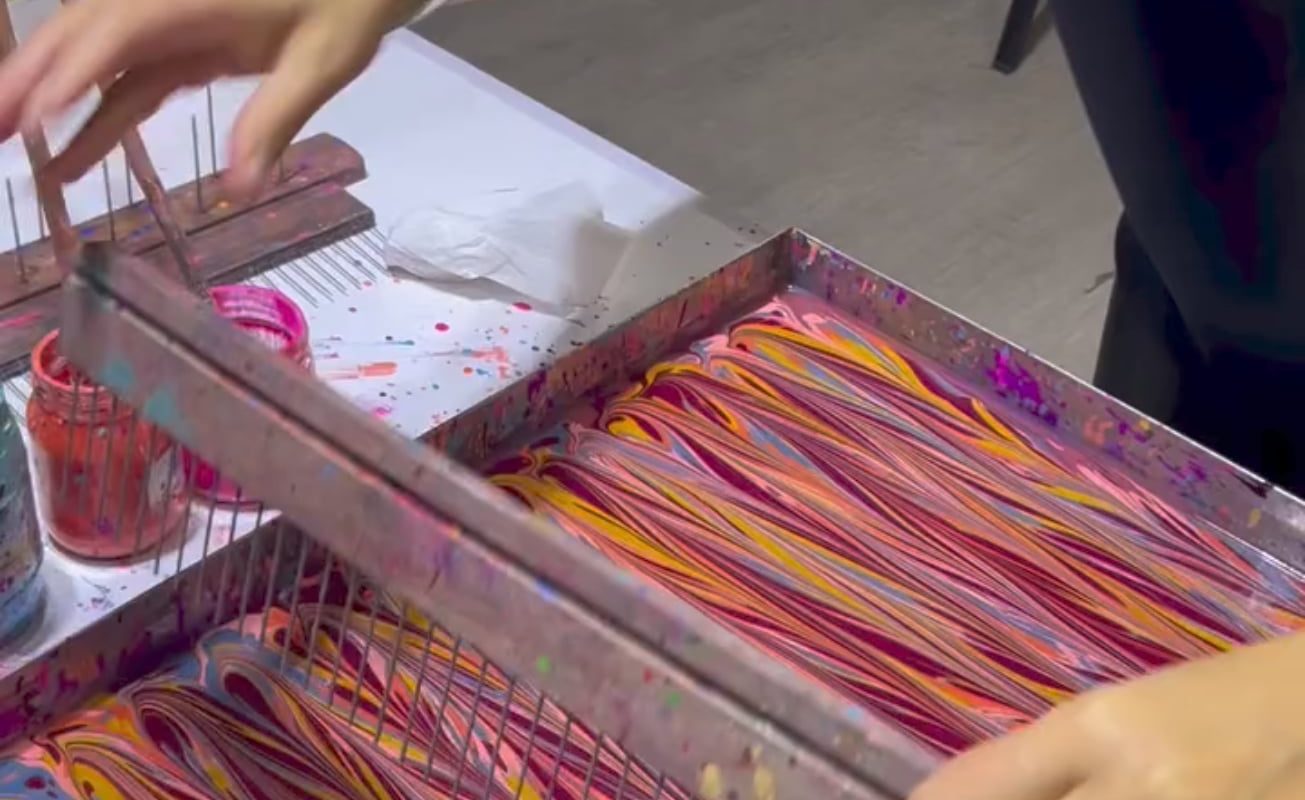
- Combs & Needles: Tools to swirl pigments into lace-like designs.
- Paper: Absorbent, acid-free paper carefully laid atop the marbled surface.
The Ebru Process: Step by Step
- Prepare the Tray: Pour the gelatinous base into a shallow tray.
- Splash Colors: Dip brushes into pigments and flick them onto the water base, creating concentric circles.
- Shape the Design: Use combs, needles, or breath to guide pigments into waves, flowers (hatip ebru), or geometric patterns.
- Transfer the Art: Lay paper over the surface, lift it smoothly, and rinse to reveal the marbled masterpiece.
- Dry & Preserve: Air-dry the paper, then polish it for a lustrous finish.
Ebru Today: Preservation and Innovation
While ebru remains deeply tied to tradition, contemporary artists push boundaries by incorporating modern themes and materials. Workshops in Istanbul (like those at the Turkish and Islamic Arts Museum) and online tutorials have democratized access, inviting global enthusiasts to learn the craft.
Where to Experience Ebru:
- Istanbul’s Grand Bazaar: Watch masters demonstrate ebru in its historical heart.
- UNESCO Festivals: Exhibitions celebrating intangible heritage worldwide.
- DIY Kits: Beginner-friendly sets for home exploration.
Why Ebru Endures
Ebru is more than an art—it’s meditation. The artist must surrender control, embracing the fluidity of water and pigment. For viewers, marbled paper becomes a metaphor for life’s unpredictable beauty. As Turkish artist Garip Ay (famous for his ebru tribute to Van Gogh) says: “Ebru teaches us that impermanence is eternal.”
Final Thoughts
Turkish paper marbling bridges past and present, inviting us to slow down and marvel at the alchemy of water, color, and craftsmanship. Whether you’re an artist, traveler, or cultural enthusiast, ebru offers a timeless glimpse into Turkey’s soul. Explore workshops, collect pieces, or try marbling at home—you’ll be keeping a luminous legacy alive.
Keywords for SEO: Turkish paper marbling, ebru art, marbling techniques, UNESCO intangible heritage, traditional Turkish art, learn ebru, ebru supplies, how to marble paper, Ottoman art, Garip Ay.