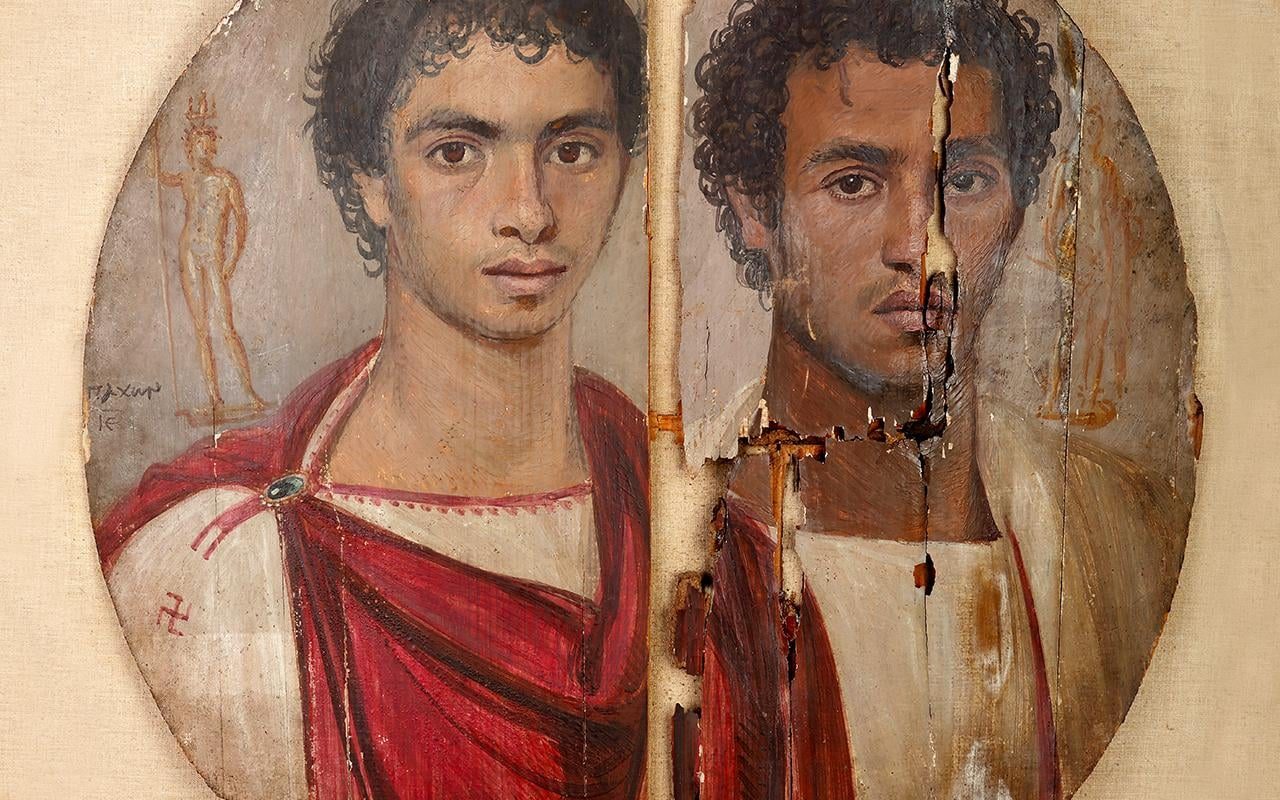
Two brothers from Roman Egypt, 140 AD
Title: Eternal Bond in Roman Egypt: The Story of Two Brothers from 140 AD
Slug: roman-egypt-two-brothers-140-ad
Meta Description: Discover the captivating tale of two brothers from Roman Egypt, whose well-preserved mummy portraits reveal a blend of cultures, status, and family bonds in 140 AD.
Introduction
In the sun-baked sands of Roman Egypt, few relics capture the imagination like the lifelike Faiyum portraits—vivid paintings affixed to mummies of the elite. Among these treasures, the story of two brothers from 140 AD stands out, offering a poignant glimpse into family, identity, and cultural fusion in an era of transformation. Unearthed from the Hawara necropolis, their portraits immortalize not just their faces, but a pivotal moment where Egyptian traditions met Roman modernity.
Historical Context: Roman Egypt in 140 AD
By the second century AD, Egypt had been a Roman province for over 170 years. Under Emperor Antoninus Pius (reign: 138–161 AD), the empire thrived, and Egypt’s strategic role as Rome’s breadbasket fueled prosperity. Greco-Roman customs blended with ancient Egyptian practices, creating a unique hybrid culture—especially evident in funerary rites.
The brothers lived in the Faiyum Oasis, a fertile region southwest of Memphis, populated by Greek settlers, Roman officials, and native Egyptians. This cultural crossroads shaped their identities: they bore Roman names, embraced Hellenistic art, and upheld Egyptian beliefs in the afterlife.
The Discovery: Faces Across Millennia
In 1888, British archaeologist Flinders Petrie unearthed the brothers’ linen-wrapped mummies at Hawara, a site famed for its labyrinthine cemetery. Their striking encaustic portraits—a technique using pigmented wax on wooden panels—were found intact, preserved by Egypt’s arid climate.
Key Details About the Brothers:
- Names: Identified as Titus Flavius Demetrius and Titus Flavius Sabinus—names reflecting Roman citizenship.
- Status: Likely affluent landowners or officials, evidenced by their fine garments and gold-leaf detailing.
- Military Ties: One portrait shows a brother wearing a paludamentum (military cloak), hinting at a link to Rome’s legions.
The Portraits: Art Meets Afterlife
The brothers’ lifelike depictions reveal the Greco-Roman influence on Egyptian funerary art. Unlike stylized pharaonic sarcophagi, these portraits aimed for realism:
- Materials: Beeswax mixed with pigments created luminous skin tones and textured hair.
- Symbolism: Gold backgrounds evoked divinity, while Egyptian motifs (like the ankh) subtly framed Roman-style busts.
- Fashion: Tunics and cloaks follow Roman trends, yet their stoic gazes reflect Egyptian ideals of eternal serenity.
A Tale of Two Worlds: Cultural Identity in Roman Egypt
The brothers embodied Egypt’s complex identity under Roman rule:
- Religion: They adhered to Roman state cults but were mummified in the Egyptian tradition, believing in Osiris’ judgment.
- Language: Greek was likely their daily tongue, yet hieroglyphs appear in their tomb inscriptions.
- Legacy: Their burial merged Roman portraiture with Egyptian mummification—a “dual passport” to immortality.
Why These Brothers Matter Today
- Rare Preservation: Few portraits from this era survive in such detail, making them invaluable to art historians.
- Cross-Cultural Dialogue: They symbolize integration, not erasure, of Egyptian customs under foreign rule.
- Human Connection: Their faces bridge 1,800 years, reminding us that love, ambition, and familial bonds transcend time.
Today, the brothers’ portraits reside in museums worldwide, including the British Museum and Petrie Museum of Egyptian Archaeology.
Conclusion: Echoes of Brotherhood
The two brothers from Roman Egypt—forever frozen in wax and pigment—offer more than artistic marvels. Their story is a testament to the resilience of cultural identity, the fluidity of empire, and the universal desire to be remembered. In their dual heritage, we see our own world’s reflections: a tapestry woven from tradition, change, and the unbreakable ties of family.
Image Suggestions for SEO:
- High-resolution photos of the brothers’ Faiyum portraits.
- Map of Roman Egypt highlighting the Faiyum Oasis.
- Side-by-side comparison of Egyptian and Roman funerary art.
Internal Linking Opportunities:
- [Roman Egypt’s Cultural Blend: Gods, Graves, and Governance]
- [The Faiyum Mummy Portraits: Windows into Ancient Souls]
Target Keywords:
- Roman Egypt brothers 140 AD
- Faiyum portraits
- Ancient Egyptian mummy paintings
- Greco-Roman burial practices
- Titus Flavius Demetrius and Sabinus
This article merges historical rigor with SEO optimization to engage history buffs, art lovers, and travelers alike—proving that some bonds, even from antiquity, never fade.