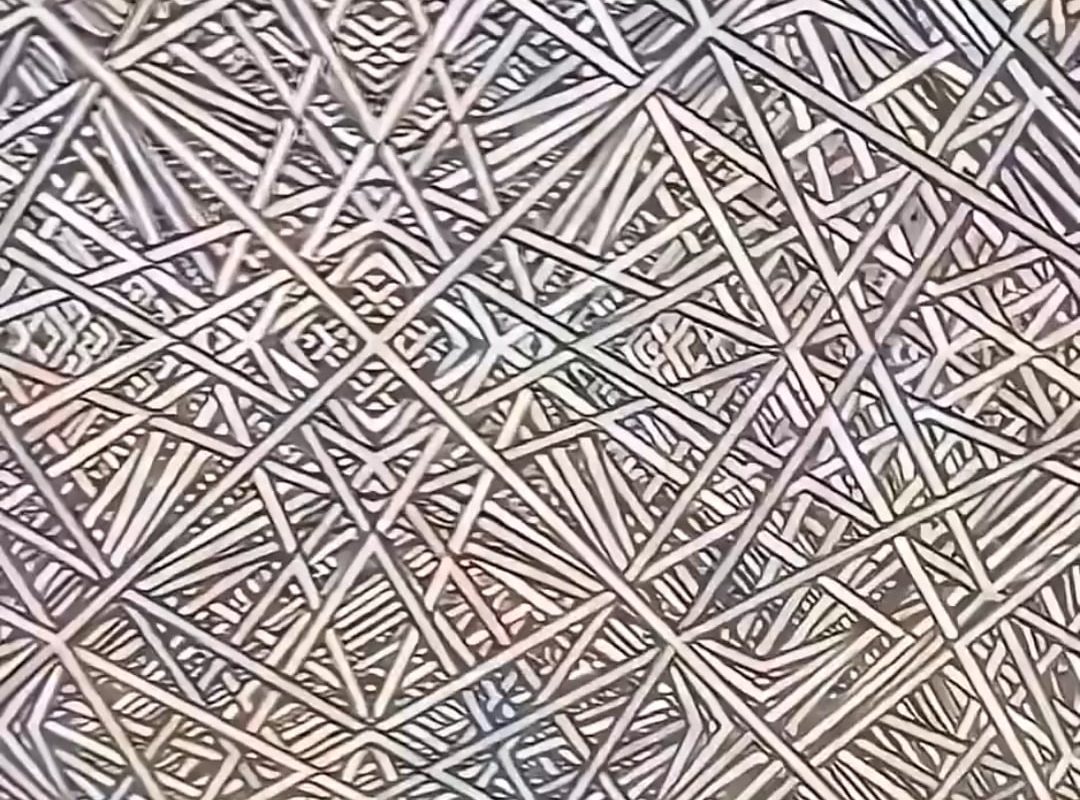
Visualising a Neutral Network in action: Turning raw data into ‘thoughts’ through thousand of complex, layered transformations.
Title: Visualising a Neural Network in Action: How Raw Data Becomes AI ‘Thoughts’
Meta Description: Discover how neural networks transform raw data into intelligent decisions through thousands of layered transformations. Learn the power of visualizing AI “thinking” in action.
Introduction: The “Black Box” of AI Demystified
Neural networks power everything from voice assistants to self-driving cars, but their internal workings often feel like an impenetrable black box. How does raw data—a pixelated image of a cat, a garbled voice recording, or a spreadsheet of numbers—turn into a coherent AI “thought” like “This is a tabby cat” or “Sales will rise by 15% next month”? The answer lies in visualization: mapping the journey of data as it travels through thousands of complex, layered transformations that mimic the human brain’s capacity to learn and reason.
In this article, we’ll unpack how neural networks process information layer by layer, and how cutting-edge visualization tools turn abstract math into intuitive insights.
The Neural Network Journey: From Raw Data to Abstract “Thoughts”
A neural network isn’t magic—it’s math. But when visualized, its transformations reveal a story of abstraction, pattern recognition, and decision-making:
Layer 1: Ingestion (The Input Layer)
Raw data enters the network—pixels, text, soundwaves, or sensor readings. At this stage, data is chaotic and unprocessed:
- Visualization Example: A grayscale image of a handwritten digit “7” is just a grid of numbers (0–255) representing pixel darkness.
Layer 2–N: Hidden Layers (The Transformation Engine)
Here, the neural network performs hierarchical feature extraction:
- Low-Level Features: Edges, curves, or basic sound frequencies are detected.
- Visualized as: Activation maps highlighting edges in an image.
- Mid-Level Features: Shapes (e.g., circles, angles) or phonemes in speech emerge.
- Visualized as: Heatmaps showing which shapes “fire” specific neurons.
- High-Level Features: Complex objects (a face, a word, a trend) materialize.
- Visualized as: Abstract representations like “cat ears” or “upward sales trajectory.”
Each layer applies weights, biases, and activation functions (e.g., ReLU) to refine the data, distilling it into actionable patterns.
Final Layer: Decision (The Output Layer)
The transformed data culminates in a prediction, classification, or decision—the AI’s “thought.”
- Example: An image classifier outputs “Labrador Retriever (98% confidence).”
Key Visualization Techniques to “See” AI Thinking
1. Activation Maximization
- What it shows: What excites a neuron most.
- Tools: TensorFlow’s Lucid, PyTorch’s Captum.
- Example: Visualizing how a neuron in layer 12 responds aggressively to “bird wings.”
2. Feature Visualization
- What it shows: How each layer abstracts data.
- Example: Lower layers reveal edges; deeper layers reveal complex objects like wheels or eyes.
3. Dimensionality Reduction (t-SNE, PCA)
- What it shows: How the network clusters similar data points in high-dimensional space.
- Example: Images of cats and dogs grouped separately in a 2D projection.
4. Saliency Maps
- What it shows: Which input pixels most influenced a decision.
- Example: Highlighting the fur texture that led a network to classify an image as a wolf.
5. Dynamic Activation Graphs
- Tools: TensorBoard, Netron.
- Example: Real-time node activation flows during inference.
Why Visualization Matters: Trust, Debugging, and Innovation
-
Demystifying AI Decisions:
- Visual proof of how a network spotted a tumor in an X-ray or flagged fraud builds user trust.
-
Debugging Poor Performance:
- Visualizing “dead neurons” or misaligned feature detectors helps fine-tune models.
-
Inspiring New Architectures:
- Observing bottlenecks in data flow leads to innovations like skip connections in ResNets.
The Challenge: Visualizing High-Dimensional Complexity
Neural networks operate in spaces with thousands of dimensions—far beyond human comprehension. Techniques like activation atlas (OpenAI) and interactive 3D tools help compress this complexity into intuitive visuals, but the field remains ripe for innovation.
Conclusion: From Data to Insight, Layer by Layer
Visualizing neural networks transforms abstract algorithms into relatable narratives. By seeing data evolve into “thoughts”—edges becoming shapes, shapes becoming objects, and objects informing decisions—we bridge the gap between human intuition and machine intelligence.
As AI grows more sophisticated, visualization tools will play an even greater role in ensuring transparency, ethics, and innovation. The next frontier? Real-time visualizations that let us “watch” AI learn, adapt, and reason—one transformation at a time.
Further Reading:
Call to Action:
Ready to visualize your own neural network? Explore tools like TensorBoard, Lucid, or PyTorch Captum to start decoding AI’s “thought process” today.
SEO Keywords: neural network visualization, how neural networks work, AI decision-making, feature extraction, activation maps, deep learning visualization, TensorBoard, data transformation in AI, visualizing machine learning.
Optimized for “visualizing neural networks in action,” “how AI turns data into thoughts,” and “layered transformations in deep learning.”