Voyager 1 left the solar system and never stopped calling home This machine has been flying for 47+ years and is still sending data Voyager 1 is farther from Earth than anything humans have ever built
Voyager 1: Humanity’s Farthest Ambassador Still Calls Home After 47 Years
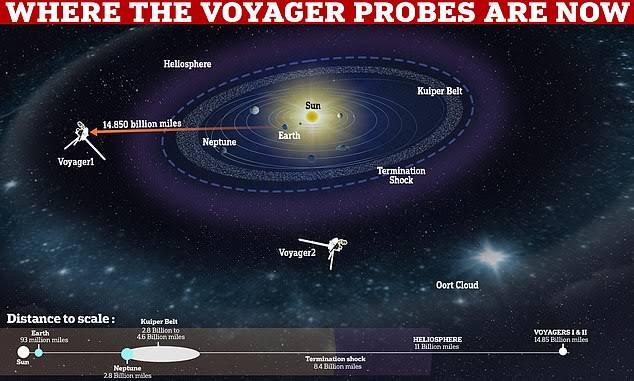
In the vast silence of interstellar space, a tiny spacecraft continues to defy the odds. Launched by NASA in 1977, Voyager 1 has traveled farther from Earth than any human-made object in history—over 15 billion miles (24 billion kilometers)—and it’s still sending data back to its creators. This resilient explorer officially left our solar system in 2012, but its mission to push the boundaries of human knowledge never ended.
The Journey Beyond Imagination
Voyager 1 began as an ambitious mission to study the outer planets. After capturing stunning images of Jupiter (1979) and Saturn (1980), including Saturn’s iconic rings and moons like Titan, it used a planetary gravity assist to slingshot toward the edge of the solar system. By 2012, NASA confirmed it had crossed the heliopause—the boundary where the Sun’s solar wind gives way to interstellar space.
Today, Voyager 1 drifts in a region untouched by our Sun’s influence, navigating a sea of cosmic rays and interstellar plasma. Despite the unfathomable distance (it takes 22 hours for signals to reach Earth), its aged systems keep transmitting insights about this uncharted frontier.
Engineering Marvel: How Voyager 1 Defies Time
Built in the 1970s with technology less powerful than a modern smartphone, Voyager 1’s longevity stuns engineers. Key to its survival:
- Nuclear Power: A radioisotope thermoelectric generator (RTG) converts heat from decaying plutonium-238 into electricity. Though output drops ~4 watts annually, it sustains critical instruments.
- Fault-Tolerant Systems: Self-repairing software and redundant components help it adapt to glitches, like the 2023 incident where garbled data forced NASA to bypass malfunctioning memory hardware.
- Thruster Adjustments: In 2017, NASA reactivated 1970s-era thrusters to reorient the probe, extending its communication lifespan.
What Voyager 1 Still Teaches Us
Even with just four operational instruments (down from 10), Voyager 1 sends invaluable data:
- Interstellar Space Weather: It monitors cosmic rays and magnetic fields, revealing how our solar system interacts with the galaxy.
- The “Hum” of Interstellar Plasma: In 2021, it detected a persistent plasma wave signature—a “cosmic ocean” background noise.
- Beyond the Sun’s Shield: Data confirms the heliosphere protects Earth from ~70% of galactic radiation.
A Time Capsule for the Cosmos
Voyager 1 carries the Golden Record—a 12-inch gold-plated copper disk containing sounds, music, and images of Earth. Curated by Carl Sagan’s team, it’s a message to potential extraterrestrial life, embodying humanity’s curiosity and hope.
Can Voyager 1 Keep Going?
Power is dwindling, and NASA estimates its final instrument will shut down by 2030. By then, it will be 20 billion miles away, drifting silently toward the constellation Ophiuchus. Yet its legacy lives on:
- Pioneering Deep Space Communication: Innovations like the Deep Space Network (DSN) laid groundwork for future missions.
- Inspiration: It embodies humanity’s relentless drive to explore, encapsulated in its famous Pale Blue Dot image (1990), showing Earth as a speck in the cosmic dark.
Conclusion: A Whisper in the Void
Voyager 1’s 47+ year odyssey is a triumph of engineering, imagination, and persistence. It has reshaped our understanding of the solar system and beyond, reminding us that even small machines can achieve immortality among the stars. As Ed Stone, Voyager’s longtime project scientist, said: “It’s an incredible journey that continues every day.”
Meta Description:
Voyager 1, NASA’s farthest spacecraft, left the solar system in 2012 after 47+ years in space. Discover how this interstellar pioneer still communicates with Earth from 15 billion miles away!
Keywords: Voyager 1, interstellar space, NASA mission, solar system, Golden Record, space exploration, interstellar probe, Voyager mission updates.
Image Suggestion:
A composite graphic showing Voyager 1’s path past Jupiter, Saturn, and beyond the heliosphere, with Earth as a tiny dot in the distance.