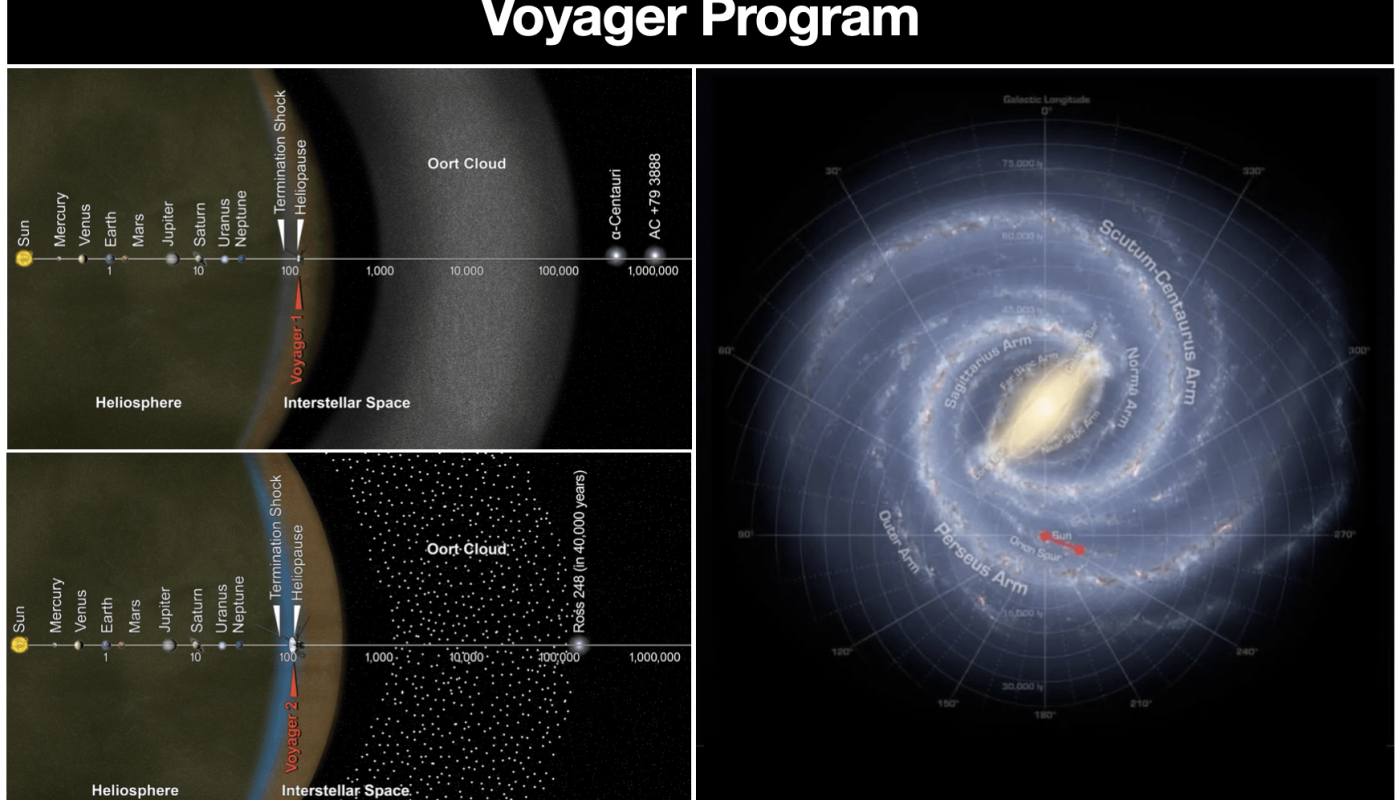
Voyager Program
Title: The Voyager Program: Humanity’s Farthest Journey into the Cosmos
Meta Description: Discover the groundbreaking Voyager Program, NASA’s iconic twin spacecraft exploring interstellar space. Explore their missions, achievements, and enduring legacy.
Introduction
In 1977, NASA launched two robotic explorers—Voyager 1 and Voyager 2—on a mission to unravel the mysteries of our outer solar system. Over four decades later, these spacecraft continue their epic journey, surpassing all expectations and becoming humanity’s farthest-reaching emissaries. This article delves into the Voyager Program’s objectives, historic discoveries, and ongoing contributions to science.
What Was the Voyager Program?
The Voyager Program was a NASA initiative designed to study Jupiter, Saturn, Uranus, and Neptune during a rare planetary alignment that occurs once every 176 years. This alignment allowed the spacecraft to use “gravity assists” to slingshot from one planet to another, conserving fuel and extending their reach.
Key Objectives:
- Study the atmospheres, moons, and rings of the gas giants.
- Collect data on magnetic fields, solar winds, and cosmic rays.
- Carry a Golden Record—a time capsule of Earth’s culture and sounds—for potential extraterrestrial encounters.
Voyager 1 & Voyager 2: Twin Pioneers
Voyager 1
- Launch Date: September 5, 1977
- Key Milestones:
- First close-up images of Jupiter (1979) and Saturn (1980).
- Discovered active volcanoes on Jupiter’s moon Io.
- Entered interstellar space in 2012.
Voyager 2
- Launch Date: August 20, 1977
- Key Milestones:
- Only spacecraft to visit Uranus (1986) and Neptune (1989).
- Revealed Neptune’s Great Dark Spot and geysers on Triton.
- Entered interstellar space in 2018.
Groundbreaking Discoveries
-
Jupiter’s Dynamic System:
- Voyager 1 identified lightning in Jupiter’s clouds and intricate details of its Great Red Spot.
- Io’s volcanic activity suggested a molten interior, reshaping ideas about moon geology.
-
Saturn’s Astonishing Rings:
- Voyager exposed the complexity of Saturn’s rings, revealing braided structures and “spokes.”
- Discovered methane lakes on Titan, hinting at prebiotic chemistry.
-
Uranus & Neptune: The Ice Giants:
- Voyager 2 found extreme seasons on Uranus due to its 98° tilt.
- Neptune’s supersonic winds and the icy geysers of Triton stunned scientists.
The Golden Record: A Message to the Stars
Both Voyagers carry a Golden Record, a 12-inch gold-plated copper disc curated by Carl Sagan’s team. It contains:
- Sounds of Earth: Whale calls, thunderstorms, laughter, and music from Bach to Chuck Berry.
- Images: Diagrams of DNA, human anatomy, and global landscapes.
- Greetings: Spoken messages in 55 languages.
Fun Fact: The records include instructions for playback, should extraterrestrial life find them—making the Voyagers humanity’s ultimate “message in a bottle.”
Where Are the Voyagers Now? (2024 Update)
As of 2024:
- Voyager 1 is 15 billion miles (24.3 billion km) from Earth, traveling at 38,000 mph.
- Voyager 2 is 12.6 billion miles (20.3 billion km) away.
- Both rely on dwindling nuclear power but still transmit data via NASA’s Deep Space Network.
Current Missions:
- Measuring cosmic rays and magnetic fields in interstellar space.
- Monitoring the boundary between our solar system and the Milky Way.
Legacy of the Voyager Program
- Fueled Public Imagination: Iconic images like the “Pale Blue Dot”—Earth as a speck in Saturn’s rings—inspired global awe.
- Engineering Marvel: With only 69 KB of memory (less than a smartphone photo), the Voyagers revolutionized deep-space tech.
- Scientific Impact: Over 6,000 research papers cite Voyager data, deepening our understanding of the solar system.
FAQs About the Voyager Program
-
Will the Voyagers ever return?
No—they’ll drift indefinitely through the Milky Way, completing an orbit every 225 million years. -
How long will they keep working?
NASA may shut down instruments by 2030 due to power loss, but their journey continues. -
What’s on the Golden Record?
A snapshot of life on Earth, including music, greetings, and natural sounds.
Conclusion
The Voyager Program represents humanity’s boldest leap into the cosmos. What began as a four-year mission evolved into a multi-generational quest, bridging science and art while uniting the world under a shared sense of wonder. As Voyager 1 and 2 sail farther into the unknown, they remind us that curiosity knows no bounds—and neither does our potential.
Follow Their Journey: Track live updates via NASA’s Voyager Mission Status.
Images Suggestion (for SEO):
- Voyager 1’s “Pale Blue Dot” photo.
- Golden Record diagram.
- Artists’ renderings of the probes in interstellar space.
Keywords: Voyager Program, Voyager 1 and 2, Interstellar Space, NASA Space Missions, Golden Record, Outer Solar System Exploration, Gas Giants, Deep Space Network.
By blending historic context, scientific insight, and cultural significance, this SEO-optimized article helps readers and search engines alike grasp the monumental legacy of the Voyager Program.