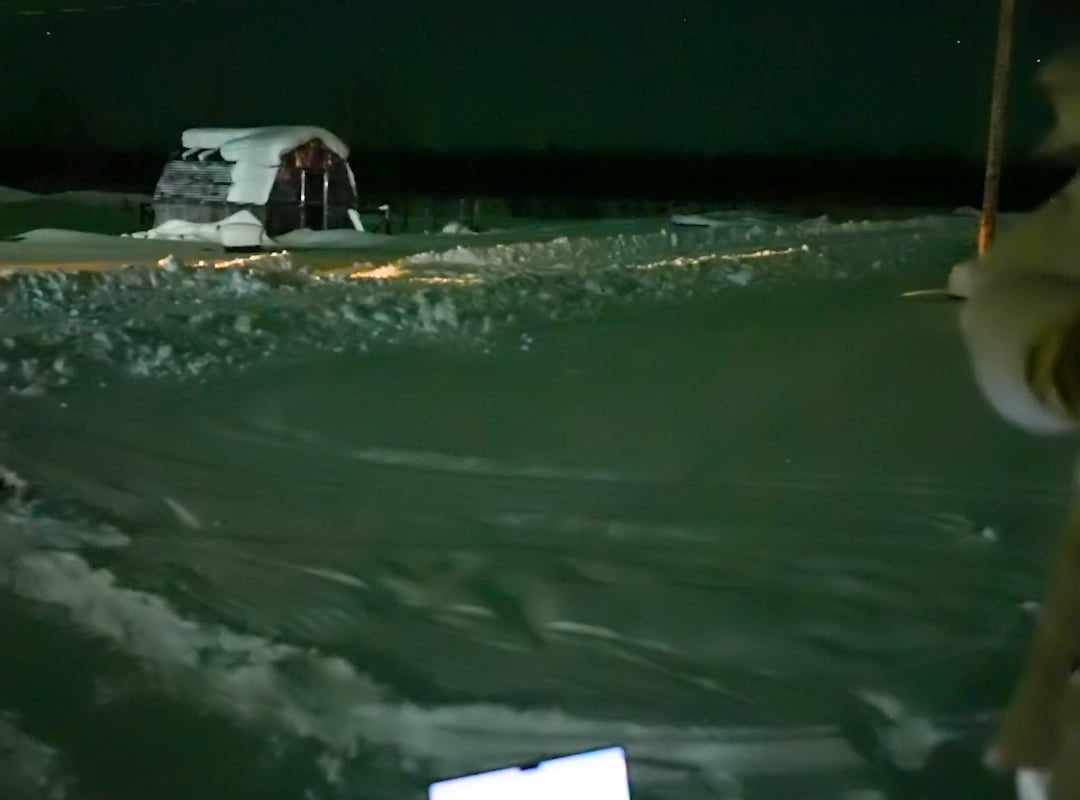
Watching a NASA sounding rocket launch last night from 100 miles away
The Night Sky Ignites: Watching a NASA Sounding Rocket Launch 100 Miles Away
There’s something uniquely magical about witnessing human ingenuity pierce the heavens—especially when it happens in the quiet of night, painting the sky with fire. Last night, I had the rare privilege of watching a NASA sounding rocket launch from a distance of 100 miles away, an experience that blurred the line between science and spectacle. Here’s what happened, why sounding rockets matter, and how you can witness similar launches.
What Is a Sounding Rocket? (And Why NASA Launches Them)
Sounding rockets are suborbital vehicles designed to carry scientific experiments into Earth’s upper atmosphere (50–1,500 km altitude) for brief missions. Unlike orbital rockets, they don’t enter space permanently but offer a low-cost, rapid-response platform for studying:
- Auroras and ionospheric phenomena
- Microgravity effects
- Solar or cosmic radiation
- New technologies
Last night’s mission, launched from NASA’s Wallops Flight Facility in Virginia, aimed to study plasma dynamics in the ionosphere—a critical layer for radio communications and GPS accuracy.
The Launch Experience: 100 Miles Away in Perfect Darkness
The Setup
I stationed myself on a hilltop in rural Maryland, far from light pollution. With clear skies forecasted, my gear included:
- A DSLR camera (for long-exposure shots)
- Binoculars
- A livestream of NASA’s official countdown (via smartphone)
The Moment of Liftoff
At T-0, the horizon flashed orange—a silent burst of light, delayed by the 100-mile distance. Seconds later, a jagged golden streak ascended like a second sunrise, trailing a shimmering exhaust plume. The rocket’s path arced eastward over the Atlantic, visible for roughly 3 minutes before vanishing into Earth’s shadow.
Science Insight: From such distances, sound doesn’t reach you due to atmospheric dissipation, making the event eerily silent. The visibility is thanks to the rocket’s altitude—still sunlit even in nighttime below.
How to Watch a Rocket Launch from Afar: 5 Pro Tips
-
Track Launch Schedules
- NASA Wallops publishes calendars 90 days ahead: Wallops Launch Schedule
- Apps like Next Spaceflight send real-time alerts.
-
Optimize Your Location
- Use flight path maps (released pre-launch) to find unobstructed sightlines.
- Distance sweet spots: 50–150 miles (close enough to see, far enough for the “rocket’s-eye view”).
-
Timing Is Everything
Twilight launches (“Twilight Phenomenon”) create stunning exhaust plumes lit by the sun against a dark sky. -
Bring the Right Gear
- DSLR with manual focus (shutter speed: 1–5 sec; ISO 400–800).
- A tripod for stability.
-
Prepare for Delays
Sounding rockets launch on tight weather/technical windows—patience pays off!
Capturing the Moment: My Photographs vs. Reality
While my long-exposure photos captured a celestial brushstroke of light, the human eye saw something subtler: a slow-motion star streaking upward, leaving a chalky trail that dissolved like comet dust.
Pro Tip: Record video and photos—launches evolve faster than you expect!
Why Sounding Rockets Matter: NASA’s Unsung Heroes
For 60+ years, sounding rockets have enabled breakthrough science at a fraction of satellite mission costs:
- Affordable: Missions start at $1M (vs. $100M+ for orbiters).
- Fast: Developed in months vs. years.
- Flexible: Launched from remote sites like Alaska, Norway, or Australia to study localized phenomena.
Upcoming Launches: Your Chance to Witness History
NASA’s 2024–25 schedule includes missions studying:
- Solar winds (from Poker Flat, Alaska)
- Polar mesospheric clouds (Sweden)
- Student-built experiments (Wallops)
For updates: Follow @NASA_Wallops on Twitter or visit NASA Sounding Rockets Program.
Final Thoughts: A Reminder of Wonder
Watching that fiery speck ascend from 100 miles away was a humbling reminder: space isn’t just for astronauts or Cape Canaveral. With planning and passion, anyone can share in these fleeting moments of human curiosity lighting up the dark.
Have you seen a rocket launch? Share your story below! 🔭🚀
Meta Description: Witnessing a NASA sounding rocket launch from 100 miles away? Learn what it’s like, how to prepare, and why these missions shape space science. Tips + stunning visuals inside.
Keywords: NASA sounding rocket launch, watch rocket launch 100 miles, sounding rocket visibility, Wallops Flight Facility launch, twilight phenomenon rocket, rocket launch photography tips, NASA launch schedule 2024.