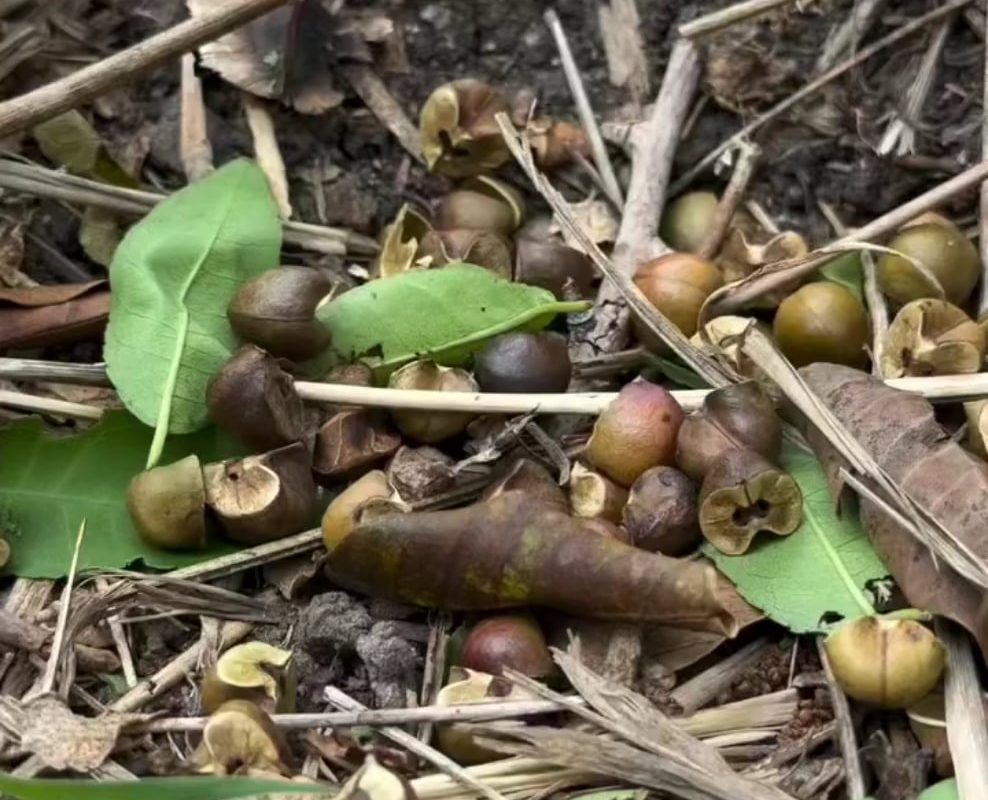
Watching and listening to the popping seeds of the Tamboti tree caused by wriggling moth larvae, as also seen in Mexican jumping beans
Unraveling Nature’s Tiny Marvel: The Popping Seeds of the Tamboti Tree and Their Wriggling Inhabitants
Have you ever witnessed a seed inexplicably twitch, roll, or even “pop” on the ground as if alive? In the dry woodlands of Southern Africa, the Tamboti tree (Spirostachys africana) produces seeds that perform this exact mystical dance, captivating onlookers. Much like the famous Mexican jumping beans, these seeds harbor a surprising secret: tiny moth larvae wriggling inside, generating movement as they eat and grow. This fascinating natural phenomenon combines botany, entomology, and a touch of magic—here’s the science behind it and why it deserves your attention.
The Tamboti Tree: A Habitat for Drama
The Tamboti tree, native to regions like South Africa, Zimbabwe, and Mozambique, is known for its hardy, drought-resistant nature and distinctive toxic sap (used traditionally in small doses for hunting). But its most intriguing feature is its three-lobed seed capsules, which fall to the ground in late summer. Once dried, these seeds become the stage for an extraordinary performance—thanks to an unwitting insect collaborator.
Why Do Tamboti Seeds “Pop”? The Moth Larva Connection
Inside many Tamboti seeds, the larvae of a small moth (likely a species related to the Cydia saltitans genus, akin to Mexican jumping bean moths) take up residence. Here’s the process:
- Infestation: Adult moths lay eggs on the Tamboti tree’s flowers or immature seed capsules.
- Hatching & Entry: Once hatched, larvae burrow into the seeds, feeding on the nutrient-rich interior.
- The Wiggle Effect: As the larvae move, metabolize food, or react to temperature changes (like sunlight warming the seed), they cause the seed to jerk, roll, or emit soft “popping” sounds.
- Survival Strategy: This movement helps larvae roll seeds into shade or cracks, protecting them from predators and harsh conditions until they pupate and emerge as moths.
The phenomenon mirrors that of Mexican jumping beans, which house larvae of the Cydia saltitans moth. Both showcase how insects manipulate plant structures for survival—a brilliant example of coevolution.
Tamboti vs. Mexican Jumping Beans: Similar Magic, Different Continents
While the mechanisms are nearly identical, the species differ:
- Tamboti Trees: Native to Africa; seeds are larger and triangular. Moths belong to a likely different (but closely related) species.
- Jumping Beans: Derived from Mexican shrubs (Sebastiania pavoniana); seeds are smaller and rounder.
Both, however, rely on larvae-induced movement to survive—proving nature often repeats its most ingenious designs across continents.
Ecological Importance: More Than Just a Curiosity
The Tamboti tree and its moth tenants play vital roles in their ecosystems:
- Seed Dispersal: While larvae eat seeds, their movement may help scatter uneaten seeds across the ground.
- Food Web Support: The moths are prey for birds, reptiles, and small mammals.
- Plant Defense: The Tamboti’s toxic sap deters most herbivores, but moth larvae have evolved immunity—showcasing nature’s arms race.
Where to Witness the Phenomenon
To see Tamboti seeds in action:
- Visit Southern Africa: Look for Tamboti trees in savannas or nature reserves (e.g., Kruger National Park).
- Timing Matters: Seeds “dance” most in late summer/early autumn when larvae are active.
- Safety Note: Tamboti sap is poisonous—never taste or handle seeds without guidance!
Tamboti Seeds in Culture and Conservation
In African folklore, the Tamboti tree is both feared (for its toxins) and revered (for its durable wood). While its popping seeds aren’t as commercialized as Mexican jumping beans, they’re a testament to nature’s wonders—and a reminder to protect biodiverse habitats threatened by deforestation.
The Takeaway: Nature’s Tiny Engineers
The Tamboti tree’s popping seeds offer a window into the hidden dramas of the natural world. By understanding these interactions, we gain awe for insects’ adaptability and the intricate bonds between flora and fauna. Next time you’re in Africa’s wilderness, listen closely—you might just hear the soft pop of a seed and witness life wriggling within.
Keywords for SEO: Tamboti tree seeds, popping seeds Africa, African jumping beans, moth larvae in seeds, Tamboti tree facts, Spirostachys africana, Mexican jumping beans comparison, nature curiosities, insect-plant symbiosis.
Explore mindfully: Always respect wildlife and habitats when observing natural phenomena like Tamboti seed movement. Leave no trace, and support conservation efforts protecting these ecological marvels!