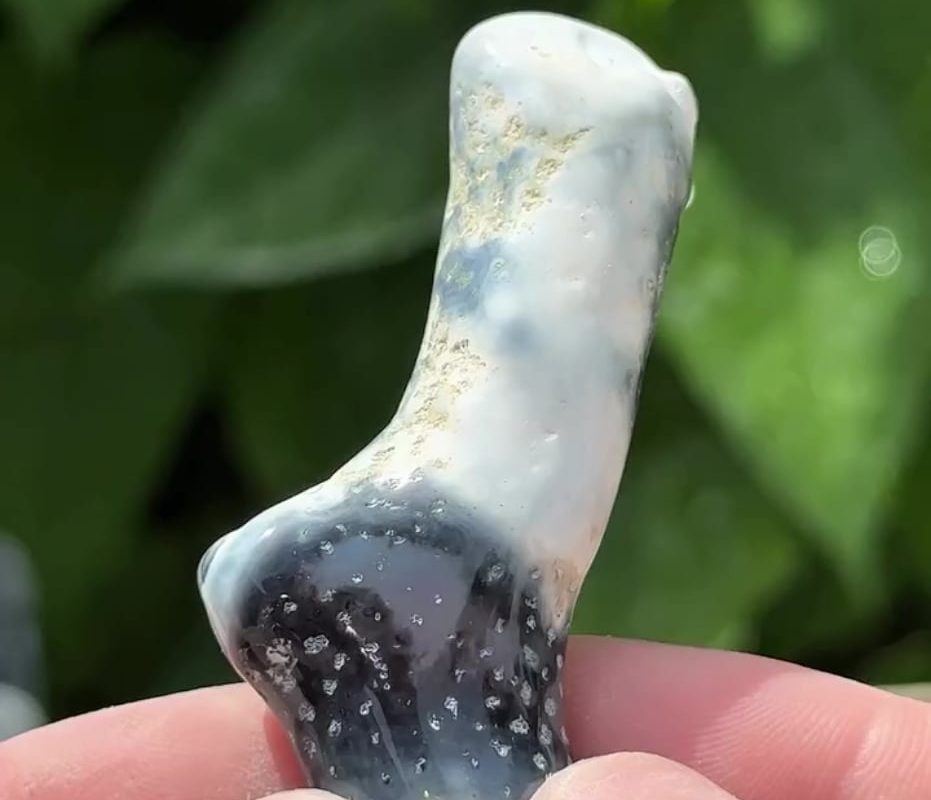
What time preserves inside a million year old coral finger
Unlocking Deep Time: The Secrets Preserved in a Million-Year-Old Coral “Finger”
For centuries, coral reefs have dazzled us with their vibrant colors and teeming biodiversity. But when corals fossilize over millions of years, they transform into extraordinary archives of Earth’s ancient past. A million-year-old coral “finger” — a term scientists use to describe elongated, digit-like fossilized coral colonies — isn’t just a relic; it’s a time capsule hiding invaluable data about our planet’s climatic, geological, and biological history.
Here’s what time has preserved inside these ancient coral structures, and why they matter to science today.
How Coral Fossils Form: Nature’s Perfect Preservation
Corals, especially reef-building species, thrive in shallow tropical seas. When they die, their calcium carbonate skeletons can survive burial under sediment. Over millennia, mineralization replaces organic material, turning the coral into stone. Unlike brittle fossils, dense coral structures often retain intricate microscopic details, capturing snapshots of their environment with stunning fidelity.
A Million-Year-Old Coral Finger Holds These Secrets
-
Growth Rings: Earth’s Ancient Calendar
Like tree rings, corals form annual growth bands. A single fossilized finger can reveal centuries of seasonal cycles. Scientists count these layers to determine the coral’s age and study changes in growth rates linked to environmental shifts, such as temperature or ocean acidity. At a microscopic level, daily growth lines can even track ancient daylight patterns! -
Chemical Signatures: A Climate Time Machine
Corals absorb elements from seawater as they grow. Their skeletons lock in isotopes (variants of elements like oxygen or carbon) that act as proxies for past conditions:- Oxygen isotopes: Reveal ancient sea temperatures and ice volume. Higher levels of oxygen-18 suggest cooler oceans or glacial periods.
- Carbon isotopes: Indicate biological productivity and ocean chemistry.
- Trace metals: Elements like barium or uranium hint at river runoff, volcanic activity, or pollution events.
In a million-year-old coral, these chemical “fingerprints” let scientists reconstruct paleoclimate models with astonishing precision.
-
Evidence of Symbiotic Relationships
Modern corals rely on photosynthetic algae (zooxanthellae) for survival. Fossilized coral fingers often preserve microscopic structures suggesting these partnerships existed millions of years ago. This clues biologists into how symbiotic life evolved amid changing oceans. -
Disasters Frozen in Time
Catastrophic events leave scars. Coral fossils may show:- Storm damage: Bands of distorted growth from ancient hurricanes.
- Ocean acidification: Thinning skeletons from CO2 spikes.
- Extinction triggers: Sudden growth halts linked to volcanic winters or asteroid impacts.
Why Scientists Treasure Ancient Coral Fossils
- Testing Climate Models: Data from fossil corals validate predictions about CO2-driven warming and ocean acidification.
- Mapping Evolutionary Shifts: How did coral species adapt to past extinctions or temperature swings? Fossil fingers hold answers.
- Exploring Lost Ecosystems: These structures often host other fossils (e.g., mollusks, sponges), revealing entire extinct reef communities.
The Cutting Edge: How We Extract Coral Secrets
Advanced tools allow researchers to probe fossil corals without destroying them:
- CT Scans: Create 3D digital reconstructions of internal structures.
- Laser Ablation: Vaporizes tiny samples to analyze isotope ratios.
- Synchrotron Imaging: Uses powerful X-rays to map trace elements at nano-scale resolution.
A Warning & a Wonder
Studying million-year-old corals underscores Earth’s resilience — and fragility. Fossil reefs from the Pliocene (3–5 million years ago), when CO2 levels matched today’s, show corals survived in hotter oceans but with vastly different ecosystems. Yet rapid modern climate change threatens reefs far faster than their ancient counterparts adapted.
Conclusion: More Than Just a Stone
A coral “finger” fossilized for a million years is not a silent rock — it’s a storyteller. Each growth band and chemical whisper reveals how Earth’s climate, oceans, and life have danced together across millennia. By decoding these messages, we gain wisdom to protect our planet’s future.
As drilling continues into ancient reefs, one truth emerges: Corals are both victims of change and guardians of time. Their fossils remind us that deep history holds urgent lessons for the Anthropocene.
Keywords: million-year-old coral fossils, ancient climate data, fossilized coral secrets, coral growth rings, paleoclimate proxies, ocean acidification history, coral symbiosis evolution, fossil analysis techniques, Earth’s climatic past, Pliocene reefs.
For more reads on paleoclimate wonders, subscribe to our newsletter!