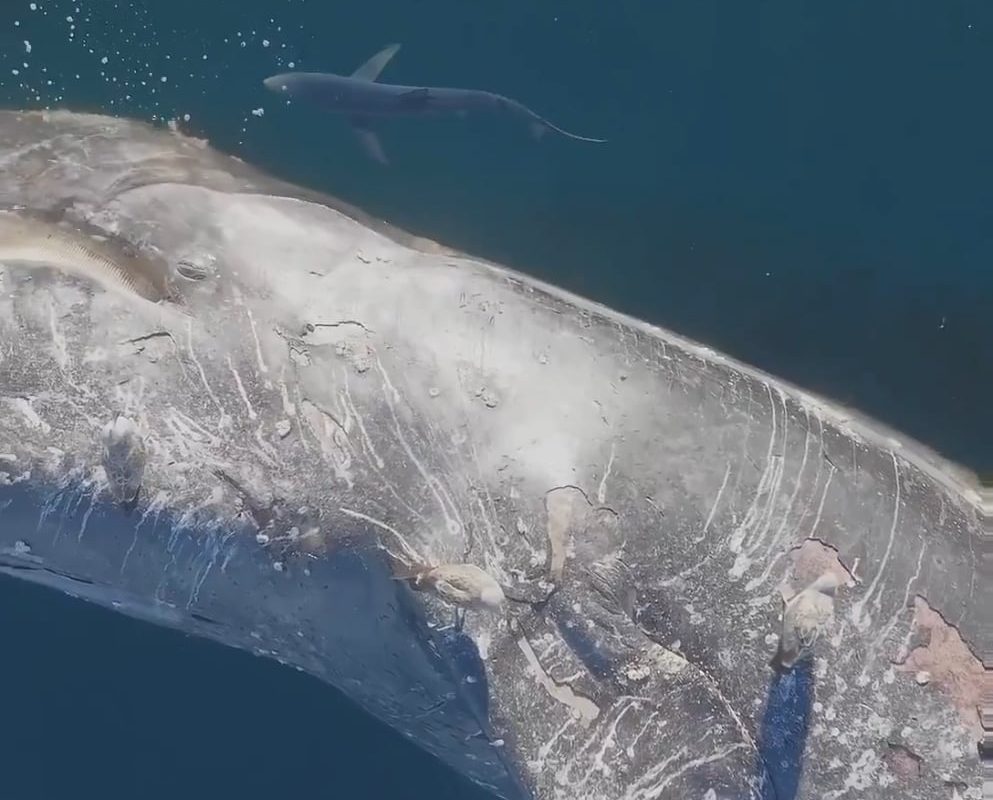
When a whale dies and sinks, its carcass, known as a whale carcass, provides an abundance of nutrients for a large number of deep-sea creatures, giving rise to its own ecosystem that can last for decades.
Title: The Whale Fall Phenomenon: How a Whale Carcass Creates a Decades-Long Deep-Sea Oasis
Meta Description: Discover how a sinking whale carcass transforms into a thriving deep-sea ecosystem, sustaining life for decades. Learn why these “whale falls” are vital to ocean biodiversity.
Introduction: The Hidden Legacy of a Whale’s Death
In the vast, lightless depths of the ocean, death begets life in extraordinary ways. When a whale dies and sinks to the seafloor, its massive body undergoes a remarkable transformation. Known as a whale carcass or “whale fall”, this event sparks the birth of a thriving, self-contained ecosystem—a rare underwater oasis that can sustain hundreds of species for decades.
This article explores how whale carcasses shape deep-sea biodiversity, the stages of decomposition that foster unique lifeforms, and why protecting whales is critical for this hidden cycle of life.
What Is a Whale Fall?
When a whale dies, its carcass may float temporarily before sinking to the ocean floor, often plunging thousands of meters below the surface. This sinking carcass creates what scientists call a whale fall—a biological hotspot that delivers an explosion of nutrients to an otherwise nutrient-poor environment.
A whale fall’s enormous size (even a small whale weighs 30+ tons) provides:
- Lipids, proteins, and bone marrow for scavengers.
- Bone-derived sulfides for chemosynthetic organisms.
- A long-term energy source for generations of deep-sea life.
The Stages of a Whale Fall Ecosystem: From Feast to Fossil
1. Mobile Scavenger Stage (Months to Years)
The carcass first attracts sharks, hagfish, crabs, and sleeper sharks that tear into the soft tissue. A single whale fall can feed these scavengers for up to 2 years, with hagfish alone consuming kilograms of flesh daily.
2. Enrichment Opportunist Stage (Up to 2 Years)
Once the soft tissue is gone, bone-inhabiting worms, crustaceans, and snails colonize the carcass. Bone fragments and organic sediments support dense, diverse colonies, like zombie worms (Osedax) that bore into whale bones to extract fats.
3. Sulfophilic (Sulfate-Reducing) Stage (Decades)
The longest phase begins when sulfur-loving bacteria break down lipids in the bones. These microbes form the base of a chemosynthetic food web—similar to hydrothermal vents—supporting mussels, clams, limpets, and tube worms for up to 50 years.
A Biodiversity Hotspot: Who Thrives in This Ecosystem?
Whale falls host organisms found nowhere else on Earth, including:
- Osedax Worms: Bone-eating “zombie” worms with no mouth or gut.
- Deep-Sea Octopuses: Opportunistic hunters like Graneledone.
- Chemosynthetic Bacteria: Convert sulfides into energy, supporting entire micro-habitats.
Scientists estimate a single whale fall can sustain 20,000+ individual organisms from 200+ species, including rare invertebrates and microorganisms.
Why Whale Falls Matter to the Ocean
✅ Nutrient Cycling
Whale falls redistribute nutrients from the ocean’s surface to its deepest zones, fueling life in deserts of sediment.
✅ Evolutionary Refuge
These ecosystems may act as stepping stones for species to disperse between hydrothermal vents and cold seeps.
✅ Carbon Sequestration
By transporting carbon to the seafloor, whale carcasses help regulate Earth’s carbon cycle—one reason whale conservation fights climate change.
The Human Impact: Why Whales Need Protection
Commercial whaling has reduced global whale populations by over 80% since the 19th century. Fewer whale carcasses mean fewer life-sustaining whale falls, threatening deep-sea biodiversity.
Conserving whales ensures these “biological engineers” continue enriching ocean ecosystems long after their deaths.
Conclusion: A Sunken Legacy of Life
A whale’s death is far from an end—it’s a catalyst for life. Whale carcasses create deep-sea cities of scavengers, opportunists, and microorganisms, sustaining ecosystems that endure for half a century. Protecting these gentle giants isn’t just about saving whales; it’s about preserving one of the ocean’s most extraordinary cycles of renewal.
Keywords for SEO:
whale carcass, whale fall ecosystem, deep-sea ecosystem, ocean nutrient cycle, whale decomposition stages, Osedax worms, deep-sea biodiversity, chemosynthetic bacteria, whale conservation, marine biology.
Internal Linking Opportunities:
- “How Whales Combat Climate Change”
- “The Mysterious World of Deep-Sea Hydrothermal Vents”
- “Why Hagfish Are the Ocean’s Cleanup Crew”
By optimizing for search intent around whale falls, deep-sea ecosystems, and marine conservation, this article targets educators, students, and eco-conscious readers while boosting organic visibility.