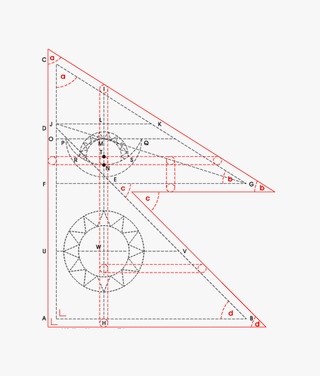
When you draw Nepal’s flag as per their constitution’s instruction
How to Draw Nepal’s Flag Accurately: A Step-by-Step Guide to Conforming with Constitutional Specifications
Nepal’s national flag is one of the world’s most unique and symbolic emblems—it is the only non-rectangular national flag globally, shaped like two stacked pennants. Unlike flags that follow simple rectangles or ratios, Nepal’s flag demands precise geometric execution as defined in the country’s constitution. In this step-by-step guide, we break down the exact constitutional instructions for drawing Nepal’s flag accurately, ensuring every curve, angle, and symbol aligns with its legal and cultural significance.
Why Nepal’s Flag Is Uniquely Complex
Before diving into the instructions, it’s important to understand why Nepal’s flag requires such meticulous design:
- Constitutional Mandate: Article 8 of Nepal’s 2015 Constitution lays out strict geometric rules for the flag’s construction, ensuring uniformity in its representation.
- Symbolism: The flag’s crimson background signifies bravery, the blue border represents peace, and the celestial symbols (sun and moon) reflect Nepal’s permanence and hope.
- National Identity: Its unconventional shape pays homage to Nepal’s Himalayan heritage and resistance to colonial influence, retaining a centuries-old design.
Constitutional Specifications for Nepal’s Flag
The flag consists of two crimson pennants stacked vertically, outlined in blue, with a white moon (upper) and 12-rayed sun (lower). Here’s how the constitution defines its construction:
1. Flag Proportions & Layout
- Height-to-Width Ratio:
- Total height = 1.5 times the width (e.g., if base width is 6 units, height is 9 units).
- Two Pennant Structure:
- Upper Pennant: Height ≈ 1/3 of total flag height.
- Lower Pennant: Height ≈ 2/3 of total flag height.
2. Geometric Construction of the Pennants (Step-by-Step)
Step 1: Drawing the Upper Pennant
- Start with a base line (AB) of any unit length (e.g., 6 units).
- Draw two upward arcs centered at points A and B, each with a radius equal to AB.
- The arcs intersect at point C, forming the curved top of the pennant.
- Connect points A-C and B-C to complete the upper pennant.
Step 2: Drawing the Lower Pennant
- Extend two lines downward from points A and B at 15-degree inward angles, converging at point D (approx. twice the height of the upper pennant).
- Draw an arc centered midway between A and B, curving outward to meet the angled lines, forming the lower pennant’s bottom edge.
Step 3: Adding the Blue Border
- Outline the entire perimeter with a blue strip equal to 1/20th of the flag’s base width (AB).
3. Emblems: Sun & Moon
- Upper Pennant (White Moon):
- A crescent moon with one smaller star inside its curve, placed near the top arc.
- Lower Pennant (White Sun):
- A 12-rayed sun emblem (8 long rays, 4 shorter rays interlaced).
Symbol Proportions:
- The moon and sun must touch the imaginary boundary of a circle with a diameter equal to 1/6th of AB (base width).
Step-by-Step Drawing Guide
Materials Needed: Ruler, compass, protractor, red/crimson (#DC143C), blue (#000080), and white coloring tools.
-
Sketch the Base Frame:
- Draw base line AB = 6 units (e.g., 6 cm). Use a compass to create the upper pennant’s arcs (radius = AB) intersecting at point C.
- Extend downward 15-degree lines from A and B to form the lower pennant, meeting at point D ≈ 12 units below AB.
-
Define the Borders:
- Outline the pennants with a blue border (0.3 cm if AB = 6 cm).
-
Draw Symbols:
- Moon: Position a white crescent moon near the top pennant’s apex, with a tiny star inside.
- Sun: In the lower pennant, draw a 12-rayed sun with alternating long (top/bottom/sides) and short (diagonal) rays.
-
Color: Fill the pennants crimson (#DC143C), border blue (#000080), and emblems white.
Why Accuracy Matters
Nepal’s flag is more than just a national emblem—it’s a constitutional duty to uphold its integrity. Inaccurate representations (e.g., rectangular flags, wrong proportions, missing rays on the sun) are not only culturally disrespectful but also legally incorrect. Even the Nepali government’s official portal provides templates to ensure compliance.
Common Mistakes to Avoid
- Wrong Shape: Never draw the flag as a rectangle or square—it must retain the double-pennant structure.
- Incorrect Angles: Pennant angles should be precise (15-degree inward slopes for the lower pennant).
- Emblem Size: Symbols that are too large or small defy constitutional ratios.
Frequently Asked Questions
Q1: Can Nepal’s flag be printed horizontally?
- No. The constitution mandates its vertical orientation with the sun and moon upright.
Q2: Why does the sun have 12 rays?
- It symbolizes Nepal’s 12-month tradition, 12 zodiac phases, and the cycle of time.
Q3: Where can I find official flag templates?
- Nepal’s Department of Information provides approved geometric schematics online (gov.np).
Conclusion: A Flag Like No Other
Drawing Nepal’s flag requires patience and precision, reflecting the nation’s commitment to preserving its unique identity. By following the constitutional guidelines outlined above, you ensure respect for this symbol of pride, unity, and resilience in the Himalayas.
Remember: The next time you recreate Nepal’s flag, you’re not just sketching a design—you’re honoring a geometry steeped in history, law, and the spirit of the Nepali people.