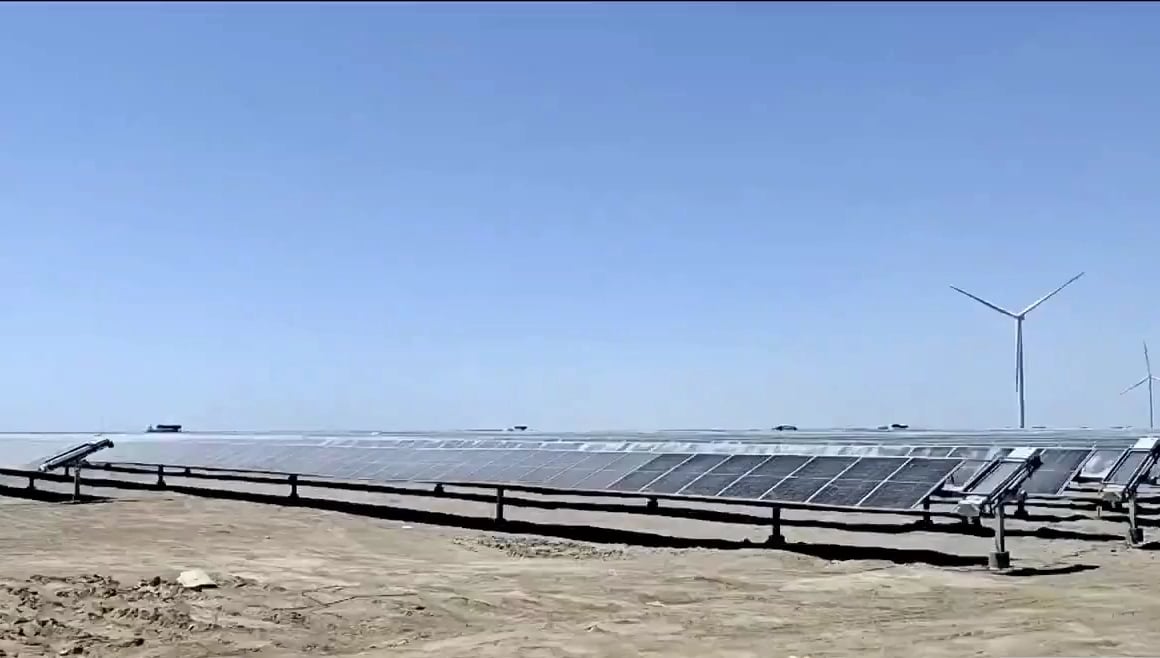
World’s largest planned renewable energy park in Gujarat, India (30 GW) – comparable to the electricity capacity of several small countries.
Title: World’s Largest Renewable Energy Park: Gujarat’s 30 GW Project Set to Power Nations
Meta Description: Discover the groundbreaking 30 GW renewable energy park in Gujarat, India – a colossal project poised to generate clean electricity equivalent to the capacity of entire countries.
Introduction: A Renewable Energy Marvel in the Making
India is pioneering the global renewable energy revolution with the world’s largest planned renewable energy park in Gujarat. Developed by Adani Green Energy, this $20 billion project boasts a staggering 30 gigawatt (GW) capacity — enough to power entire nations. To put this into perspective, 30 GW surpasses the total installed electricity capacity of countries like Denmark (18 GW), Ireland (11 GW), or Sri Lanka (4 GW). This article explores how Gujarat’s renewable megaproject will reshape energy sustainability, drive economic growth, and accelerate India’s net-zero ambitions.
1. The Khavda Renewable Energy Park: Project Overview
Located in the expansive Rann of Kutch desert, the Khavda Renewable Energy Park spans 72,600 hectares (726 sq km) — nearly the size of Singapore. Once completed by 2030, it will combine:
- Solar Power (26 GW): Millions of photovoltaic panels harnessing Gujarat’s high solar irradiance.
- Wind Energy (4 GW): Turbines capitalizing on the region’s strong coastal and land-based winds.
- Hybrid Systems: Integrated battery storage to ensure round-the-clock power supply.
Key Stats:
- Annual Output: 81 billion units of electricity.
- CO2 Reduction: 58 million tons per year (equivalent to replacing 12 coal-fired plants).
- Investment: ₹1.5 lakh crore (~$20 billion).
2. Why Gujarat? The Perfect Location for Renewable Domination
Gujarat’s unique geography makes it ideal for mega-scale renewable projects:
- Abundant Sunlight: 300+ sunny days annually with solar potential of 5.0–5.5 kWh/m²/day.
- High Wind Speeds: Average wind speeds of 8 m/s along the Kutch coastline.
- Minimal Habitat Disruption: The barren, sparsely populated desert terrain minimizes ecological and social impact.
3. Global Scale: How 30 GW Compares to Small Countries
To grasp the enormity of 30 GW, consider these comparisons:
| Country | Total Installed Capacity (GW) |
|——————–|———————————–|
| Denmark | 18 GW |
| Ireland | 11 GW |
| Sri Lanka | 4 GW |
| Khavda Park (India) | 30 GW (planned) |
This single project could power 16.1 million homes annually in India, or supply nations like Belgium (22 GW) or Chile (31 GW) with nearly their entire electricity needs.
4. Socio-Economic Impact: Jobs, Innovation & Energy Security
The project promises far-reaching benefits:
- Job Creation: 15,000+ direct jobs and 150,000+ indirect roles in manufacturing, construction, and maintenance.
- Infrastructure Boost: Roads, water systems, and digital connectivity in remote Kutch.
- Energy Sovereignty: Reducing fossil fuel imports, saving $3–5 billion annually.
- Community Upliftment: Adani Green plans skill development programs for locals in solar/wind maintenance.
5. Environmental Benefits: A Leap Toward Net-Zero
As India targets 500 GW of renewable capacity by 2030, Khavda Park will be pivotal for:
- Climate Action: Cutting emissions by ~5% of India’s 2022 CO2 output.
- Biodiversity Protection: Unlike hydropower or mining, solar/wind projects preserve groundwater and reduce land degradation.
- Resource Efficiency: Zero water consumption (dry cooling tech for solar panels).
6. Challenges & Solutions
While revolutionary, the project faces hurdles:
- Land Acquisition: Balancing speed with fair compensation for tribal communities.
- Grid Integration: Building high-capacity transmission lines to connect to India’s national grid (Green Energy Corridor Phase II underway).
- Sandstorms & Corrosion: Reinforced, weather-resilient solar infrastructure is critical.
Adani Green has mitigated risks via AI-powered drones for site monitoring and partnerships with global tech leaders like Maxeon Solar.
7. India’s Renewable Energy Vision: A Global Blueprint
The Khavda park aligns with India’s Panchamrit Goals announced at COP26:
- 500 GW non-fossil energy capacity by 2030.
- Net-zero emissions by 2070.
With projects like this, India is poised to surpass China as Asia’s renewable leader and inspire developing nations worldwide.
Conclusion: Lighting Up the Future
Gujarat’s 30 GW renewable energy park is more than an engineering feat—it’s a symbol of humanity’s capacity to harmonize progress with planetary health. By harnessing desert sunlight and wind, India is proving that clean energy at scale is not just viable but essential. As the world watches, Khavda could become the blueprint for powering nations sustainably.
Call to Action:
Stay updated on renewable energy breakthroughs! Subscribe for insights on global sustainability megaprojects.
Keywords for SEO:
World’s largest renewable energy park, Gujarat 30 GW solar wind project, Adani Green Energy, Khavda solar park, India renewable news, solar energy capacity vs countries.