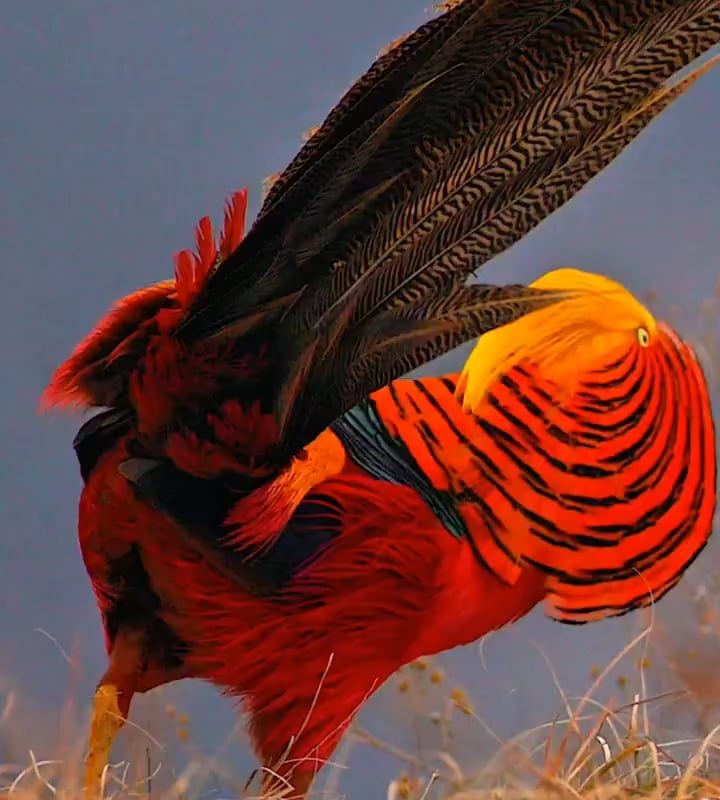
Often called the “Real-life Phoenix,” the Golden Pheasant is stunning when it performs its courtship dance
Title: Witness the Golden Pheasant’s Courtship Dance: Nature’s “Real-Life Phoenix” in Action
Meta Description: Discover the Golden Pheasant, a bird so dazzling it’s nicknamed the “Real-Life Phoenix.” Learn about its hypnotic courtship dance, vibrant colors, and ecological significance.
Nestled in the dense forests and mountainous regions of China, the Golden Pheasant (Chrysolophus pictus) is one of Earth’s most visually spectacular birds. Often dubbed the “Real-Life Phoenix” for its fiery plumage and mythical elegance, this avian wonder transforms into living art during its mesmerizing courtship dance. Join us as we explore the biology, behavior, and symbolism behind this creature’s awe-inspiring displays.
The Legend Comes to Life: Why the Golden Pheasant Earned Its “Phoenix” Moniker
The phoenix, a legendary bird reborn from flames, symbolizes renewal and beauty across cultures. The Golden Pheasant mirrors this mystique through its striking appearance:
- Crimson & Gold: Males flaunt a cape of deep red, a golden crest, an orange “mane,” and a blue-green back resembling polished armor.
- Long, Ornate Tail: Their tail feathers stretch up to 2 feet, shimmering with intricate black-and-orange patterns.
- Mythical Contrast: Females are camouflaged in earthy browns, making males appear even more supernatural during displays.
This dramatic dichotomy between mythic males and stealthy females underscores nature’s balance—beauty for attraction, subtlety for survival.
The Courtship Dance: A Hypnotic Performance
When breeding season arrives (late winter to spring), male Golden Pheasants unleash a dance ritual that rivals any fantasy creature’s grandeur. Here’s how they captivate potential mates:
-
The Grand Entrance:
Males emerge from dense foliage, fanning their tail feathers into a semicircular “shawl” to showcase their full glory. -
Feathers in Motion:
They vibrate their wings rhythmically, creating a rustling sound while tilting their golden crests forward. The neck hackles puff up, framing their faces in a sunburst of orange. -
The Sidestep Shuffle:
In a delicate, almost balletic movement, they circle females with sideways hops, ensuring every angle of their plumage glows in the light. -
Vocal Accompaniment:
Sharp chirps and metallic calls punctuate the dance, amplifying its intensity.
Scientists believe this ritual evolved to demonstrate fitness—only the strongest males can maintain such vibrant feathers and expend energy on prolonged dances.
Behind the Beauty: Habitat, Diet, and Survival
While their dance steals the spotlight, Golden Pheasants face real-world challenges:
- Habitat: Native to western China’s forests, they prefer dense undergrowth for nesting and open clearings for displays.
- Diet: Omnivorous, feeding on insects, grains, leaves, and berries.
- Threats: Habitat loss and poaching for ornamental feathers have reduced wild populations. They’re now classified as Least Concern (IUCN) but depend on conservation efforts.
Ironically, their popularity in aviculture (they’re widely kept in captivity) may be safeguarding the species while wild numbers decline.
Where to See the Golden Pheasant’s Dance in the Wild (or Close to It)
While challenging to spot in their native China, you can witness their courtship magic in:
- Forest Reserves: Sichuan and Shaanxi provinces offer guided wildlife tours during mating season.
- Zoological Gardens: Many zoos (e.g., San Diego Zoo, London Zoo) house Golden Pheasants, prioritizing breeding programs.
- Private Sanctuaries: Ethical bird sanctuaries in the UK and Europe often celebrate their vibrant displays.
Tip: Visit at dawn when males are most active, and bring binoculars—their shy nature means they vanish swiftly!
Cultural Symbolism: More Than Just a Pretty Bird
Beyond biology, the Golden Pheasant inspires art and folklore:
- Imperial China: Represented nobility and was often depicted in traditional paintings.
- Western Heraldry: Symbolizes refined beauty and vigilance in European coats of arms.
- Modern Metaphors: Entrepreneurs and artists use “Golden Pheasant moments” to describe transformative, attention-grabbing actions.
Conservation: Protecting the “Phoenix” of Our Forests
Preserving Golden Pheasants means protecting entire ecosystems. How to help:
- Support Reforestation: Donate to NGOs like BirdLife International working in East Asia.
- Ethical Tourism: Choose wildlife tours certified by the Global Ecotourism Network.
- Combat Trafficking: Report illegal trade of feathers or live birds via local wildlife agencies.
Conclusion: A Living Jewel Worth Celebrating
The Golden Pheasant’s courtship dance is more than a mating ritual—it’s a testament to evolution’s artistry. Like the phoenix of lore, its breathtaking beauty ignites our imagination while reminding us to cherish Earth’s fragile wonders. Whether glimpsed in the wild or on-screen, this avian marvel leaves an indelible mark: a flash of gold, a whirl of crimson, and a heartbeat of wilderness we cannot afford to lose.
Ready to See the Dance?
Search for videos of Golden Pheasants in courtship—a spectacle that proves truth can be stranger (and more stunning) than fiction!