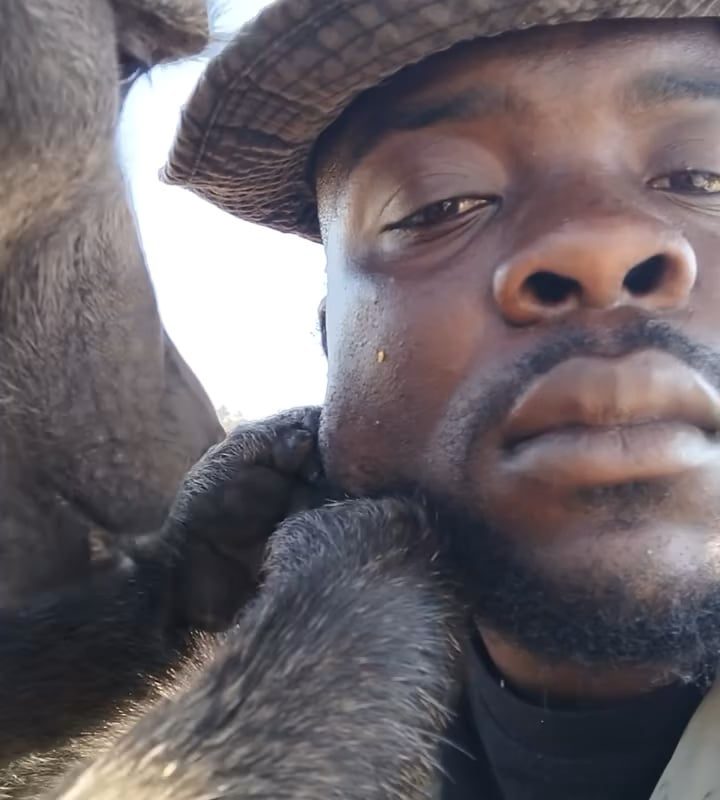
Baboon grooming human
I still can’t get over the viral video I saw recently of a baboon gently grooming a human – it’s a scene that’s both surreal and strangely heartwarming. The way the baboon’s fingers meticulously pick through the human’s hair, searching for any tangles or knots, is a testament to the complex social bonds that can form between species. But what’s behind this unusual behavior, and what can we learn from it? As it turns out, baboons are notorious for their love of grooming, and it plays a crucial role in their social hierarchy and relationships.
The Science of Grooming
Grooming is an essential part of baboon behavior, serving as a way to strengthen social bonds, resolve conflicts, and even establish dominance. By grooming each other, baboons are able to remove parasites, clean wounds, and generally improve each other’s health and well-being. But what’s fascinating is that this behavior isn’t limited to just their own species – in some cases, baboons have been known to groom other animals, including humans. This phenomenon is often referred to as “cross-species grooming,” and it’s a remarkable example of the complex emotional and social lives of these intelligent primates.
A Deeper Connection
So, why do baboons seem to be so drawn to grooming humans? One theory is that it’s a result of their highly developed sense of empathy and social intelligence. Baboons are able to read human body language and behavior, and they may even be able to pick up on our emotional states. By grooming us, they may be attempting to comfort or soothe us, much like they would with one of their own troop members. This raises some fascinating questions about the nature of empathy and compassion in the animal kingdom, and whether we’re truly alone in our capacity for complex emotions.
Conservation Implications
The fact that baboons are willing to groom humans also has some interesting implications for conservation efforts. In some parts of the world, baboons are considered pests or nuisances, and are often persecuted or relocated. But by recognizing the complex social and emotional lives of these animals, we may be able to develop more effective and humane conservation strategies. By working with baboons and understanding their behavior, we may be able to find ways to peacefully coexist with them, and even learn from their remarkable social bonds.
As I reflect on that viral video, I’m struck by the beauty and simplicity of the baboon’s actions – a gentle, loving gesture that transcends species and speaks to our shared humanity. It’s a powerful reminder of the complex, emotional lives of the animals that share our planet, and the incredible things we can learn from them if we only take the time to look.