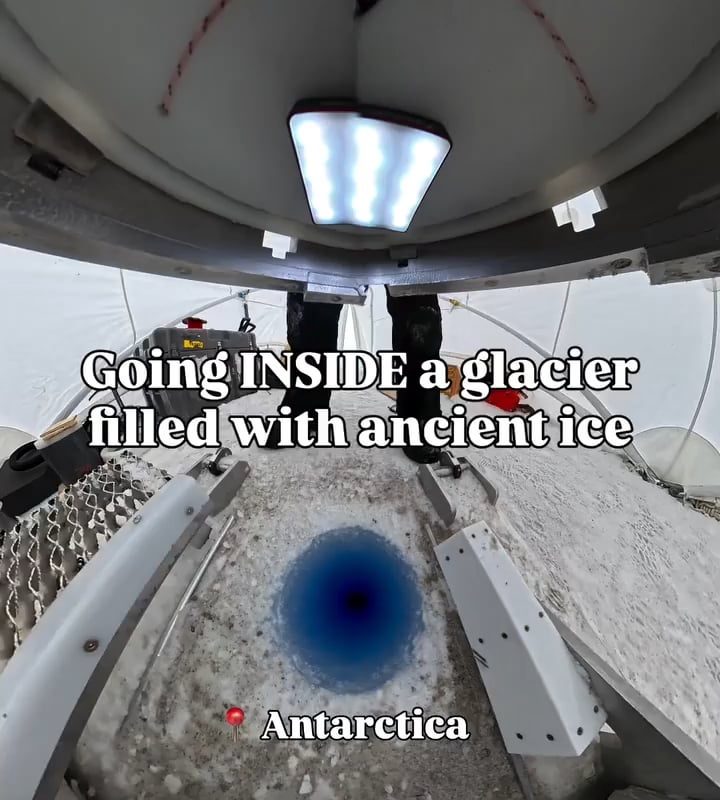
Inside a glacier filled with ancient ice
Title: Inside a Glacier Filled with Ancient Ice: Unlocking Earth’s Climate Secrets
Meta Description: Discover how glaciers preserve ancient ice cores, acting as time capsules that reveal Earth’s climate history, atmospheric changes, and secrets buried for millennia.
Introduction: The Frozen Archives of Our Planet
Imagine standing atop a glacier thousands of years old—a colossal river of ice hiding secrets from Earth’s distant past. Glaciers are more than stunning natural wonders; they are icy vaults preserving snapshots of ancient climates, atmospheric composition, and even traces of long-lost ecosystems. Deep within their frozen layers, scientists uncover clues about our planet’s history and humanity’s impact on the environment. In this article, we delve into the mesmerizing world of ancient ice buried inside glaciers, exploring its significance, the science behind it, and why these frozen time capsules matter now more than ever.
What is Ancient Ice? Nature’s Deep-Freeze Record
Glaciers form over centuries as snowfall compresses into dense ice, trapping air bubbles, dust, volcanic ash, and organic particles from each era. The oldest ice cores drilled from glaciers like Antarctica’s Dome C or Greenland’s GISP2 contain ice up to 800,000 years old, offering a pristine record of Earth’s atmospheric conditions before human industrialization.
Key Insights Preserved in Ancient Ice:
- Climate History: Layers of ice act like tree rings, revealing temperature fluctuations over millennia.
- Greenhouse Gas Concentrations: Bubbles of ancient air show CO₂ and methane levels during ice ages and warm periods.
- Volcanic Eruptions & Cosmic Events: Ash layers and isotopes hint at major geological and extraterrestrial events.
- Biological Material: Microbes and pollen trapped in ice provide glimpses of past ecosystems.
Journey Inside a Glacier: How Scientists Extract the Past
Exploring a glacier’s interior is no easy feat. Teams endure extreme polar conditions to drill ice cores—cylindrical samples extracted vertically from deep within the ice sheet. Here’s how it works:
- Drilling: Specialized hollow drills penetrate hundreds of meters into the glacier, retrieving cores segment by segment.
- Analysis: Laboratories worldwide study these cores using mass spectrometers, microscopes, and radiometric dating.
- Decoding Layers: Each ice layer’s thickness, chemistry, and trapped gases help reconstruct historical climate trends.
Landmark projects like the European Project for Ice Coring in Antarctica (EPICA) have revolutionized our understanding of Earth’s climate cycles, proving that today’s CO₂ levels are unprecedented in 800,000 years.
Mind-Blowing Discoveries from Glacier Ice
- The Youngest Dryas Event: Ice cores exposed abrupt cooling 12,800 years ago, likely caused by a comet impact.
- Ice Age Cycles: Ancient ice reveals how orbital shifts (Milankovitch cycles) drove glacial advances and retreats.
- Human Pollution Traces: Industrial lead and nuclear fallout from mid-20th-century tests appear in post-1850 ice layers.
Why Study Ancient Ice? Climate Science’s Crystal Ball
Glacier ice doesn’t just look backward; it helps predict Earth’s future. By comparing historical data with modern climate models, scientists:
- Validate predictions about global warming impacts.
- Study how ecosystems responded to past temperature shifts.
- Highlight the urgency of reducing greenhouse emissions.
Dr. Sarah Shackleton, a paleoclimatologist at Cambridge, puts it bluntly: “Ancient ice shows us that what’s happening now isn’t natural. We’re altering the atmosphere faster than ever before.”
Threats to Glaciers: A Disappearing Library
Sadly, the very archives holding Earth’s history are vanishing. Climate change is melting glaciers at record rates:
- Greenland lost 5,100 gigatons of ice between 1992–2020—enough to flood New York City under 23 feet of water.
- Alpine glaciers could disappear entirely by 2100, erasing irreplaceable climate data.
Conservation isn’t just about preserving landscapes—it’s about safeguarding humanity’s memory bank.
Conclusion: Guardians of the Frozen Past
Glaciers filled with ancient ice are more than geological marvels—they’re libraries of Earth’s autobiography. As these icy archives shrink, their message grows clearer: understanding our past is key to protecting our future. Through cutting-edge science and global climate action, we can ensure these frozen chronicles endure for generations to come.
Explore More:
- Visit polar research hubs like the Byrd Polar and Climate Research Center.
- Support initiatives like Ice Memory, which preserves ice cores in Antarctica’s “Ice Sanctuary.”
Keywords: ancient ice, glacier core samples, climate history, ice core drilling, paleoclimate research, glacial archives, greenhouse gas records, melting glaciers.
Boost your SEO with this deep dive into glaciers’ frozen secrets—perfect for science enthusiasts, educators, and eco-conscious readers alike! ❄️🔬