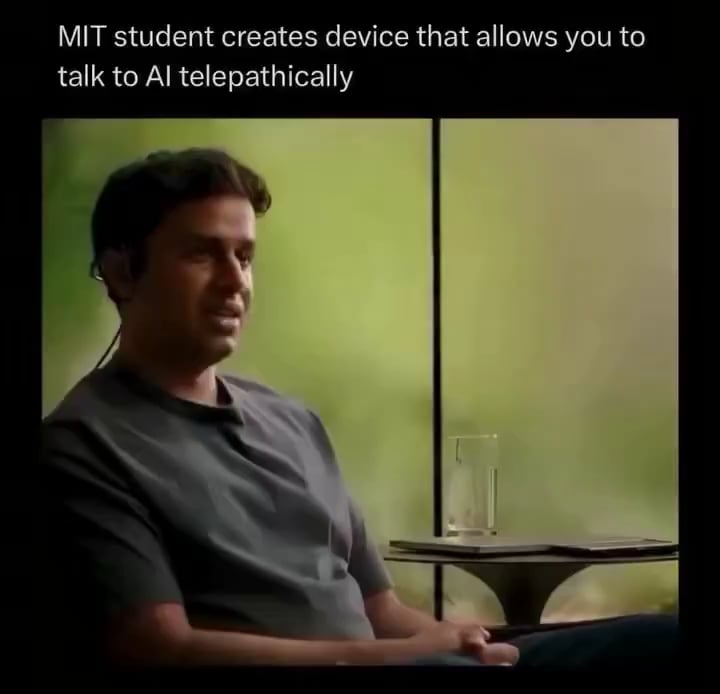
Arnav Kapur: Alter Ego, is a wearable headset designed at the MIT Media Lab. The device captures subtle neuromuscular signa when a person internally articulates words without speaking aloud.
Unlocking Silent Speech: Exploring the MIT Media Lab’s Alter Ego Headset by Arnav Kapur
(Meta Description: Discover Alter Ego, MIT’s wearable headset that translates silent speech into action. Learn how Arnav Kapur’s innovation uses neuromuscular signals to revolutionize communication and AI interaction.)
Arnav Kapur’s Alter Ego: The Wearable Tech That Hears Your Unspoken Words
Imagine controlling devices, searching the web, or sending messages—without uttering a sound. That’s the reality promised by Alter Ego, a groundbreaking wearable headset developed by Arnav Kapur at MIT’s Media Lab. This device deciphers silent speech by reading subtle neuromuscular signals, blurring the lines between human thought and machine interaction.
What Is Alter Ego?
Alter Ego is a non-invasive, wearable headset designed to detect internal speech articulation—when you mentally “say” words without moving your lips or vocal cords. Using advanced sensors and AI, it captures electrical signals from facial muscles and translates them into actionable commands or text.
Key Features:
- Silent Speech Recognition: Detects neuromuscular patterns generated when users internally articulate words.
- Bone Conduction Feedback: Delivers AI responses through vibrations, letting users “hear” without blocking ambient noise.
- AI-Powered Intelligence: Integrates with systems like ChatGPT or Google Search for real-time information retrieval.
- Minimalistic Design: Discreet form factor, resembling headphones or glasses arms for everyday use.
How Does Alter Ego Work?
Arnav Kapur’s invention leverages electromyography (EMG) sensors and machine learning to bridge the gap between thought and technology:
-
Signal Detection:
Sensors placed along the jawline and face pick up micro-movements generated during internal speech (subvocalization). -
AI Translation:
A neural network decodes these signals into words, phrases, or commands. For example, silently asking “What’s the capital of Norway?” triggers the system to whisper “Oslo” via bone conduction. -
Seamless Interaction:
Users converse with AI, control smart devices, or navigate digital interfaces—hands-free and voice-free.
Real-World Applications: Where Alter Ego Shines
Alter Ego isn’t just sci-fi—it’s poised to transform industries and lives:
-
Assistive Technology
- Empowers individuals with speech disabilities (e.g., ALS, stroke survivors) to communicate naturally.
- Offers a lifeline for those silenced by physical or neurological conditions.
-
Covert & High-Stakes Environments
- Military or security personnel could relay messages silently during operations.
- Surgeons might access patient data mid-procedure without breaking sterility.
-
Enhanced Productivity
- Multitaskers interact with AI assistants during meetings or noisy commutes.
- Provides instant access to knowledge without typing or speaking aloud.
-
Gaming & Virtual Reality
- Silent commands could control VR avatars or in-game actions for deeper immersion.
The Visionary Behind Alter Ego: Arnav Kapur
Arnav Kapur, an MIT Media Lab researcher, designed Alter Ego to “augment human cognition”—enabling technology to function as a seamless extension of our minds. His vision emphasizes “intelligence amplification,” where humans and AI collaborate to transcend traditional interaction limits.
“What if computing was woven into your daily life… like a sixth sense?”
– Arnav Kapur, TED Talk
Technical Breakthroughs & Challenges
While revolutionary, Alter Ego faces hurdles:
- Accuracy: Recognizing diverse vocabularies and accents with minimal training.
- Privacy: Ensuring neural data remains secure from unintended access.
- Adoption: Moving from lab prototype to consumer-ready device.
Yet, early trials show >90% accuracy for simple commands, with ongoing refinements expanding its capabilities.
The Future of Silent Communication
Alter Ego hints at a future where:
- Humans “Google” answers internally during conversations.
- Wearables replace keyboards and voice assistants.
- Disabilities no longer limit how we connect with the world.
As Kapur states, “We’re entering an era where technology understands not just what you say—but what you mean.”
FAQs About Alter Ego
Q1: Can Alter Ego read minds?
No—it detects deliberate neuromuscular signals from intentional internal speech, not raw thoughts.
Q2: Is this technology available for purchase?
Not yet. MIT is refining the prototype, but commercial partnerships are likely.
Q3: How much does Alter Ego cost?
Pricing is unconfirmed, but MIT aims for accessibility in healthcare and consumer markets.
Q4: Does it work for all languages?
Currently optimized for English, with multilingual support planned.
Conclusion: A Silent Revolution in Wearables
Arnav Kapur’s Alter Ego redefines human-computer interaction, turning silent thoughts into a powerful interface. For people with disabilities, professionals, and tech enthusiasts alike, this MIT innovation promises to unlock unprecedented freedom in how we connect with machines—and each other.
As R&D accelerates, Alter Ego could soon transition from lab curiosity to life-changing tool, proving that sometimes, the loudest revolutions happen in total silence.
(Keywords: Alter Ego headset, Arnav Kapur MIT, silent speech technology, neuromuscular wearable, internal speech recognition, assistive communication device, MIT Media Lab inventions, human-AI interaction, subvocalization tech)