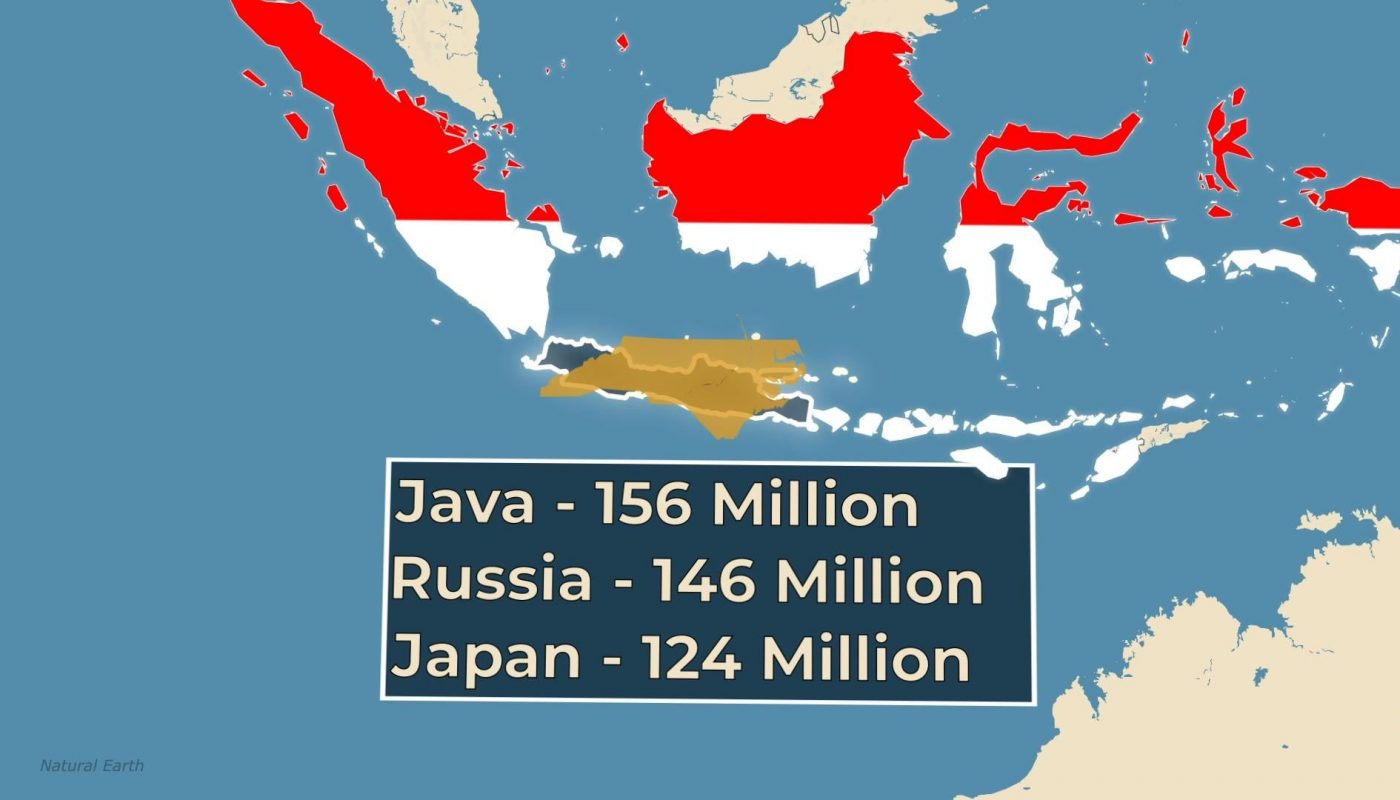
One Indonesian island has more people than Russia
Title: Java: The Indonesian Island with a Bigger Population Than Russia
Meta Description: Discover how Java, Indonesia’s most populous island, holds more inhabitants than the entire country of Russia. Dive into its demographics, history, and the factors driving its extraordinary density.
Introduction: A Staggering Demographic Surprise
Imagine an island so densely packed with people that its population outnumbers one of the world’s largest countries by land area. This isn’t fiction—it’s Java, Indonesia. With an estimated 150 million residents, Java surpasses Russia’s entire population (144 million) and crams them into an area just 4% the size (138,800 km² vs. Russia’s 17.1 million km²). How did this island become a global population epicenter? Let’s explore.
Java vs. Russia: A Population Showdown
- Java’s Population: ~150 million (as of 2024).
- Russia’s Population: ~144 million (as of 2024).
- Density Difference: Java fits 1,125 people per km², while Russia averages 8.4 people per km².
For perspective, Java’s population is comparable to Pakistan or Nigeria, yet squeezed into an island smaller than England. This density fuels both economic dynamism and immense challenges.
Why Is Java So Crowded?
-
Historical Roots:
Java’s fertile volcanic soil attracted settlers for centuries. Colonial Dutch policies further concentrated plantations, infrastructure, and governance on the island. -
Economic Magnet:
Java generates 60% of Indonesia’s GDP, anchored by Jakarta (the capital), Surabaya, and Bandung. Industries, universities, and jobs draw migrants from across the archipelago. -
Metro Jakarta:
The world’s second-largest urban area (35 million people) sprawls across Java. Rapid urbanization swells its cities—roughly 60% of Indonesians live on Java, despite it being just 7% of the nation’s land.
Challenges of Overcrowding
- Infrastructure Strain: Traffic jams cost Jakarta’s economy $7 billion annually. Housing shortages push millions into informal settlements.
- Environmental Pressures: Deforestation, river pollution, and air quality crises plague urban areas.
- Resource Scarcity: Groundwater depletion and waste management struggles threaten long-term sustainability.
Beyond the Numbers: Java’s Cultural Power
Java isn’t just populous—it’s Indonesia’s cultural heartland, home to:
- Ancient temples like Borobudur and Prambanan.
- Traditional arts: batik, gamelan music, and wayang puppetry.
- A linguistic majority—Javanese is Indonesia’s most-spoken native language.
Will Java Keep Growing?
Indonesia’s government is working to decentralize growth, promoting cities like Makassar (Sulawesi) and Balikpapan (Kalimantan) as alternatives. Yet Java remains the undisputed nucleus of power, trade, and opportunity—likely maintaining its demographic dominance for decades.
Did You Know?
If Java were a country, it would rank 8th in population, ahead of Russia, Bangladesh, and Mexico.
Conclusion: A Microcosm of Global Megatrends
Java exemplifies the tensions of rapid urbanization: innovation and chaos, tradition and modernity, all packed into a land smaller than Montana. Its story mirrors challenges faced by megacities worldwide—and underscores why sustainable development is non-negotiable.
Explore Java Yourself:
From Jakarta’s skyscrapers to Yogyakarta’s rice fields, Java balances frenetic energy with timeless beauty. Just prepare for crowds!
Keywords for SEO: Java island population, Indonesia vs Russia population, most populous island in the world, Java demographic facts, Jakarta overcrowding, Indonesian geography.
By framing Java’s jaw-dropping density in relatable terms, this article aims to captivate readers while optimizing for search engines seeking comparisons between Indonesia and global giants like Russia.