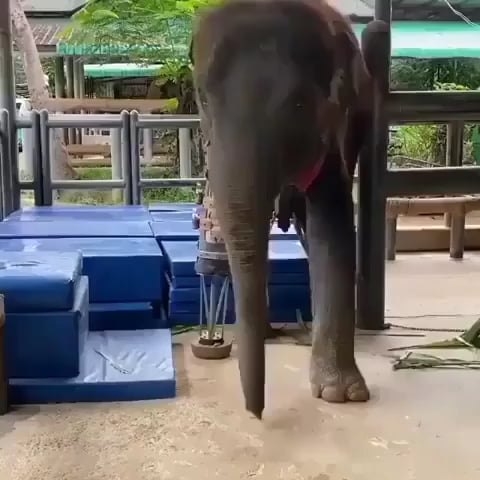
This man creating prosthetic legs for elephants
Title: Meet the Hero Crafting Prosthetic Legs for Elephants: A Tale of Innovation and Compassion
Meta Description: Discover the groundbreaking work of one man who is revolutionizing elephant care by designing custom prosthetic legs for injured giants. Learn how his innovation is saving lives.
URL Slug: prosthetic-legs-for-elephants-hero
The Unseen Hero Giving Elephants a Second Chance
In the heart of wildlife conservation, a quiet revolution is unfolding—one that blends cutting-edge technology with profound compassion. Meet Dr. Therdchai Jivacate, a Thai orthopedic specialist who has dedicated his life to creating life-changing prosthetic limbs for elephants. These gentle giants, often injured by landmines, accidents, or illness, face unimaginable challenges when they lose a limb. Without intervention, they suffer chronic pain, infections, and even death. But Dr. Therdchai’s visionary work is rewriting their stories.
Why Prosthetics for Elephants Matter
Elephants are the world’s largest land mammals, weighing up to 12,000 pounds. When a leg is lost or severely damaged, their immense weight makes mobility nearly impossible. Traditional treatments often fail due to elephants’ size and the complexity of their injuries. In the wild, an injured elephant faces almost certain death. In captivity, they endure lifelong confinement.
Enter prosthetics—a solution long used for humans and pets—but scaled for elephants. The challenge? Crafting a limb sturdy enough to support tons of weight while mimicking natural movement. Dr. Therdchai, inspired by his decades of work with human amputees, saw an opportunity to bridge this gap.
The Making of an Elephant Prosthetic: Precision Meets Ingenuity
Creating a prosthetic leg for an elephant isn’t just a larger version of a human design. It requires:
- Custom Molded Designs: Each prosthetic is tailored to the elephant’s unique anatomy. 3D scanning and casts ensure a flawless fit.
- Military-Grade Materials: Lightweight yet ultra-durable materials like carbon fiber, thermoplastics, and rubber are used to withstand massive pressure.
- Biomechanics Expertise: The prosthetic must replicate an elephant’s natural gait to prevent joint strain and sores.
- Collaboration: Teams of vets, engineers, and mahouts (elephant caretakers) work together to ensure the prosthetic meets behavioral and medical needs.
One of Dr. Therdchai’s earliest successes was Mosha, a female Asian elephant who lost her leg to a landmine at age 7. After years of painful adaptations, Mosha received her first prosthetic in 2007. Today, she walks confidently—and even plays—thanks to regular adjustments as she grows.
The Ripple Effect: Beyond Mobility
Prosthetics don’t just restore movement; they give elephants a renewed lease on life. At elephant sanctuaries like the Friends of the Asian Elephant Hospital in Thailand, patients like Motola (another landmine survivor) now thrive with prosthetic legs. This innovation also:
- 🔄 Reduces Stress: Pain-free mobility improves mental health and social interaction.
- 🌍 Supports Conservation: By rescuing injured elephants, these efforts contribute to preserving endangered species.
- 💡 Inspires Global Change: Dr. Therdchai’s work has sparked similar projects in India, Africa, and beyond.
Challenges and Future Innovations
Despite successes, obstacles remain. Elephants’ prosthetics require frequent adjustments due to rapid growth or wear. Funding and specialized vet care are also barriers in low-resource regions. Yet, pioneers like Dr. Therdchai continue innovating—experimenting with shock-absorbing materials and AI-driven gait analysis to create even smarter limbs.
How You Can Help
- Support Organizations: Donate to sanctuaries like the Friends of the Asian Elephant Hospital (FAE).
- Spread Awareness: Share stories like Mosha’s to highlight the intersection of tech and wildlife rescue.
- Advocate for Change: Push for bans on landmines and habitat destruction, the root causes of elephant injuries.
Final Thoughts
Dr. Therdchai Jivacate’s mission is a testament to human ingenuity and empathy. By building “legs of hope” for elephants, he reminds us that no creature is beyond saving—no matter how large the challenge. As prosthetic technology evolves, so too does our capacity to protect Earth’s most vulnerable giants.
Keywords: Prosthetic legs for elephants, elephant rescue, Dr. Therdchai Jivacate, Asian elephant conservation, elephant prosthetics innovation, elephant landmine survivors, Friends of the Asian Elephant Hospital, Mosha the elephant, Motola elephant, wildlife rehabilitation.
Internal Links Strategy: Link to related articles on wildlife conservation, prosthetics for animals, or landmine impact on wildlife.
Image ALT Text: “Elephant with prosthetic leg walking in sanctuary” / “Dr. Therdchai fitting a prosthetic on an elephant.”