Poster Restoration
The Art of Poster Restoration: Preserving History, One Print at a Time
Posters have long been more than just decorative pieces—they are snapshots of cultural history, advertising milestones, and artistic movements. From vintage movie posters and wartime propaganda to concert memorabilia and rare travel ads, these prints tell stories that resonate across generations. But over time, exposure to light, moisture, pests, and mishandling can leave posters torn, stained, faded, or brittle. This is where poster restoration comes in: a meticulous craft that blends artistry, science, and reverence for the past.
In this guide, we’ll explore why poster restoration matters, the techniques professionals use, and how to decide whether DIY fixes or expert intervention is best for your prized collection.
Why Poster Restoration Matters
Posters are ephemeral by nature—often printed on inexpensive paper for short-term use. Yet, decades later, they become irreplaceable artifacts with historical and monetary value. Restoration isn’t just about aesthetics; it’s about:
- Preserving Cultural Heritage: Iconic posters (e.g., Toulouse-Lautrec’s Moulin Rouge ads or WWII “Rosie the Riveter”) reflect societal shifts.
- Protecting Financial Value: A professionally restored rare poster can sell for thousands at auction. Damage cuts value drastically.
- Emotional Significance: Family heirlooms, like a grandfather’s travel poster or a prized band tour print, carry sentimental weight.
Common Poster Damage & Challenges
Restoration begins with diagnosing the damage:
- Tears and Creases: Rough handling or folding leads to rips or permanent crease lines.
- Stains: Water damage, mold, ink bleed, or adhesive residue (from tape or glue).
- Fading: Sunlight or UV exposure bleaches colors over time.
- Brittleness: Acidic paper degrades, turning yellow and fragile.
- Pest Damage: Silverfish, termites, or rodents leave holes or gnaw marks.
Professional Poster Restoration Techniques
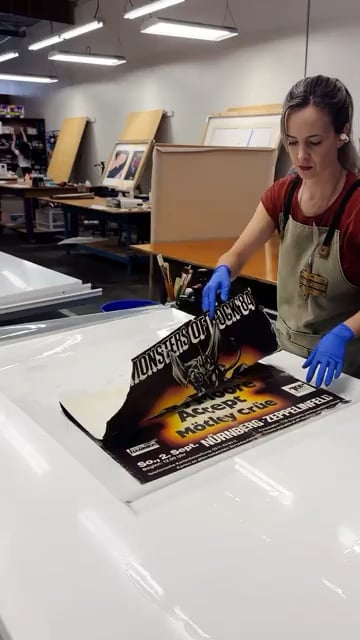
Expert conservators use reversible, non-invasive methods to rescue posters while maintaining authenticity:
1. Cleaning & Deacidification
- Surface Cleaning: Dry methods (soft brushes, specialized sponges) remove dust and dirt without moisture.
- Wet Cleaning: For stubborn stains, delicate baths in purified water or solvents lift grime safely.
- Deacidification: Neutralizes acidic paper with alkaline solutions to halt decay and prevent future brittleness.
2. Paper Repair & Infilling
- Japanese Paper Backing: Torn areas are reinforced with ultra-thin, archival-grade kozo (mulberry) paper and reversible wheat starch paste.
- Infilling Gaps: Missing sections are recreated using hand-painted paper or digital recreation printed on archival stock.
3. Stain & Discoloration Treatment
- Light Bleaching: Controlled exposure to reduce yellowing or foxing (brown spots caused by mold or oxidation).
- Solvent Gels: Target-specific stains (e.g., wine, ink) are lifted with precision applications.
4. Strengthening & Support
- Linen Backing: For severely damaged posters, experts use archival linen backing to stabilize the piece while allowing it to remain flexible. This technique is common for high-value vintage posters.
- Archival Mounting: Acid-free mats and UV-protective glass prevent future damage in framing.
5. Color Restoration
- Inpainting: Faded or lost pigments are meticulously retouched by hand using conservation-grade paints that age like the original ink. Digital tools may assist in color-matching.
DIY Poster Restoration: When to Proceed with Caution
Minor issues might tempt a DIY approach, but proceed carefully:
- ✅ Gently Clean Surface Dust: Use a microfiber cloth or soft brush.
- ✅ Remove Non-Adhesive Debris: Tweezers can lift loose particles.
- ❌ Avoid:
- Household tapes or glues (they yellow and weaken paper).
- Bleach or harsh cleaners (risk of irreversible damage).
- Heavy-handed attempts to “fix” tears or stains.
For valuable, rare, or emotionally significant posters, always consult a professional. A botched repair can slash value and cause permanent harm.
Choosing a Professional Poster Restorer
Look for specialists with:
- Experience in Paper Conservation: Ask for before/after portfolios.
- Use of Reversible Methods: Ensures future conservators can undo treatments if needed.
- Transparency: A detailed assessment and clear pricing.
- Archival Materials Guarantee: All adhesives, papers, and paints must be acid-free and pH-neutral.
Preventing Damage: How to Store & Display Posters
Restoration is a last resort. Protect your collection proactively:
- Frame Smartly: Use UV-filtering glass or acrylic and acid-free mats. Keep posters away from direct sunlight.
- Store Flat: In archival sleeves or flat files, away from humidity and temperature swings.
- Handle Minimally: Wear cotton gloves to avoid oils from skin transferring to paper.
Conclusion: Breathing New Life into the Past
Poster restoration bridges the gap between history and the present, ensuring that vibrant works of art and cultural touchstones survive for future generations. Whether you’re a collector, historian, or someone with a cherished keepsake, professional restoration honors the story behind every crease, stain, and faded hue.
By understanding the process and investing in expert care, your posters can reclaim their brilliance—not as flawless replicas, but as authentically preserved testaments to the eras they represent.
Keywords for SEO: Poster Restoration, Vintage Poster Repair, Paper Conservation, Poster Conservation Tips, Restoring Old Posters, Archival Poster Repair, Professional Poster Restoration, Preserve Movie Posters, Linen Backing Posters, DIY Poster Repair.