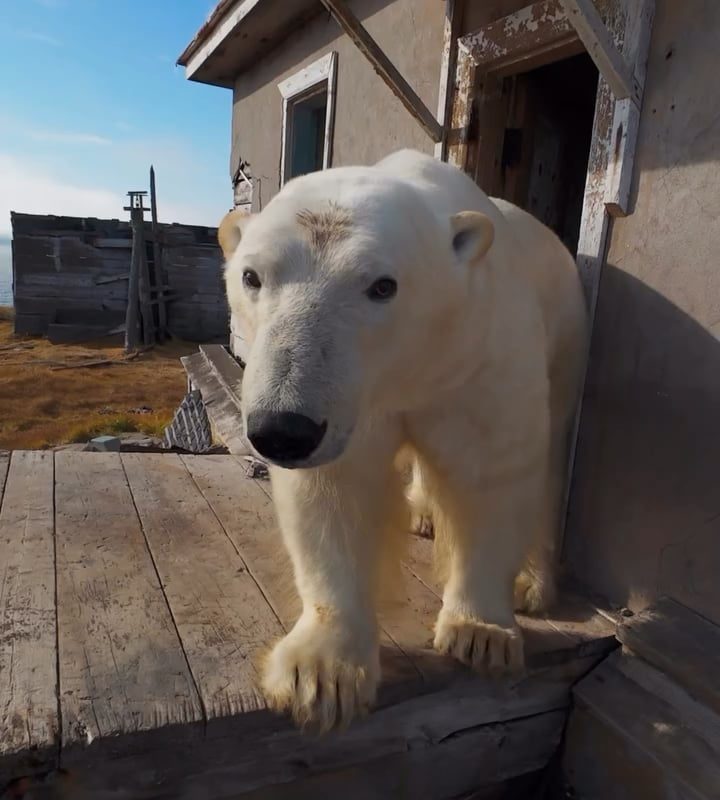
Polar bears found living together in an abandoned weather station
Title: Polar Bears Discovered Cohabiting in Abandoned Arctic Weather Station – A Sign of Changing Times
Meta Description: Explore the fascinating discovery of polar bears using an abandoned Russian weather station as shelter, and what this reveals about their adaptation to climate change.
Polar Bears Turn Abandoned Weather Station into Surprising Sanctuary
In a remarkable display of adaptation, polar bears have been documented living inside an abandoned weather station on the remote island of Kolyuchin in the Russian Arctic. This discovery, first reported by researchers and photographers, highlights how these iconic Arctic predators are repurposing human-made structures as climate change reshapes their natural habitat.
The Unexpected Arctic Tenants
Kolyuchin Island, located off the coast of Chukotka in northeastern Russia, was once home to a bustling Soviet-era weather station. Abandoned in the early 1990s, the decaying infrastructure has now found new life as a seasonal refuge for polar bears. Photographs and drone footage reveal adult bears and cubs navigating staircases, peering through broken windows, and resting inside the station’s dilapidated buildings—an eerie juxtaposition of wildlife and human relics.
Scientists note that polar bears typically den in snowbanks or coastal alcoves. However, as sea ice retreats due to warming temperatures (Arctic sea ice has declined by 13% per decade since 1979), bears are increasingly forced ashore for longer periods. The barren, wind-swept terrain of Kolyuchin offers few natural shelters, making the weather station’s sturdy structures an irresistible alternative.
Why Are Polar Bears Choosing Human Structures?
- Shelter from Extreme Conditions: The station provides protection from blizzards and sub-zero temperatures, especially for vulnerable cubs.
- Denning Opportunities: Empty rooms mimic natural dens, offering privacy for rearing young.
- Scouting Advantage: Elevated vantage points allow bears to spot prey or threats across the frozen tundra.
This behavior isn’t isolated to Kolyuchin. Abandoned buildings, military bases, and research outposts across the Arctic have reported similar bear invasions, signaling a broader trend of wildlife adapting to human-altered environments.
Implications for Polar Bear Survival
While the footage of bears in the weather station has captivated audiences worldwide, it underscores a grim reality. Polar bears, classified as vulnerable by the IUCN, rely on sea ice to hunt calorie-rich seals. As ice disappears, starvation and habitat stress rise. By 2100, scientists warn polar bear populations could decline by 30% unless greenhouse gas emissions are drastically reduced.
Human structures, though temporarily beneficial, cannot replace intact ecosystems. Increased bear-human interactions also raise risks of conflict, especially as industrial activity expands in the Arctic.
Conservation Steps Forward
- Minimize Arctic Disruption: Advocate for reduced fossil fuel exploration in sensitive habitats.
- Support Climate Action: Polar bears depend on global efforts to limit temperature rise to 1.5°C under the Paris Agreement.
- Research & Monitoring: Scientists are using satellite collars and AI to track bear movements and identify critical refuges.
A Symbol of Resilience and Crisis
The haunting imagery of polar bears occupying a Soviet ghost town serves as both a testament to their resilience and a stark warning. As one researcher stated, “They’re survivors, but they’re running out of options.”
Call to Action: Share this story to raise awareness about Arctic conservation. Support organizations like Polar Bears International or WWF to fund climate resilience initiatives.
Target Keywords: polar bears weather station, arctic climate change, abandoned buildings wildlife, polar bear adaptation, Kolyuchin Island bears, polar bear conservation.
By blending scientific urgency with a captivating narrative, this article aims to rank for trending climate-wildlife keywords while educating readers on an extraordinary ecological shift.