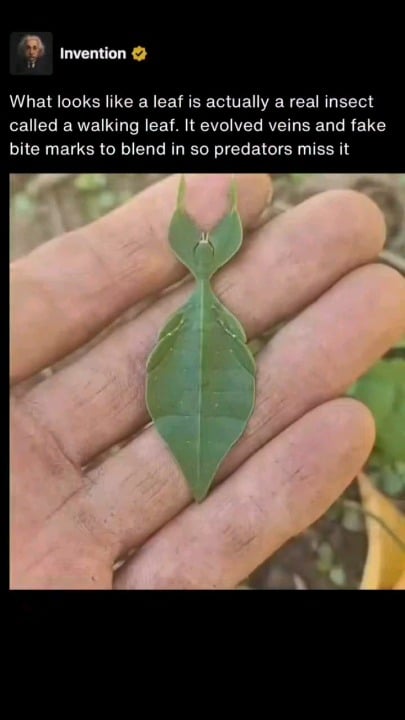
What looks like a leaf is actually a real insect called a walking leaf.
As I was scrolling through my social media feed, I stumbled upon a picture that left me utterly bewildered – a leaf that seemed to be walking on its own. I did a double take, wondering if it was some sort of clever editing trick or a still from a sci-fi movie. But as I delved deeper, I discovered that what looked like a leaf was actually a real insect, aptly named the walking leaf. My curiosity was piqued, and I just had to learn more about this incredible creature.
The Master of Disguise
The walking leaf insect, also known as Phyllium spp., is a type of leaf insect that has evolved to resemble a leaf in astonishing detail. Its body is flat and leaf-shaped, with intricate veins and a waxy texture that makes it almost indistinguishable from a real leaf. But what’s even more fascinating is the way it moves – with a slow, deliberate gait that mimics the gentle swaying of a leaf in the breeze. This remarkable disguise allows the walking leaf to blend in seamlessly with its surroundings, making it nearly impossible to spot in the wild.
Ancient Origins
The walking leaf insect has been around for millions of years, with fossil records dating back to the Mesozoic era. It’s believed that these insects evolved to mimic leaves as a defense mechanism, allowing them to avoid predators and sneak up on unsuspecting prey. Over time, they’ve developed an incredible range of adaptations that enable them to convincingly impersonate leaves – from the shape and color of their bodies to the way they move and even the way they smell. It’s a testament to the incredible diversity and ingenuity of the natural world, and a reminder that even the most unlikely creatures can hold the key to remarkable secrets and surprises.
Uncovering the Science
So, how do walking leaf insects manage to pull off their impressive disguise? It all comes down to a combination of remarkable physical adaptations and clever behavior. For example, they have specialized legs that allow them to move slowly and deliberately, mimicking the gentle rustle of a leaf in the wind. They also have highly developed senses that enable them to detect even the slightest movements and changes in their surroundings, allowing them to respond and adapt in real-time. And when threatened, they can even release a chemical signal that mimics the scent of a leaf, further confusing potential predators and helping them to stay safe.
As I continued to learn more about the walking leaf insect, I found myself becoming increasingly fascinated by these incredible creatures. Their remarkable disguise, ancient origins, and clever adaptations all combine to make them one of the most intriguing and awe-inspiring insects in the natural world. Whether you’re an avid entomologist or just someone who appreciates the beauty and diversity of nature, the walking leaf insect is sure to captivate and inspire – a reminder of the magic and wonder that’s waiting to be discovered, just beneath the surface of our everyday world.