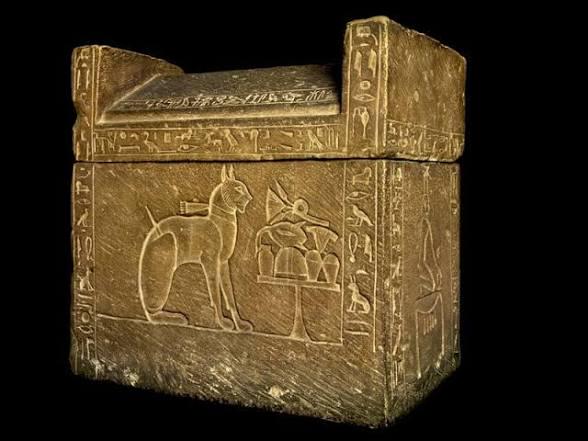
The limestone sarcophagus of “Ta-Miu”, the beloved pet cat of Egyptian Prince Thutmose (c. 1350 BC). He was so devastated by her death that he ordered a customized royal coffin with Book of the Dead inscriptions so they could reunite in the afterlife.
In the sweltering deserts of ancient Egypt, a heart-wrenching tale of love and loss has been unearthed, giving us a glimpse into the life of a royal family that lived over 3,000 years ago. The story begins with the death of a beloved pet cat named Ta-Miu, who was so cherished by her owner, Egyptian Prince Thutmose, that he was driven to create an extraordinary tribute to their bond. The result is a stunning limestone sarcophagus, adorned with intricate hieroglyphs and passages from the Book of the Dead, that has left historians and animal lovers alike in awe. As we delve into the fascinating story of Ta-Miu and her doting owner, we find ourselves pondering the depths of human emotion and the enduring power of love and companionship.
The Royal Treatment
The limestone sarcophagus of Ta-Miu is a testament to the wealth and status of Prince Thutmose, who spared no expense in ensuring that his beloved pet was laid to rest in style. The coffin itself is a masterpiece of ancient Egyptian craftsmanship, with delicate carvings and paintings that depict scenes from the Book of the Dead. This sacred text was believed to guide the deceased through the afterlife, and its inclusion on Ta-Miu’s sarcophagus suggests that Prince Thutmose hoped to reunite with his pet in the great beyond. As we gaze upon the sarcophagus, we are struck by the realization that the love and devotion that Prince Thutmose felt for Ta-Miu was not so different from the bonds we form with our own pets today.
A Glimpse into Ancient Egyptian Culture
The story of Ta-Miu and Prince Thutmose offers a unique window into the culture and values of ancient Egypt. In this society, cats were revered as sacred animals, associated with the goddess Bastet and prized for their independence and agility. The fact that Prince Thutmose chose to honor Ta-Miu with a royal coffin suggests that she was more than just a pet – she was a beloved member of the family. As we explore the history and symbolism surrounding Ta-Miu’s sarcophagus, we gain a deeper understanding of the complex and often surprising ways in which ancient Egyptians viewed the world and their place within it.
A Timeless Tribute
Despite the passing of millennia, the limestone sarcophagus of Ta-Miu remains a poignant reminder of the transformative power of love and loss. As we contemplate the story of Prince Thutmose and his beloved pet, we are invited to reflect on our own relationships with the animals that share our lives. Whether we are cat lovers, dog devotees, or simply animal enthusiasts, the tale of Ta-Miu and Prince Thutmose encourages us to cherish the time we have with our pets and to honor the bonds that we form with them. As we bid farewell to this ancient Egyptian prince and his faithful feline companion, we are left with a sense of wonder and awe at the enduring legacy of their love, a testament to the timeless and universal language of the heart.
As we close the chapter on the story of Ta-Miu and Prince Thutmose, we are reminded that even in the face of overwhelming loss, love and devotion can transcend time and circumstance. The limestone sarcophagus of this beloved pet cat stands as a lasting tribute to the human-animal bond, a powerful symbol of the ways in which our lives are enriched by the presence of animals. Whether we are exploring the ancient ruins of Egypt or simply cuddling with our own pets on the couch, the story of Ta-Miu and Prince Thutmose invites us to appreciate the beauty and depth of these relationships, and to honor the love that they bring into our lives.