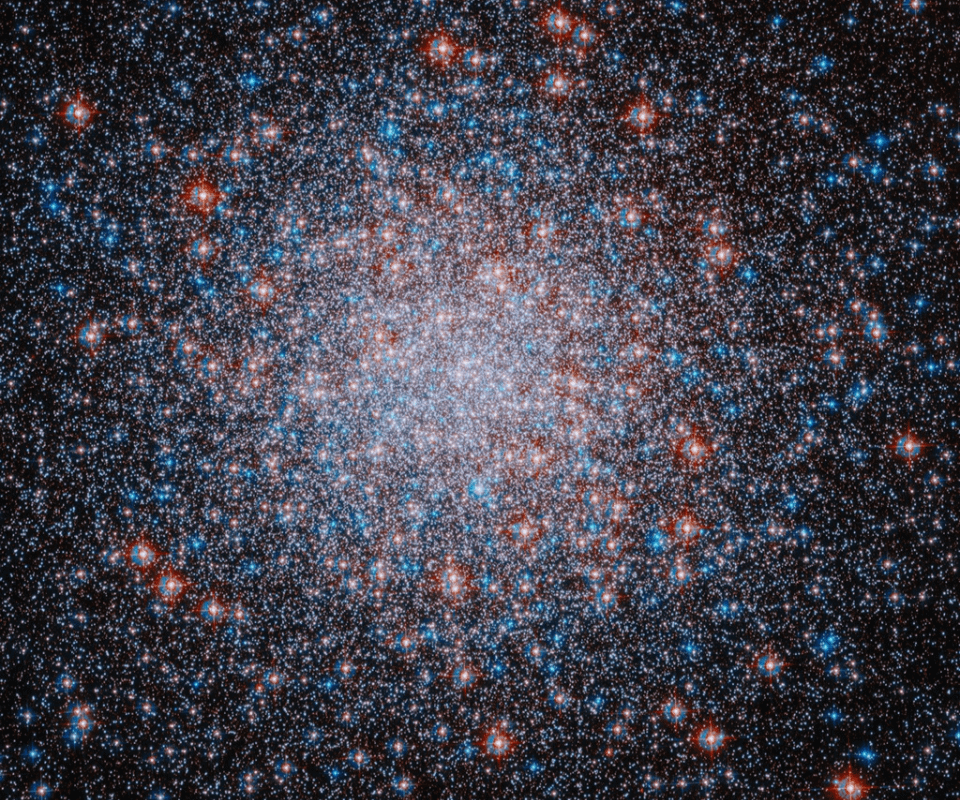
Hubble’s image of Messier 3, a globular cluster containing more than 500,000 stars
Imagine being able to see into the distant past, to witness the birth and evolution of our universe in stunning detail. The Hubble Space Telescope has been doing just that for decades, capturing breathtaking images of celestial wonders that leave us awestruck and curious. One of its most recent and remarkable images is of Messier 3, a globular cluster that contains more than 500,000 stars. This dazzling snapshot is not only a treat for the eyes, but also a window into the fascinating history and science of our cosmos.
A Cosmic Treasure Trove
Messier 3, also known as M3, is one of the largest and most beautiful globular clusters in the universe. Located about 33,000 light-years away in the constellation Canes Venatici, it’s a treasure trove of astronomical delights. The cluster is thought to have formed around 8 billion years ago, making it one of the oldest structures in the Milky Way galaxy. As we gaze at Hubble’s stunning image, we’re seeing the cluster as it existed in the distant past, its light taking thousands of years to reach us. The sheer scale and complexity of M3 are a reminder of the awe-inspiring beauty and mystery of the universe.
Unraveling the Secrets of Star Formation
The image of Messier 3 is not just a pretty picture – it’s also a valuable tool for scientists studying the formation and evolution of stars. By analyzing the different colors and brightness of the stars in the cluster, astronomers can learn more about the various stages of stellar evolution. The cluster’s stars are thought to have formed from a single cloud of gas and dust, making them similar in age and composition. This allows scientists to study the effects of different factors, such as mass and metallicity, on the life cycles of stars. As we continue to explore and understand the secrets of star formation, we may uncover new insights into the fundamental nature of the universe.
A Legacy of Discovery
The Hubble Space Telescope has been a driving force behind our understanding of the universe, capturing iconic images that inspire and educate us. The image of Messier 3 is just one example of Hubble’s incredible legacy, which includes discoveries such as dark energy, the formation of galaxies, and the detection of water on distant planets. As we look to the future of space exploration, we can only imagine the new wonders that await us. With its successor, the James Webb Space Telescope, set to launch soon, we can expect even more breathtaking images and groundbreaking discoveries that will continue to expand our knowledge of the cosmos.
As we marvel at the breathtaking image of Messier 3, we’re reminded of the incredible beauty and complexity of the universe. The Hubble Space Telescope has given us a glimpse into the distant past, and the secrets it holds are still waiting to be uncovered. As we continue to explore and understand the cosmos, we may uncover new insights into the fundamental nature of reality itself. The universe is full of mysteries waiting to be solved, and with the help of incredible images like Hubble’s snapshot of Messier 3, we’re one step closer to unraveling its secrets.