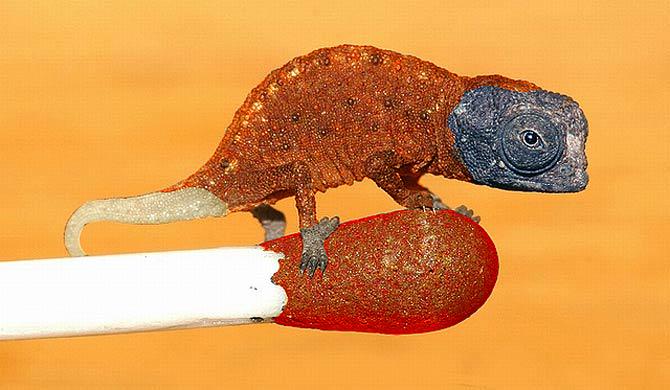
The Chameleon (Brookesia nana), shown is an adult and is smallest chameleon in the world. Occurs in Madagascar. It is estimated that this species does not exceed 30 mm (1.2 in) in length.
In the lush, vibrant forests of Madagascar, a tiny king of camouflage has been making waves in the scientific community. Meet the Brookesia nana, or the dwarf chameleon, which has stolen the hearts of many with its itsy-bitsy size and remarkable ability to blend into its surroundings. This miniature marvel is the smallest chameleon in the world, and its story is one of fascinating adaptations and survival strategies. As we delve into the world of this tiny creature, we’ll discover the intricate details that make it a true natural wonder.
The Elusive Dwarf Chameleon
The Brookesia nana is a master of disguise, with a body that can change color to match its environment in the blink of an eye. But what’s even more astonishing is its size – or rather, lack thereof. Reaching a maximum length of just 30 mm (1.2 in), this chameleon is smaller than a human thumb. Its tiny size makes it a challenging creature to spot, and scientists have had to use specialized techniques to study it in its natural habitat. Despite its elusiveness, the Brookesia nana has been found to inhabit the leaf litter and low-lying vegetation of Madagascar’s forests, where it feeds on small insects and invertebrates.
Uncovering the Secrets of the Dwarf Chameleon
So, what makes the Brookesia nana so unique? For starters, its tiny size is likely an adaptation to its environment, where larger predators roam free. By being small, the chameleon can avoid detection and sneak up on its prey undetected. But size isn’t the only fascinating aspect of this creature – its color-changing abilities are also worth exploring. Like other chameleons, the Brookesia nana has specialized cells in its skin that allow it to change color in response to its surroundings. This remarkable ability helps the chameleon to communicate, regulate its body temperature, and even express its emotions. Scientists are still uncovering the secrets of the Brookesia nana’s color-changing abilities, and their research is shedding new light on the complex biology of these incredible creatures.
A Conservation Concern
As we marvel at the tiny wonders of the Brookesia nana, it’s also important to consider the conservation status of this species. Unfortunately, the dwarf chameleon is listed as endangered due to habitat loss and fragmentation, which threatens the very existence of this tiny king of camouflage. Efforts are being made to protect the forests of Madagascar and preserve the habitats of the Brookesia nana and other unique species. By supporting conservation initiatives and spreading awareness about the importance of preserving biodiversity, we can help ensure the long-term survival of this incredible creature and the ecosystem it inhabits.
As we conclude our journey into the world of the Brookesia nana, it’s hard not to be amazed by the intricate details and fascinating adaptations of this tiny chameleon. From its remarkable color-changing abilities to its tiny size, the dwarf chameleon is a true natural wonder that continues to captivate scientists and animal lovers alike. As we strive to protect and preserve the natural world, the story of the Brookesia nana serves as a powerful reminder of the importance of conservation and the incredible diversity of life on our planet.