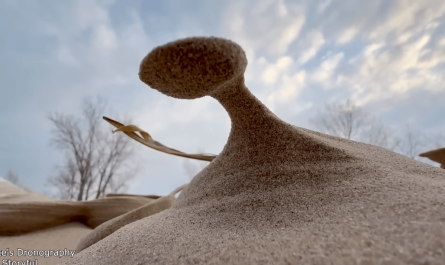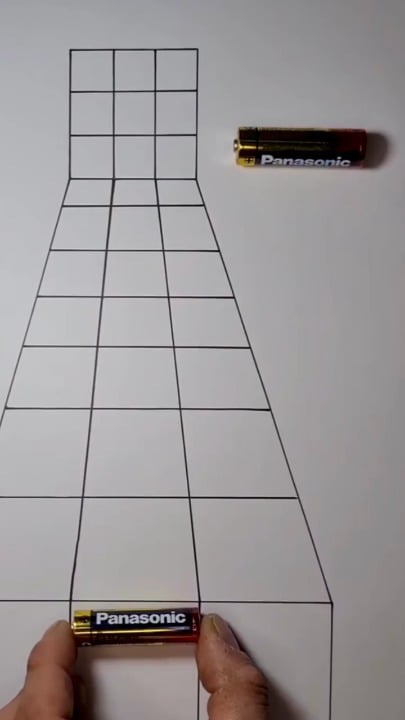
Perspective deceiving the object’s real size
Have you ever found yourself standing in front of a breathtaking monument, only to feel utterly underwhelmed by its size? Maybe you’ve seen pictures of the Eiffel Tower or the Statue of Liberty, and when you finally saw them in person, they seemed smaller than you expected. This phenomenon is more common than you think, and it’s all about perspective. Our brains are wired to perceive the world in a certain way, and sometimes that can deceive us into thinking that objects are smaller or larger than they really are. This got me curious – what’s behind this fascinating optical illusion, and how does it affect the way we see the world?
The Science of Perspective
Perspective is a fundamental concept in art, photography, and even psychology. It refers to the way objects appear to change size and shape depending on their distance from the viewer. When we look at an object, our brain uses visual cues like depth, texture, and context to estimate its size. However, these cues can be misleading, especially when we’re looking at very large or very small objects. For example, if you’re standing at the base of a tall mountain, it’s hard to gauge its true height because there are no nearby objects to compare it to. This is why photographers often use techniques like forced perspective to create illusions of size and scale in their images.
The Power of Context
Context plays a huge role in how we perceive the size of objects. If you’re used to seeing pictures of a famous landmark, you might have a preconceived notion of its size based on the context in which it’s usually depicted. For instance, the Eiffel Tower is often shown in photos with the Parisian skyline, which can make it seem larger than it really is. But when you see it in person, without the familiar context of the cityscape, it can seem smaller and less impressive. This is why it’s so important to experience things firsthand, rather than just relying on second-hand accounts or images. By seeing objects and landmarks in their natural context, we can gain a more accurate understanding of their true size and scale.
Challenging Our Assumptions
So what can we learn from this phenomenon of perspective deceiving our perception of size? For one, it challenges our assumptions about the world and how we experience it. It reminds us that our brains are capable of playing tricks on us, and that we should always be open to new experiences and perspectives. By embracing this uncertainty and ambiguity, we can gain a deeper appreciation for the complexity and beauty of the world around us. Whether it’s a famous landmark, a work of art, or even just a everyday object, everything has the potential to surprise and delight us – if we only take the time to look at it from a fresh perspective.
As I reflect on the ways in which perspective can deceive us, I’m reminded of the importance of staying curious and open-minded. By embracing the complexities and nuances of human perception, we can gain a deeper understanding of the world and our place in it. So next time you find yourself standing in front of a famous landmark or a breathtaking view, take a moment to appreciate the ways in which perspective is shaping your experience. You might just discover a whole new world of wonder and awe.