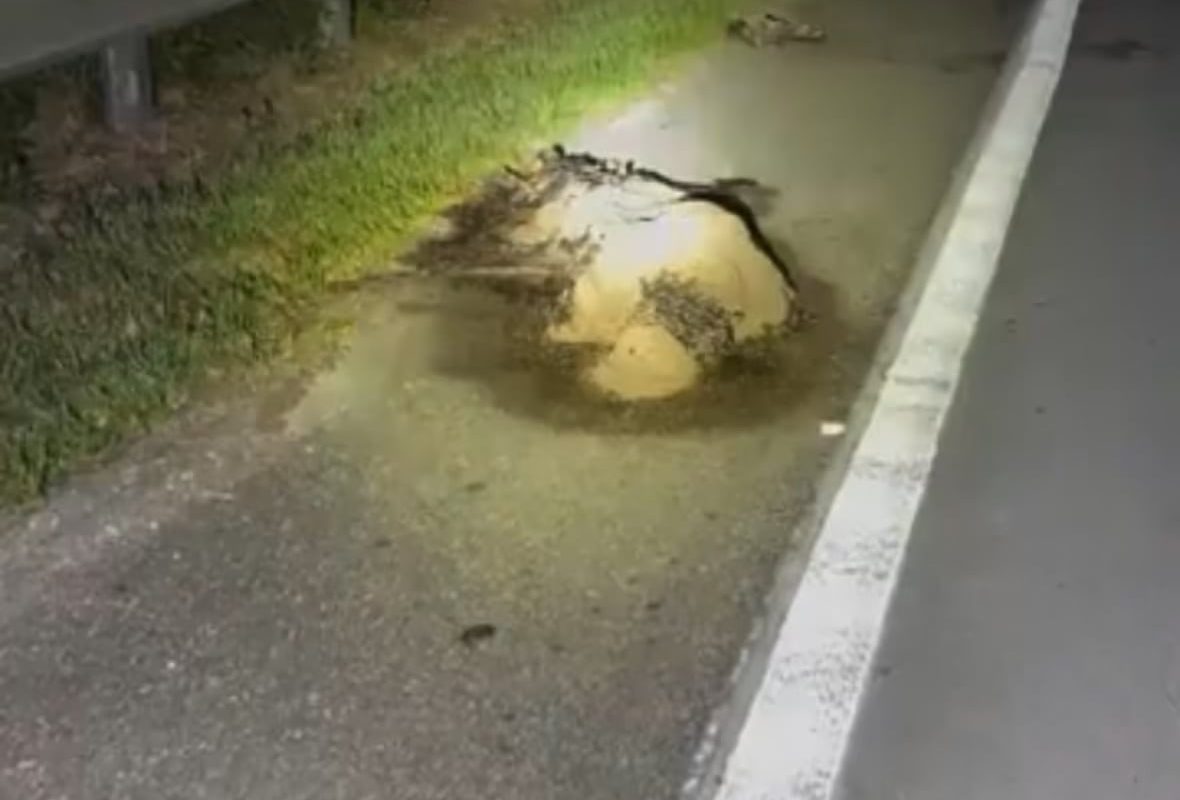
Tens of thousands of maggots eating a dead alligator
I just stumbled upon the most fascinating and slightly unsettling video that has left me with more questions than answers – tens of thousands of maggots eating a dead alligator. At first glance, it’s a pretty gruesome sight, but as I delved deeper into the story behind this bizarre phenomenon, I discovered a world of intricate ecosystems and fascinating science. The sheer scale of this maggot feast is a testament to the incredible efficiency of nature’s cleanup crew, and it’s got me hooked. I mean, who needs a horror movie when you have Mother Nature serving up a real-life spectacle like this?
The Circle of Life
The video in question shows a deceased alligator, likely a victim of the harsh realities of the wild, being consumed by an astonishing number of maggots. It’s a sobering reminder that in the natural world, death is an integral part of life. These maggots, the larvae of flies, are nature’s recyclers, breaking down organic matter and returning nutrients to the ecosystem. It’s a vital process that ensures the environment remains balanced and healthy. The alligator, in its final act, becomes a source of sustenance for these tiny creatures, which in turn will become food for other animals, illustrating the delicate and interconnected web of life.
Science Behind the Scene
But what makes this scene so captivating is the science behind it. Maggots are incredibly efficient at consuming organic matter, with some species able to break down tissue at an alarming rate. The specific conditions required for such a large number of maggots to converge on a single carcass are quite unique, involving the right combination of temperature, humidity, and the presence of adult flies to lay their eggs. It’s a race against time, as other scavengers and decomposers also vie for a share of the nutrient-rich carcass. The speed and scale at which these maggots work are a testament to evolutionary adaptations that have perfected the art of decomposition over millions of years.
Nature’s Cleanup Crew
The role of maggots and other decomposers in ecosystems cannot be overstated. They are the unseen heroes, working tirelessly behind the scenes to ensure that dead organisms do not become breeding grounds for disease. Without these natural recyclers, our environment would quickly become overrun with decaying matter, leading to significant health and ecological issues. The sight of tens of thousands of maggots eating a dead alligator might not be for the faint of heart, but it’s a powerful reminder of the beauty and complexity of nature’s processes. It’s a lesson in appreciating the often-overlooked creatures that keep our planet healthy and thriving.
As I reflect on this incredible phenomenon, I’m reminded of the awe-inspiring complexity and beauty of the natural world. The story of tens of thousands of maggots eating a dead alligator is more than just a morbid curiosity; it’s a window into the intricate mechanisms that govern life on Earth. It’s a tale of life, death, and rebirth, played out in the most unexpected and fascinating ways. And as unsettling as it may seem at first, it’s a powerful reminder of the importance of respecting and appreciating the natural balance that sustains us all.