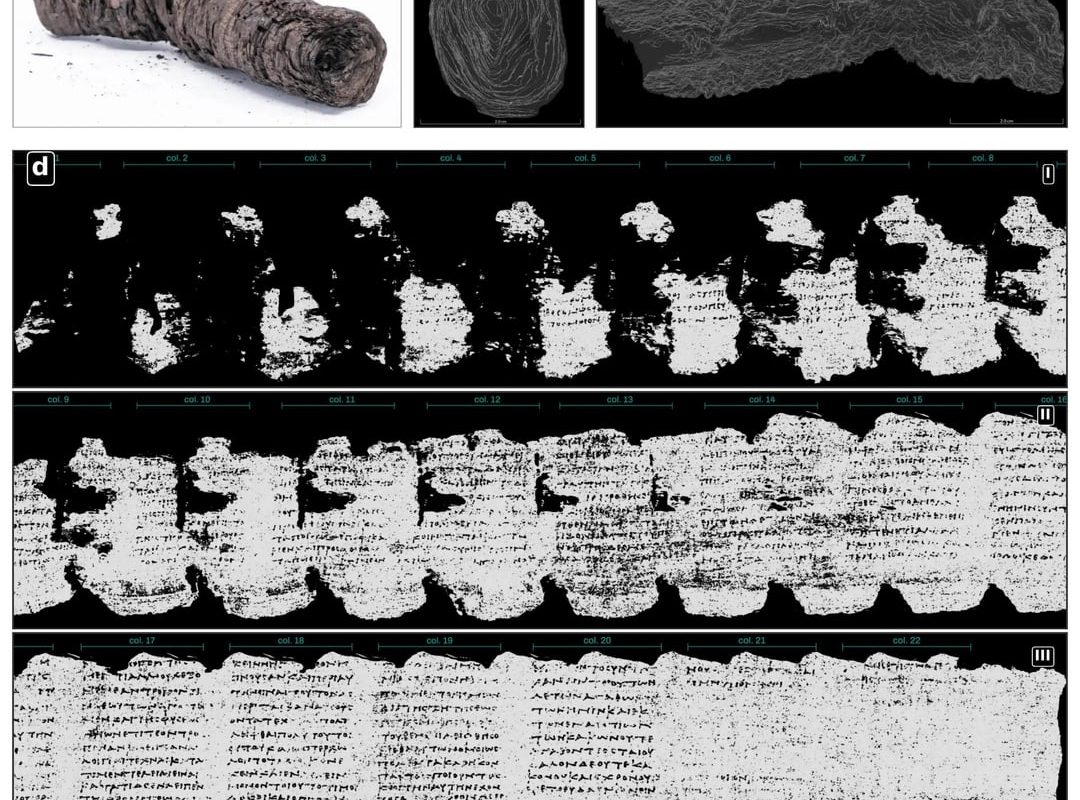
A number of the Herculaneum papyri, discovered in the library of a roman Villa that was destroyed in the Vesuvius eruption, were tossed away in the 19th century because people mistook them for pieces of burned charcoal. Scientists have now managed to digitally unwrap and read them
Imagine stumbling upon a treasure trove of ancient knowledge, only to have it carelessly discarded as worthless trash. This is exactly what happened to a number of the Herculaneum papyri, which were discovered in the library of a Roman villa that was destroyed in the devastating Vesuvius eruption. For centuries, these priceless artifacts lay buried, waiting to be unearthed and deciphered. But when they were finally discovered in the 18th century, some of them were tossed away like burnt charcoal, leaving us to wonder what secrets they might have held. Fast forward to the present day, and scientists have made a groundbreaking discovery – they’ve managed to digitally unwrap and read these ancient texts, giving us a glimpse into the minds of our ancient ancestors.
The Discovery and Loss of the Herculaneum Papyri
The Herculaneum papyri were discovered in the 18th century, buried under the ash and pumice of the Vesuvius eruption. The villa where they were found was once the home of a wealthy Roman, and its library was filled with scrolls containing the works of famous philosophers and writers. However, when the villa was excavated, many of the papyri were found to be badly damaged, and some were even mistaken for burnt charcoal and thrown away. It’s a tragedy that so many of these precious artifacts were lost, but the ones that remain are still providing us with a unique window into the past. The papyri that were preserved are incredibly fragile, and handling them physically would be far too risky, which is why scientists have had to rely on digital technology to unwrap and read them.
Unwrapping the Papyri Digitally
So, how do you unwrap a 2,000-year-old scroll without touching it? The answer lies in cutting-edge digital technology. Scientists have developed a technique that uses X-rays to scan the papyri and create a digital model of the scroll. This model can then be virtually unwrapped, allowing researchers to read the text without causing any damage to the physical artifact. It’s a painstaking process, but one that has already yielded some remarkable results. The texts that have been uncovered so far include works by famous philosophers such as Epicurus and Chrysippus, giving us a unique insight into the intellectual currents of the ancient world.
A Window into the Ancient World
The Herculaneum papyri are more than just a collection of ancient texts – they’re a window into the minds and culture of our ancient ancestors. By reading these scrolls, we can gain a deeper understanding of the ideas and values that shaped the ancient world, and how they continue to influence us today. The fact that scientists have been able to digitally unwrap and read these texts is a testament to the power of human ingenuity and curiosity. As we continue to explore and learn from these ancient artifacts, we’re reminded that even the most fragile and damaged relics can hold the key to unlocking the secrets of the past.
As we delve deeper into the secrets of the Herculaneum papyri, we’re struck by the realization that these ancient texts are not just relics of a bygone era, but a bridge that connects us to our shared human heritage. The fact that we can now read and learn from them is a truly remarkable achievement, and one that will continue to inspire and fascinate us for generations to come. Whether you’re a history buff, a philosophy enthusiast, or simply someone who’s curious about the world, the story of the Herculaneum papyri is a reminder that the past is always present, waiting to be uncovered and explored.