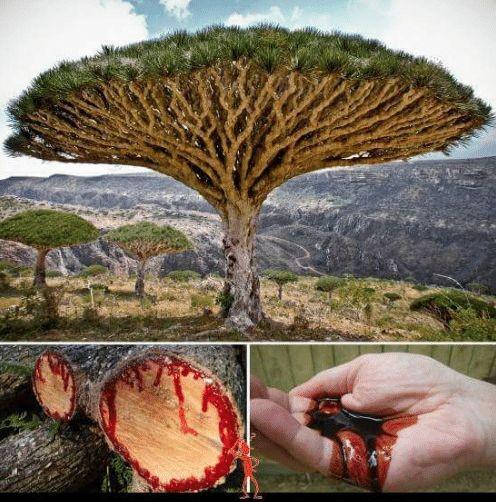
The “dragon’s blood” tree, it bleeds like humans when cut. Ancient people believed its red, thick sap was dragon’s blood. it also has healing & therapuetic qualities. It acts as a natural coagulant to stop bleeding and forms a protective “second skin” over cuts.
Imagine stumbling upon a tree that seems to have a life of its own, with a deep red sap that flows like blood when its bark is cut. The “dragon’s blood” tree, also known as the Dracaena cinnabari, has been a source of fascination for centuries, with its unique appearance and remarkable properties captivating the imagination of people around the world. This tree’s red, thick sap was believed by ancient people to be the blood of dragons, and it’s easy to see why – the sap is a vibrant, blood-like color that seems to pulse with life.
The Legend of Dragon’s Blood
The legend of the dragon’s blood tree dates back thousands of years, with ancient civilizations believing that the tree’s sap had magical properties. The sap was highly valued for its supposed ability to heal wounds, stop bleeding, and even bring good luck. The tree was also believed to have been born from the blood of dragons, which were said to have been slain by brave warriors. This mythological backstory has contributed to the tree’s enduring fascination, with many people still seeking out the sap for its supposed healing properties.
Healing Properties of Dragon’s Blood
But the dragon’s blood tree is more than just a fascinating legend – it also has real, scientifically-proven healing properties. The sap of the tree contains a unique compound that acts as a natural coagulant, helping to stop bleeding and promote healing. It also forms a protective “second skin” over cuts and wounds, which can help to prevent infection and promote tissue repair. This makes the sap a valuable resource for wound care, and it has been used for centuries in traditional medicine to treat a range of ailments, from cuts and scrapes to more serious injuries.
Modern Uses of Dragon’s Blood
Today, the dragon’s blood tree is still highly valued for its sap, which is used in a range of applications, from wound care to cosmetics. The sap is also being researched for its potential anti-inflammatory and antioxidant properties, which could make it a valuable ingredient in the development of new medicines. Despite its many uses, however, the dragon’s blood tree is still a relatively rare and endangered species, found only in a few remote locations around the world. This makes conservation efforts essential, to protect this incredible tree and its unique properties for future generations.
As we continue to learn more about the dragon’s blood tree and its remarkable properties, it’s clear that this incredible plant has a lot to offer. From its fascinating legend to its real, scientifically-proven healing properties, the dragon’s blood tree is a true natural wonder. Whether you’re interested in traditional medicine, conservation, or simply the fascinating stories behind the natural world, the dragon’s blood tree is definitely worth learning more about. With its unique appearance, remarkable properties, and rich history, this tree is sure to captivate and inspire anyone who learns about it.