Asymmetric Satellite Thermal Attack (Geometric Control and Thermal Radiation Material in the Medium Infrared in Metamaterial Architectures: ENZ Regimes,DNG and Phase-Change for Wavefront Engineering)
Imagine being able to harness the power of thermal energy in space, using advanced materials to manipulate and control the flow of heat in ways that were previously thought impossible. This is the fascinating world of asymmetric satellite thermal attack, where scientists are pushing the boundaries of what is possible with geometric control and thermal radiation materials. The medium infrared spectrum is the key to unlocking this potential, and researchers are using metamaterial architectures to create innovative solutions that are changing the game. From the mysterious properties of epsilon-near-zero (ENZ) regimes to the cutting-edge technology of phase-change materials, this field is full of intriguing concepts that are worth exploring.
Unlocking the Secrets of Metamaterials
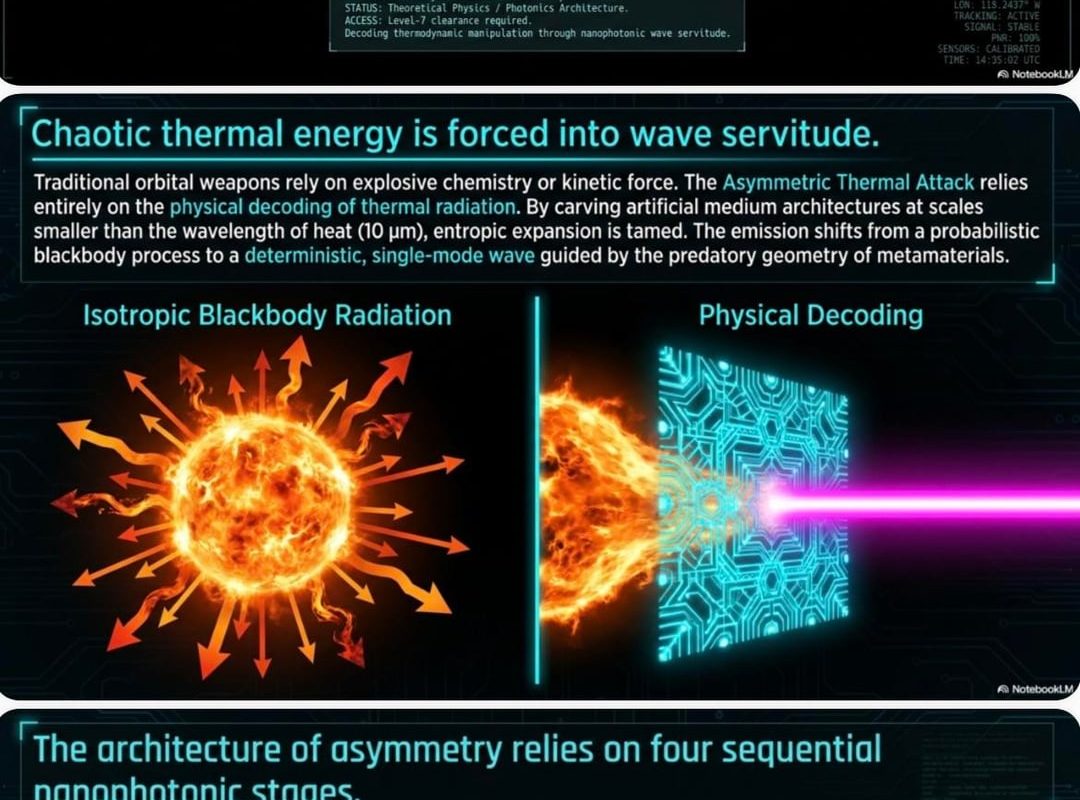
Metamaterials are artificial materials engineered to have properties not typically found in nature. In the context of asymmetric satellite thermal attack, these materials are being used to create advanced thermal radiation systems that can manipulate the flow of heat in space. By using metamaterial architectures, scientists can design materials with specific properties that allow them to control the thermal radiation in the medium infrared spectrum. This is achieved through the use of ENZ regimes, which have a refractive index close to zero, allowing for the creation of ultra-thin, ultra-lightweight thermal radiation systems. The potential applications of this technology are vast, from satellite thermal management to advanced sensing and imaging systems.
Wavefront Engineering and the Power of Phase-Change Materials
Wavefront engineering is a technique used to manipulate the phase and amplitude of electromagnetic waves, and it’s being used in conjunction with phase-change materials to create advanced thermal radiation systems. Phase-change materials have the ability to change their properties in response to changes in temperature, allowing for the creation of dynamic thermal radiation systems that can adapt to changing conditions. By combining these materials with metamaterial architectures, scientists can create systems that can manipulate the thermal radiation in the medium infrared spectrum with unprecedented precision. This technology has the potential to revolutionize the field of satellite thermal management, enabling the creation of more efficient and effective thermal radiation systems.
From DNG to ENZ: The Future of Thermal Radiation
The use of double-negative (DNG) metamaterials is also being explored in the context of asymmetric satellite thermal attack. These materials have a negative refractive index, allowing for the creation of advanced thermal radiation systems that can manipulate the flow of heat in space. However, the use of ENZ regimes is becoming increasingly popular due to their unique properties, which allow for the creation of ultra-thin, ultra-lightweight thermal radiation systems. As research in this field continues to advance, we can expect to see the development of even more innovative technologies that harness the power of thermal energy in space. The potential applications of this technology are vast, and it’s exciting to think about the possibilities that the future may hold.
As we continue to push the boundaries of what is possible with asymmetric satellite thermal attack, it’s clear that this field is full of fascinating concepts and innovative technologies. From the use of metamaterial architectures to the power of phase-change materials, the science behind this technology is both complex and captivating. As we look to the future, it’s exciting to think about the potential applications of this technology, and how it may change the way we approach satellite thermal management and beyond. With its unique blend of cutting-edge materials and advanced engineering techniques, asymmetric satellite thermal attack is an area that is sure to continue to inspire and intrigue us for years to come.