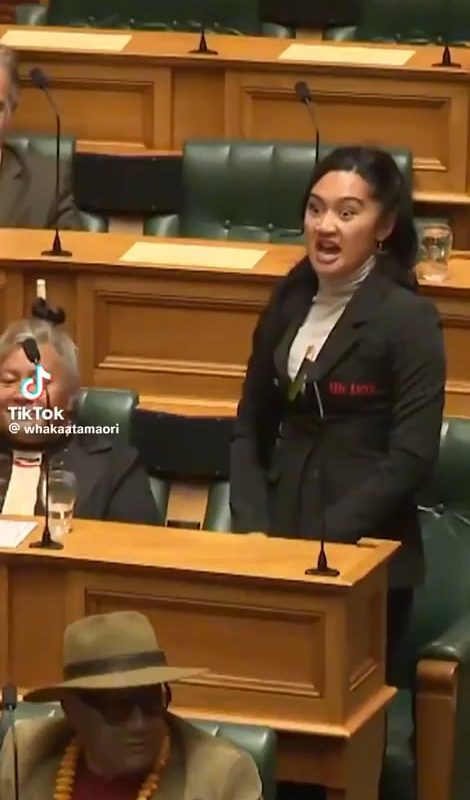
In 2024, New Zealand’s parliament was brought to a temporary halt by MPs performing a haka, amid anger over a controversial bill seeking to reinterpret the country’s founding treaty with Māori people.
In a remarkable display of cultural pride and defiance, New Zealand’s parliament was brought to a temporary halt in 2024 by MPs performing a haka, a traditional Māori dance, amid anger over a controversial bill seeking to reinterpret the country’s founding treaty with Māori people. The scene was electrifying, with lawmakers using their bodies to convey the depth of their emotions and the significance of the moment. It was a powerful reminder of the enduring importance of the Treaty of Waitangi, the historic agreement that has shaped the country’s identity and continues to influence its politics to this day.
A Symbol of Resistance
The haka, a ceremonial dance that involves synchronized movements, chanting, and singing, has long been an integral part of Māori culture. It is a symbol of unity, strength, and resilience, and is often performed on special occasions, such as weddings and funerals, as well as during times of conflict and protest. In this context, the haka was a potent expression of resistance against the proposed bill, which many saw as an attempt to undermine the rights and interests of Māori people. By performing the haka, the MPs were able to convey their opposition to the bill in a way that was both deeply personal and profoundly meaningful.
A Complex History
The Treaty of Waitangi, which was signed in 1840, is a foundational document in New Zealand’s history. It established a partnership between the British Crown and Māori chiefs, granting the Crown sovereignty over the islands in exchange for Māori control over their land and cultural practices. However, the treaty has been the subject of intense debate and controversy over the years, with many Māori people arguing that the Crown has failed to uphold its obligations and has instead sought to erase their culture and marginalize their community. The proposed bill, which sought to reinterpret the treaty’s provisions, was seen as a further attempt to undermine Māori rights and interests, and sparked widespread outrage and opposition.
A Call to Action
The haka performed by the MPs was more than just a symbolic gesture – it was a call to action, a reminder that the struggle for Māori rights and self-determination is ongoing. It highlighted the need for greater understanding, respect, and reconciliation between Māori and non-Māori people, and underscored the importance of preserving and promoting Māori culture and language. As the debate over the treaty and its interpretation continues, the haka remains a powerful symbol of resistance and resilience, a reminder of the enduring spirit and determination of the Māori people.
The image of New Zealand’s MPs performing a haka in parliament will be etched in our memories for a long time, a testament to the power of culture and tradition to inspire and mobilize people in the face of adversity. As we reflect on this moment, we are reminded of the importance of respecting and honoring the rights and interests of indigenous peoples, and of the need for greater understanding and reconciliation between different cultures and communities. The haka may have brought parliament to a temporary halt, but it has also sparked a vital conversation about the future of New Zealand and its relationship with its Māori people.