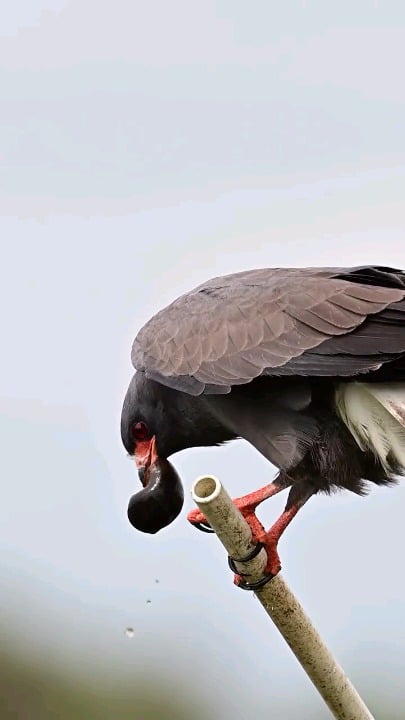
Have you ever wondered how a Snail Kite eats a snail?
Have you ever stopped to think about the intricate details of the natural world? I mean, really think about it – like, have you ever wondered how a Snail Kite eats a snail? It sounds like a simple question, but trust me, the answer is fascinating. The Snail Kite, a bird of prey found in the wetlands of North and South America, has a very unique relationship with its favorite food source: the apple snail. It’s a match made in heaven, or rather, a match made in the marshes. The kite’s entire existence revolves around these slimy creatures, and it’s amazing to learn just how adapted they are to eating them.
The Hunt is On
The Snail Kite’s hunt for snails is a carefully choreographed dance. The bird flies low over the water, its sharp eyes scanning the surface for the slightest sign of movement. When it spots a snail, it quickly swoops down, its long, curved beak snapping shut just above the water’s surface. But here’s the amazing part: the kite doesn’t actually grab the snail with its beak. Instead, it uses its beak to extract the snail from its shell, a process that requires incredible precision and control. It’s like a little game of hide-and-seek, where the kite has to coax the snail out of its protective shell before it can enjoy its meal.
A Delicate Balance
The Snail Kite’s reliance on apple snails is not just a matter of taste – it’s a matter of survival. The kite’s entire ecosystem is built around the snail population, and any changes to the snail’s habitat or population can have a ripple effect throughout the entire food chain. It’s a delicate balance, where the kite’s needs are carefully calibrated to the snail’s abundance. And it’s not just the kite that’s affected – the snails themselves play a crucial role in maintaining the health of the wetlands, serving as both a food source and a nutrient vector. It’s a complex web of relationships, and the Snail Kite is just one strand in the intricate tapestry of life.
An Evolutionary Marvel
So, how did the Snail Kite develop this unique relationship with the apple snail? It’s a testament to the incredible adaptability of life on Earth. Over time, the kite’s ancestors evolved to occupy a specific niche in the ecosystem, one that revolved around the abundance of snails in the wetlands. The kite’s curved beak, its sharp eyesight, and its agile flight are all adaptations that have allowed it to thrive in this environment. It’s a remarkable example of evolutionary specialization, where a species has developed a unique set of traits that allow it to exploit a specific resource. And it’s a reminder that, even in the most unexpected places, there is beauty and wonder waiting to be discovered.
As I finish writing this, I’m left with a sense of awe and appreciation for the natural world. The Snail Kite’s story is just one of many fascinating tales that are waiting to be uncovered, and it’s a reminder that even the most seemingly mundane creatures can hold the most extraordinary secrets. So next time you’re out in nature, take a moment to stop and appreciate the intricate details of the world around you – you never know what wonders you might discover.