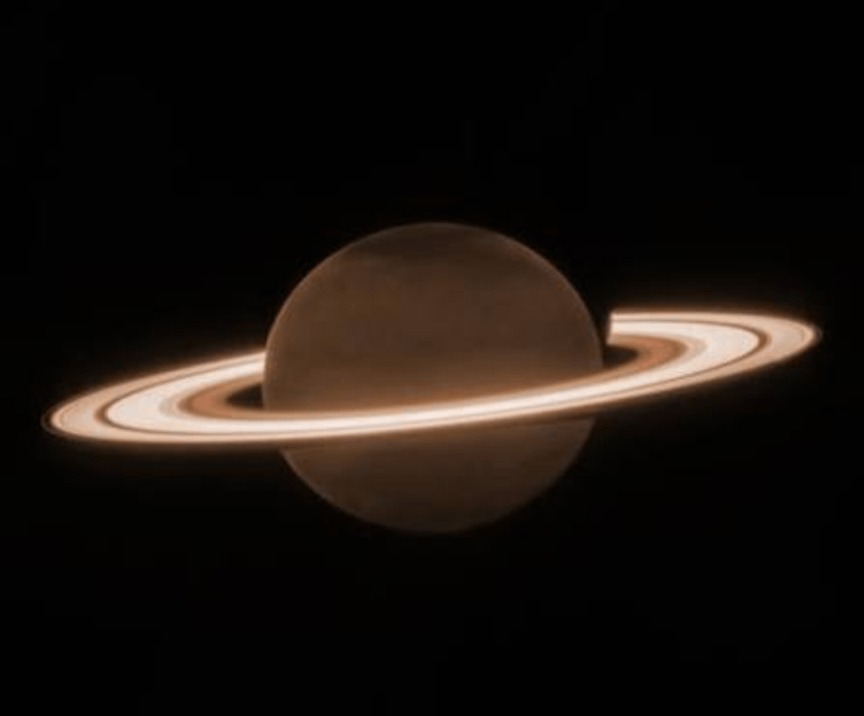
Saturn in near infrared from the James Webb Space Telescope
As I gazed at the breathtaking image of Saturn taken by the James Webb Space Telescope in near infrared, I couldn’t help but feel a sense of awe and wonder. The stunning ring system, the vibrant colors, and the intricate details all combined to create a truly mesmerizing sight. But what makes this image so special, and what can it tell us about our fascinating universe? Let’s dive in and explore the story behind this incredible capture.
A New Perspective on a Familiar Planet
The James Webb Space Telescope has been making headlines with its groundbreaking images of the cosmos, and this near infrared view of Saturn is no exception. By observing the planet in this specific wavelength, the telescope is able to reveal details that are not visible to the human eye. The resulting image shows Saturn’s rings in a completely new light, with the icy particles and rock debris standing out in vivid contrast. This unique perspective allows scientists to study the planet’s composition and atmosphere in greater detail, shedding new light on the formation and evolution of our solar system.
Unveiling the Secrets of the Ring System
Saturn’s ring system is one of the most iconic and intriguing features of our solar system, and the James Webb Space Telescope’s near infrared image offers a fascinating glimpse into its inner workings. The image reveals the complex dynamics at play, with the rings’ delicate balance of gravity, orbital resonance, and collisions shaping their structure and behavior. By studying the rings in near infrared, scientists can gain insights into the distribution of ice and rock particles, as well as the role of Saturn’s moons in shaping the ring system. This knowledge can help us better understand the history and evolution of the Saturnian system, and perhaps even provide clues about the formation of other planetary systems.
A Window into the Universe’s Past
The James Webb Space Telescope’s image of Saturn in near infrared is not just a beautiful capture – it’s also a window into the universe’s past. The telescope’s advanced technology allows it to detect the faint glow of distant objects, including the residual heat from the formation of the solar system. By studying this radiation, scientists can learn more about the conditions that existed in the early days of our solar system, and how they shaped the planets and other celestial bodies we see today. This image of Saturn is just the beginning, as the James Webb Space Telescope continues to explore the universe and uncover its secrets, one breathtaking image at a time.
As I continued to marvel at the James Webb Space Telescope’s image of Saturn, I couldn’t help but feel grateful for the incredible advancements in technology and science that make such discoveries possible. The near infrared view of Saturn is more than just a pretty picture – it’s a gateway to a deeper understanding of our universe, its history, and its many mysteries waiting to be unraveled. As we continue to explore and learn more about the cosmos, we’re reminded of the infinite wonders that await us, and the magic that happens when human curiosity and ingenuity come together to reveal the secrets of the universe.