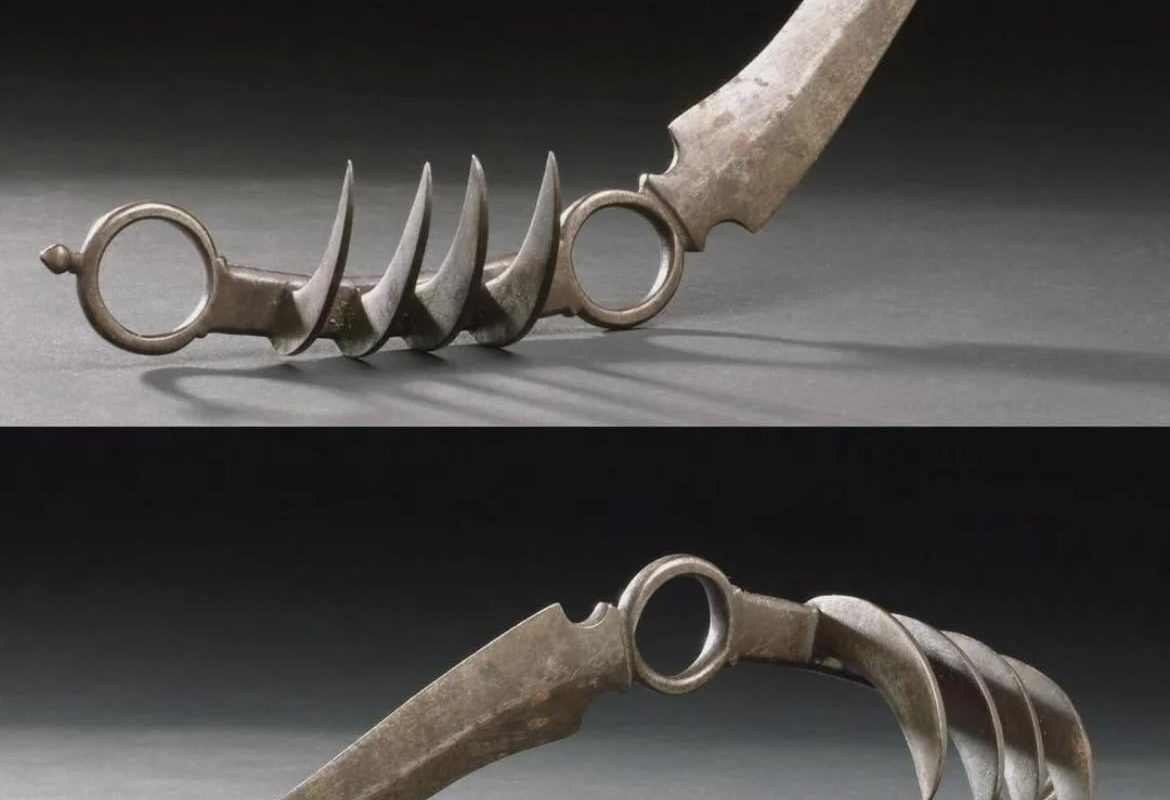
The Bagh Nakh (“Tiger Claw”) was a concealed Indian weapon modeled after a tiger’s claws. Worn in the hand, it was used in deadly close combat by warriors, thieves, and assassins.
The world of ancient Indian warfare is full of fascinating and sometimes frightening weapons, but few are as intriguing as the Bagh Nakh, also known as the “Tiger Claw”. This concealed weapon, modeled after the razor-sharp claws of a tiger, was worn in the hand and used in deadly close combat by warriors, thieves, and assassins. The very idea of such a weapon sends shivers down the spine, and yet, it’s hard not to be drawn in by its cunning design and the secretive world of those who wielded it. As we delve into the history and mechanics of the Bagh Nakh, it’s clear that this is a story of stealth, strategy, and the unrelenting pursuit of power.
The Origins of the Bagh Nakh
The Bagh Nakh has its roots in ancient India, where it was used by various warrior castes and clandestine groups. Its design was inspired by the tiger, an animal revered for its strength and agility in Indian culture. The weapon typically consisted of a series of curved blades or claws, usually made of steel or iron, which were attached to a metal plate or a leather strap. This plate or strap was then worn over the hand, allowing the user to conceal the blades until the moment of attack. The Bagh Nakh was often used in surprise attacks, where the element of surprise was as deadly as the blades themselves.
Deadly Efficiency
The science behind the Bagh Nakh’s design is as fascinating as it is lethal. The curved shape of the blades allowed for maximum damage with minimal effort, making it an efficient weapon for close combat. The fact that it was worn in the hand also meant that the user could engage in hand-to-hand combat without being encumbered by a larger weapon. This made the Bagh Nakh a favorite among warriors who needed to be agile and stealthy, such as those who fought in dense forests or urban areas. Additionally, the psychological impact of the Bagh Nakh should not be underestimated – the sight of a warrior wielding a weapon that mimicked the claws of a tiger was sure to inspire fear in the hearts of enemies.
A Legacy of Stealth and Power
Today, the Bagh Nakh is largely a relic of the past, a reminder of a time when warfare was more personal and more brutal. And yet, its legacy lives on in the world of martial arts and in the imagination of those who are fascinated by the history of warfare. The Bagh Nakh represents a bygone era of stealth and strategy, where warriors relied on cunning and agility as much as brute strength. As we look back on the history of this fearsome weapon, we are reminded that even in the most ancient of times, the pursuit of power and the art of warfare were intricately linked, and that the most effective weapons were often those that combined efficiency with element of surprise.
As we conclude our journey into the world of the Bagh Nakh, it’s hard not to feel a sense of awe at the ingenuity and ruthlessness of the warriors who wielded this fearsome weapon. The Bagh Nakh may be a relic of the past, but its story continues to captivate us, offering a glimpse into a world of ancient warfare that was both beautiful and brutal. Whether you’re a history buff, a martial arts enthusiast, or simply someone who is fascinated by the strange and unknown, the Bagh Nakh is sure to leave you with a lasting impression, a reminder of the power and the danger that lies at the heart of human conflict.