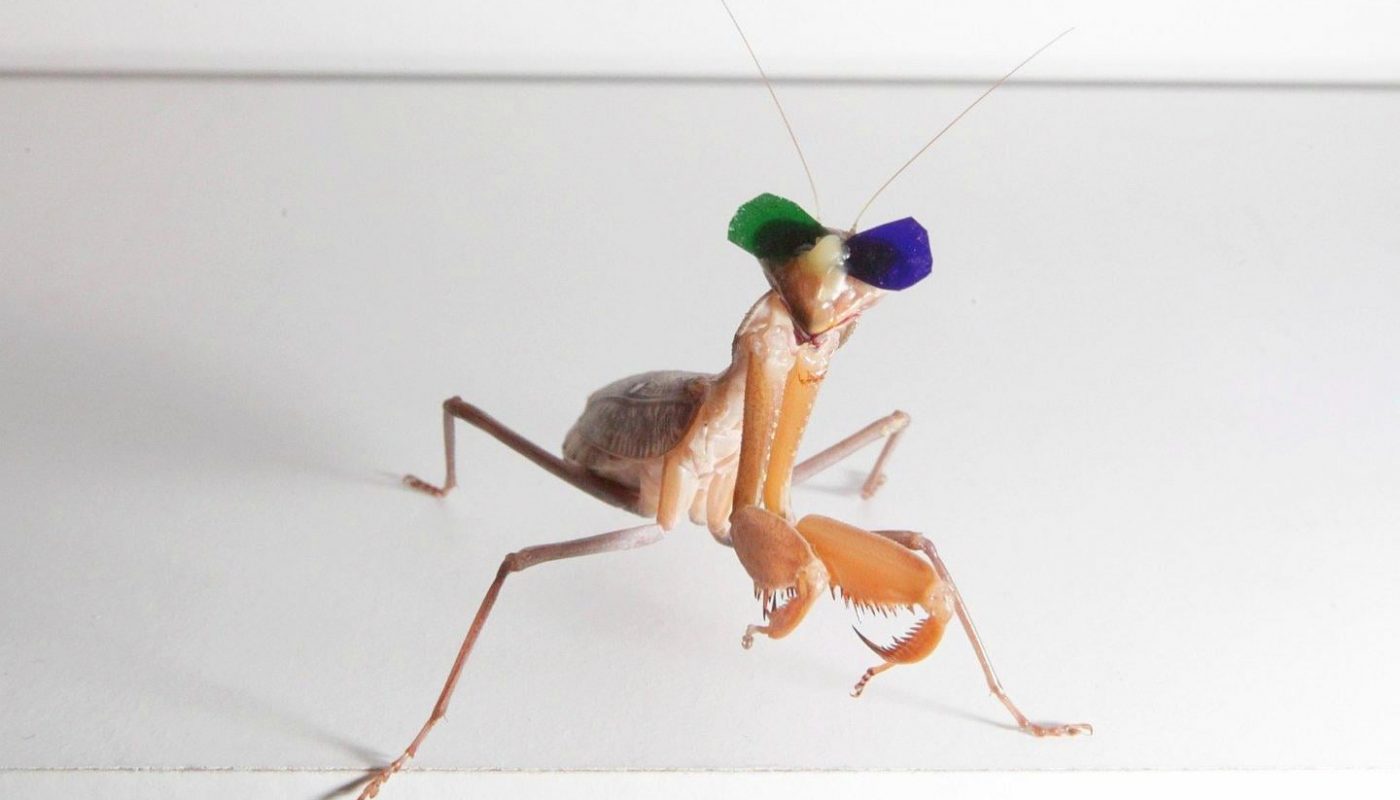
Researchers at Newcastle University used tiny 3D glasses to demonstrate that praying mantises use stereoscopic vision to judge distance when hunting prey.
Have you ever stopped to think about how insects navigate their surroundings, especially when it comes to hunting prey? I mean, we’ve all seen those impressive slow-motion videos of a praying mantis snatching its unsuspecting meal right out of the air, but what’s really going on behind those big, beautiful eyes? Researchers at Newcastle University decided to get to the bottom of this question, and what they found is nothing short of amazing. Using tiny 3D glasses, they demonstrated that praying mantises use stereoscopic vision to judge distance when hunting – a trait previously thought to be exclusive to humans and a few other animals.
How it Works
So, how do these tiny 3D glasses work, and what do they reveal about the praying mantis’s hunting strategy? Essentially, the researchers created a miniature version of the 3D glasses we’re familiar with, complete with tiny lenses that display slightly different images to each eye. By showing the mantises different images with these glasses, the team was able to test their ability to perceive depth and judge distance. The results were astonishing – the mantises were able to accurately judge the distance of their prey, even when the images presented to each eye were subtly different. This suggests that, just like humans, praying mantises use the disparity between the images in each eye to calculate depth and distance.
The Science Behind Stereoscopic Vision
But what’s really interesting here is the science behind stereoscopic vision. You see, when we look at an object, each eye sees it from a slightly different angle, and our brain uses this disparity to calculate the object’s distance from us. This is known as binocular vision, and it’s a crucial part of how we navigate the world. The fact that praying mantises use this same technique to hunt their prey is a testament to the incredible complexity and adaptability of the insect world. And it’s not just limited to praying mantises – other insects, like bees and flies, also use forms of stereoscopic vision to navigate and find food.
Implications and Applications
So, what does this discovery mean for the wider world of science and technology? For one thing, it highlights the incredible diversity and complexity of the natural world, and the many secrets that are still waiting to be uncovered. It also has potential applications in the field of robotics and computer vision – by studying how insects like the praying mantis use stereoscopic vision, we may be able to develop more sophisticated and adaptable robots that can navigate and interact with their environments in new and innovative ways. And who knows – maybe one day we’ll even have robots that can hunt and catch their own “prey” with the same deadly precision as a praying mantis.
As we continue to explore and learn more about the natural world, we’re constantly reminded of the incredible complexity and beauty that surrounds us. The discovery that praying mantises use stereoscopic vision to hunt their prey is just one example of the many fascinating secrets that are still waiting to be uncovered, and it’s a testament to the power of human curiosity and ingenuity. Who knows what other secrets are out there, waiting to be discovered – and what amazing things we might learn from the tiny, but mighty, praying mantis.