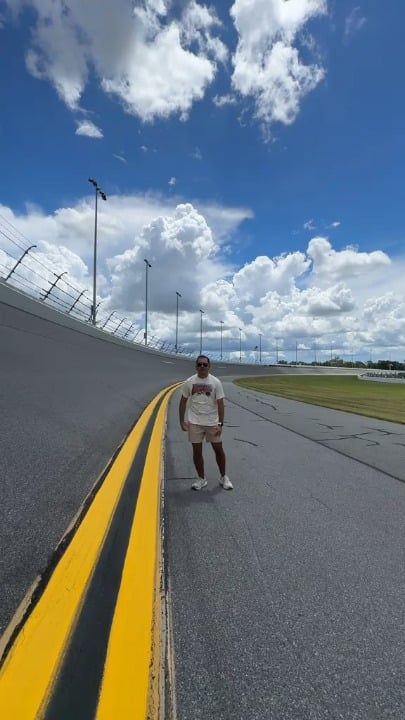
The banking at Daytona International Speedway
As I walked through the gates of Daytona International Speedway, I couldn’t help but feel a rush of adrenaline and excitement. The roar of the engines, the smell of gasoline, and the thrill of the unknown all combined to create an electrifying atmosphere that’s hard to match. But as I made my way to my seat, I noticed something that caught my attention – the banking of the track. It’s a feature that’s both beautiful and functional, and it plays a crucial role in the speed and safety of the racing experience. I found myself wondering, what’s the story behind this iconic design element?
The History of Banking
The concept of banking, or inclining, a track has been around for decades, and it’s rooted in the early days of auto racing. In the 1920s and 30s, racing circuits were often built on existing roads or public streets, which didn’t always lend themselves to high-speed racing. To compensate, track designers began to incorporate banking into their designs, allowing drivers to maintain higher speeds through turns without losing control. At Daytona, the banking is particularly pronounced, with turns that incline at a staggering 31 degrees. This allows drivers to reach speeds of over 200 miles per hour, making it one of the fastest tracks in the world.
The Science Behind Banking
So, how does banking actually work? It all comes down to physics and the way that forces interact with the car. When a car enters a turn, it experiences a centrifugal force that pushes it outward, away from the center of the turn. By inclining the track, the force of gravity is used to counteract this centrifugal force, allowing the car to maintain its speed and trajectory. The banking also helps to reduce the amount of friction between the tires and the track, which can cause wear and tear on the vehicle. At Daytona, the banking is carefully calibrated to provide the perfect balance of speed and safety, making it a thrilling experience for drivers and spectators alike.
A Unique Challenge
Banking also presents a unique challenge for drivers, who must be able to navigate the turns with precision and control. It requires a deep understanding of the track and the car’s dynamics, as well as a healthy dose of bravery and instinct. At Daytona, the banking is so severe that drivers often report feeling like they’re stuck to the track, with the forces pushing them deep into their seats. It’s a truly exhilarating experience, and one that demands the utmost skill and concentration. As I watched the cars zoom by, I couldn’t help but feel a sense of awe and respect for the drivers who tackle this challenging track.
As I left the speedway that day, I felt grateful for the opportunity to experience the thrill of Daytona International Speedway. The banking of the track is just one aspect of what makes this place so special, but it’s a crucial element that sets it apart from other racing circuits. Whether you’re a die-hard racing fan or just a curious observer, the banking at Daytona is sure to leave you in awe of the speed, skill, and science that goes into this incredible sport.