Source: Amon Designer
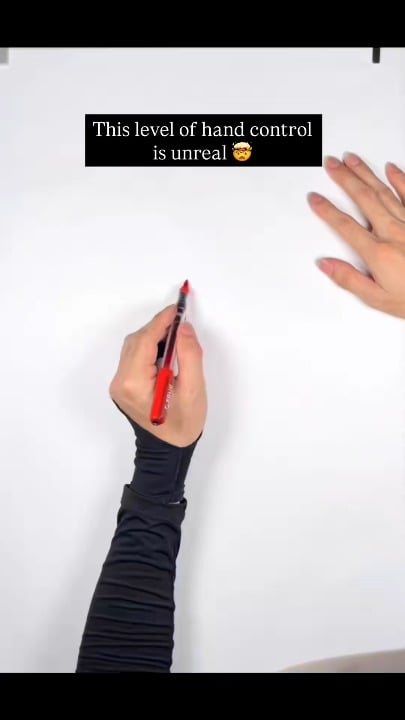
Have you ever stumbled upon an optical illusion that left you wondering how on earth it was created? I recently came across a mind-bending example of a 3D spring effect made with just one continuous line, and I’m still trying to wrap my head around it. The simplicity and elegance of this design are truly mesmerizing, and it’s got me curious about the story behind it. As it turns out, this type of illusion has been fascinating artists and designers for centuries, and its creation is rooted in a deep understanding of human perception and geometry.
The Art of Optical Illusions
Optical illusions like the 3D spring effect have been a staple of art and design for centuries. From M.C. Escher’s impossible constructions to the clever use of perspective in Renaissance art, these illusions have captivated audiences and challenged our understanding of reality. The science behind these illusions lies in the way our brains process visual information, using cues like shading, texture, and perspective to create a sense of depth and dimensionality. In the case of the 3D spring effect, the continuous line is carefully crafted to create a sense of curvature and movement, tricking our brains into seeing a three-dimensional shape.
The Geometry of Deception
So, how exactly do artists and designers create these illusions? It all comes down to geometry and a deep understanding of how our brains process visual information. The 3D spring effect, for example, relies on a technique called “continuous curvature,” where a single line is curved and twisted in a way that creates a sense of depth and dimensionality. This is achieved by carefully controlling the line’s curvature, using subtle changes in direction and slope to create a sense of movement and tension. By manipulating these geometric elements, artists can create complex, three-dimensional shapes that seem to jump off the page.
Pushing the Boundaries of Perception
The 3D spring effect is more than just a clever trick – it’s a testament to the power of human creativity and perception. By pushing the boundaries of what we think is possible with a single line, artists and designers can create new and innovative ways of seeing and experiencing the world. As we continue to explore the possibilities of optical illusions and geometric deception, we may uncover new insights into the workings of the human brain and the nature of reality itself. And who knows – we may just discover new ways of creating art and design that challenge our assumptions and delight our senses.
As I continue to marvel at the 3D spring effect, I’m reminded of the magic and wonder that can be found in the simplest of things. With just one continuous line, artists and designers can create entire worlds of depth and dimensionality, challenging our perceptions and pushing the boundaries of what we thought was possible. Whether you’re an artist, a designer, or just someone who loves a good optical illusion, the 3D spring effect is a fascinating reminder of the power of human creativity and the endless possibilities that await us when we dare to imagine.