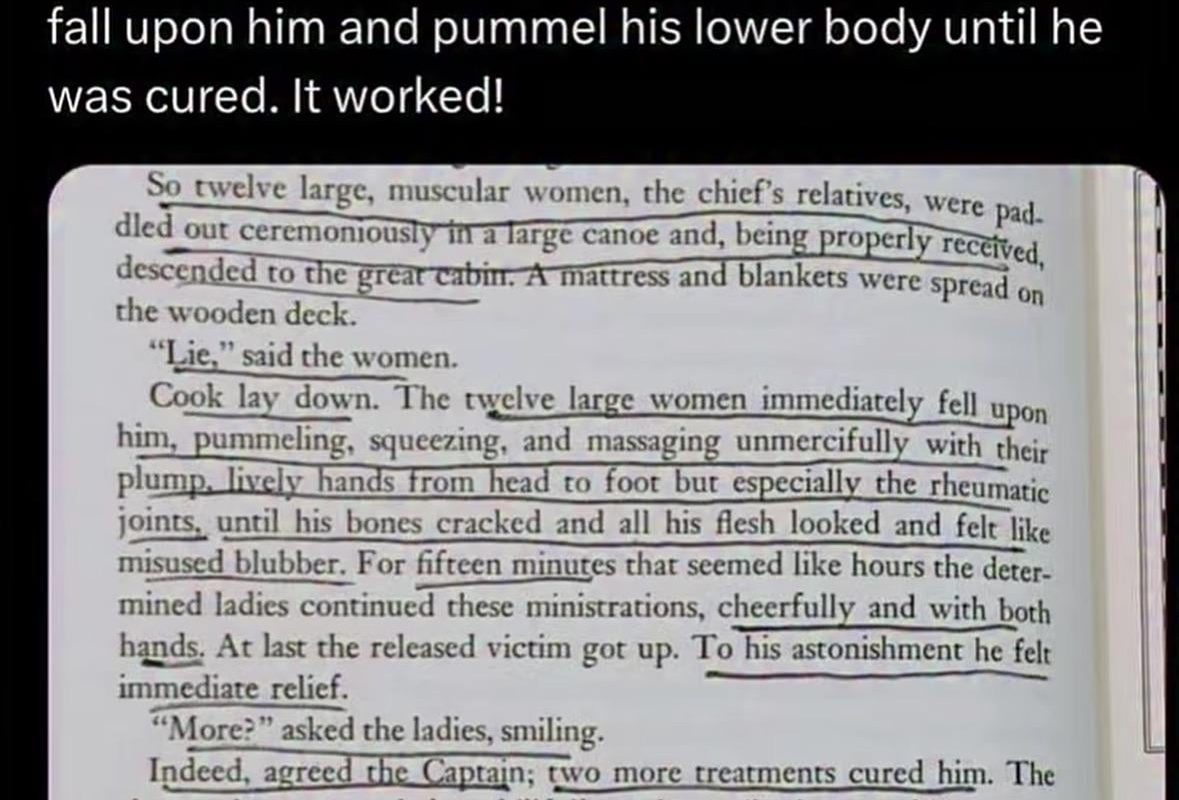
Captain cook cured his rheumatism by getting pummelled by 12 muscular women.
I recently stumbled upon a fascinating piece of history that left me intrigued and eager to learn more – the story of Captain James Cook, the renowned British explorer, and his rather unconventional approach to curing his rheumatism. It’s said that Cook, who suffered from this painful condition, found an unusual remedy during his travels in the Pacific Islands. The remedy involved being pummelled by a group of 12 muscular women, and while it may sound like the stuff of legend, it’s a story that has been passed down through the centuries and has left many wondering about the science behind it.
The Story Behind the Remedy
Captain Cook’s encounter with the women took place during his visit to the island of Tahiti in the 18th century. According to historical accounts, the women, who were likely trained in traditional Polynesian massage techniques, used their strength and skill to pummel and knead Cook’s muscles, providing him with significant relief from his rheumatism. While the idea of being pummelled by a group of women may seem unusual to us today, it’s likely that the combination of heat, massage, and manual therapy helped to reduce Cook’s pain and inflammation, providing him with a much-needed respite from his condition.
The Science of Massage and Rheumatism
So, what’s behind the science of massage and its ability to alleviate rheumatism? Research has shown that massage can be an effective way to reduce pain and inflammation, improve circulation, and promote relaxation. When it comes to rheumatism, massage can help to reduce stiffness and improve range of motion, making it an attractive complementary therapy for those suffering from the condition. Additionally, the heat generated by the massage can help to increase blood flow to the affected areas, reducing pain and promoting healing. It’s likely that the combination of these factors, along with the skilled technique of the women, contributed to Cook’s improvement.
A Legacy of Unconventional Remedies
Captain Cook’s story is a fascinating example of the unconventional remedies that have been used throughout history to treat a range of ailments. From the use of leeches to the application of poultices, our ancestors often turned to unusual and unorthodox methods to cure their ills. While some of these remedies may seem bizarre to us today, they often reflect a deep understanding of the human body and the natural world. Cook’s encounter with the women of Tahiti is a testament to the power of traditional knowledge and the importance of considering alternative approaches to healthcare.
As I delved deeper into the story of Captain Cook and his encounter with the 12 muscular women, I couldn’t help but feel a sense of wonder and awe at the rich history and cultural heritage that surrounds us. The story is a reminder that there’s often more to the remedies of the past than meets the eye, and that by exploring these unusual approaches, we can gain a deeper understanding of the human experience and the many ways in which we’ve sought to heal and care for one another over the centuries.